
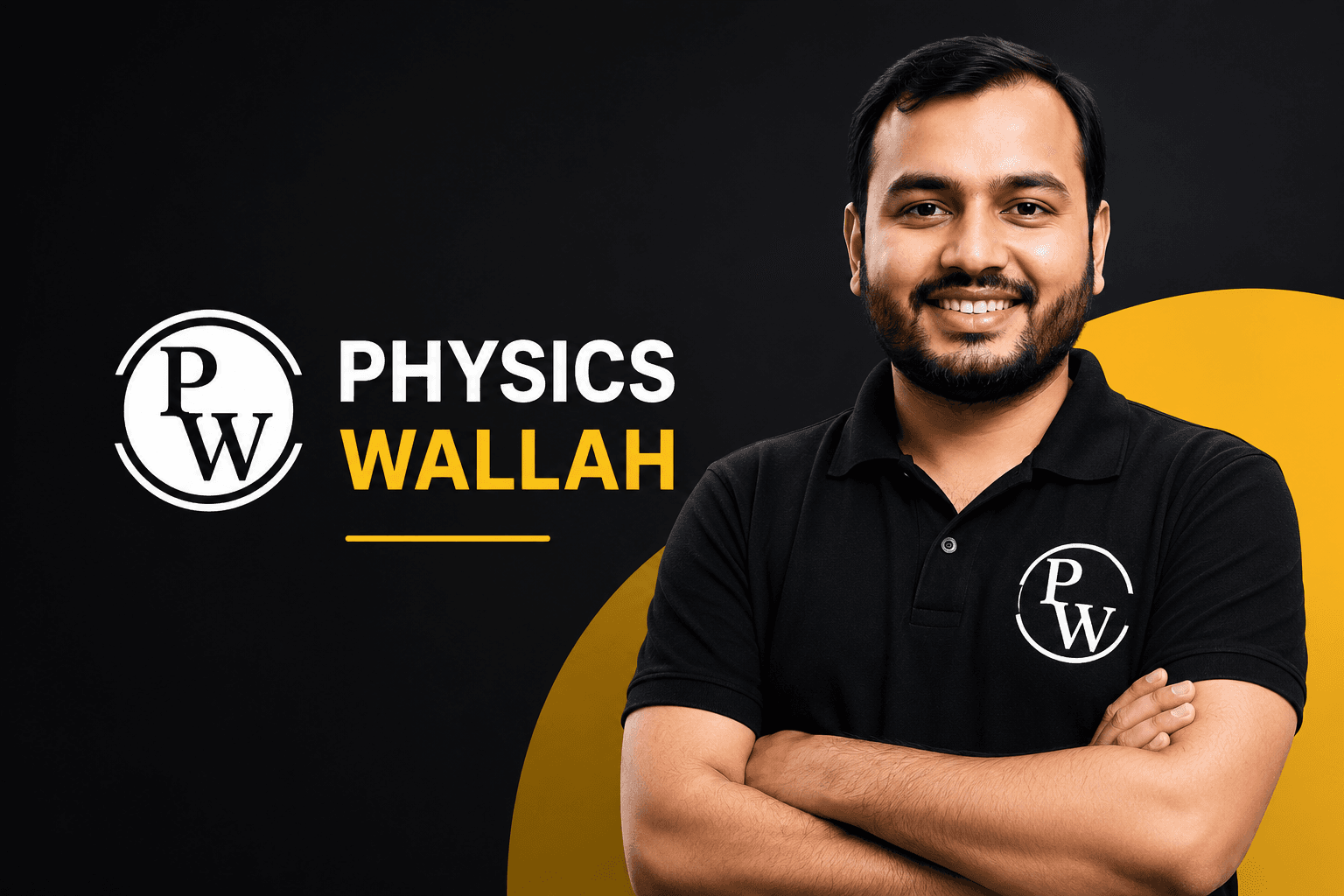
How One Teacher Built India’s Most Relatable EdTech Brand
In India’s education system, quality coaching has often been linked with expensive institutes, crowded classrooms, and pressure-filled environments. For years, students believed that cracking competitive exams required lakhs of rupees and access to big-city coaching centers.
Then came PhysicsWallah — a platform that changed the way millions of students looked at education.
What started as a simple YouTube channel by a teacher from Prayagraj slowly became one of India’s biggest edtech success stories. But unlike many startups built around aggressive marketing and investor hype, PhysicsWallah grew because students genuinely connected with it.
At the center of this journey is Alakh Pandey, a teacher who understood one thing very clearly: most Indian students do not need fancy education, they need understandable education.
A Beginning Built on Simplicity
Before PhysicsWallah became a company, it was just a YouTube channel where Alakh Pandey taught physics in a simple and energetic way. His teaching style felt different from traditional coaching institutes. He explained difficult concepts using relatable examples, everyday language, and genuine interaction.
Students from small towns especially connected with him because he represented someone they could relate to. He was not teaching from a luxury studio or presenting education like a corporate product. He taught like a teacher who truly understood student struggles.
At a time when many edtech companies were focusing heavily on branding and advertisements, PhysicsWallah focused on accessibility.
That difference became its biggest strength.
Affordable Education Became the Core Mission
One of the biggest reasons behind PhysicsWallah’s rapid growth was pricing.
In India, coaching for exams like JEE and NEET can cost students anywhere between ₹1 lakh to ₹3 lakh annually. For many middle-class and lower-middle-class families, this creates financial pressure.
PhysicsWallah entered the market with courses priced at a fraction of traditional coaching fees. This immediately attracted students who wanted quality education without burdening their families financially.
The company understood an important reality of India:
Millions of talented students live outside metro cities, and affordability matters as much as quality.
Instead of targeting only premium users, PhysicsWallah built trust among ordinary students.
That trust eventually became stronger than advertising.
Building a Community, Not Just a Platform
Most successful startups build users.
PhysicsWallah built a community.
Students did not just watch lectures; they emotionally connected with the brand. The comment sections of videos often looked less like online classes and more like student support groups.
Many students saw Alakh Pandey not as a businessman, but as a mentor who genuinely cared about their future.
This emotional connection gave PhysicsWallah something extremely valuable in the startup world — loyalty.
Even when bigger edtech companies had larger funding rounds and celebrity endorsements, PhysicsWallah continued growing because students themselves became promoters of the platform.
Word-of-mouth played a huge role in its success.
Growth Without Losing Identity
As the company expanded into app-based learning, offline centers, and multiple competitive exams, many people wondered whether PhysicsWallah would lose its original simplicity.
But the brand carefully protected its identity.
Its communication remained student-focused. Its teachers continued using approachable language. Its pricing strategy still reflected affordability compared to competitors.
In a startup ecosystem where companies often chase valuation numbers, PhysicsWallah kept focusing on reach and trust.
That helped the company stand out during a time when several edtech startups faced criticism over aggressive sales tactics and unsustainable business models.
The Bigger Impact on Indian Education
PhysicsWallah’s rise represents something larger than startup success.
It shows how internet access and digital platforms are slowly reducing the education gap between metro cities and smaller towns.
A student sitting in a village today can access lectures from top educators without relocating to another city. That shift is changing aspirations across India.
The company also proved that understanding Indian students deeply can sometimes matter more than expensive business strategies.
Technology helped PhysicsWallah scale, but relatability made it successful.
Final Thoughts
PhysicsWallah is not just an edtech company; it is a reflection of changing India.
Its journey proves that startups do not always need complex narratives to succeed. Sometimes, solving a real problem honestly is enough.
By making education affordable, understandable, and emotionally relatable, PhysicsWallah earned something more valuable than rapid growth — student trust.
And in education, trust is everything.