Markets, policy, and the forces shaping your financial future — decoded with clarity, backed by data.
 Economy
In the recent initiatives after a decade, the RBI has taken a major turn by selling 1 trillion bonds, making it a historic transaction in the last decade, It didn't happen even during the period of covid 19. It happened through open market operations of around 1 lakh crore according to Indian rupees. It was initiated in 3 phases on 17 September, 21 September and 28 September. The rupee reached up to 95 rupees in comparison to the dollar, making it critical. Due to Iran and the middle east crisis, as the currency is escalating higher, these initiatives have been taken by RBI.
By seeing such situations and the liquidity increasing across the banks, the RBI does not want to increase inflation and attract the wrong interest rates. So they initiated a policy for (FCNR) foreign currency non-residents, to get dollars coming in exchange for rupees. This initiative gave results above their expectations, making it around $127 billion. To manage that level of dollars, the RBI initiated bonds to manage a better economy.
This initiative has improved massive liquidity. To handle inflation as a precautionary measure, the RBI took this firm decision for long-term benefits. It benefits from stopping banks from giving bad loans with low interest rates and protect everyone from inflation growth. It would improve stronger foreign capital and balance Dollar and Rupee values. Having excessive cash with citizens could lead to price spike on food and goods. This initiative is a courageous move by the RBI to handle the economy.

Bura Anirudh Yadav
September 30, 2026
 Economy
After the death of Ratan Tata ji, the Tata group is always in the news due to internal disputes and conflicts between the board members. The Tata Group is one of the prominent companies across the globe, which has 10 lakh employees with a 30 lakh crore market cap. It has a higher GDP than Pakistan with 400 companies with 30 listed companies and 370 unlisted companies. People measure Tata Group as equal to government jobs due to its reputation and standards it has maintained since decades.
The real dispute is between Tata Trust and Tata Sons, which now the government has interfered in solving the dispute. Let's clearly understand the difference between these groups. The Tata Trust is the supreme head of the company, making it the highest decision-making body consisting of 7 members. Tata Sons is the executive company which majorly operates the entire Tata group's operations, finance and all 400 companies which are under its control.
The Tata trust board has 7 members, which is headed by Neol Naval Tata along with 6 others. The recent decision to remove one of the members has created a rift on the board. The Board elected 4/3 and the Tata trust wanted the entire control over the board and members to be named, according to Neol Naval Tata. Now the main decision-making has been disputed and Tata Sons operations have been delayed. Tata Sons chairman Natarajan Chandrashekar in his tenure improved its revenue and business in large scale and making it extremely profitable.
4/3 board members frequently stop most of the decisions of Tata Sons, making it difficult to take major decisions. The board which got divided into 2 groups now, once had monopoly control of Ratan Tata for 21 years and JRD Tata for 50 years without any single dispute. The Tata group also has many disputes with RBI, Board members and stakeholders.
As long as Ratan Tata ji was alive, the Tata group worked efficiently and effectively, but after his death, the group is going through a tough time. The matter has entered the courtroom between the board members representing lawyers from both sides. The government is also trying to solve the dispute. If the dispute runs for a long time, it might have a deep impact on India, stock markets and Tata organisational conflicts. We have to wait and see who will hold the supreme control over the Tata group in the coming years.
Bura Anirudh Yadav
September 25, 2026
 Economy
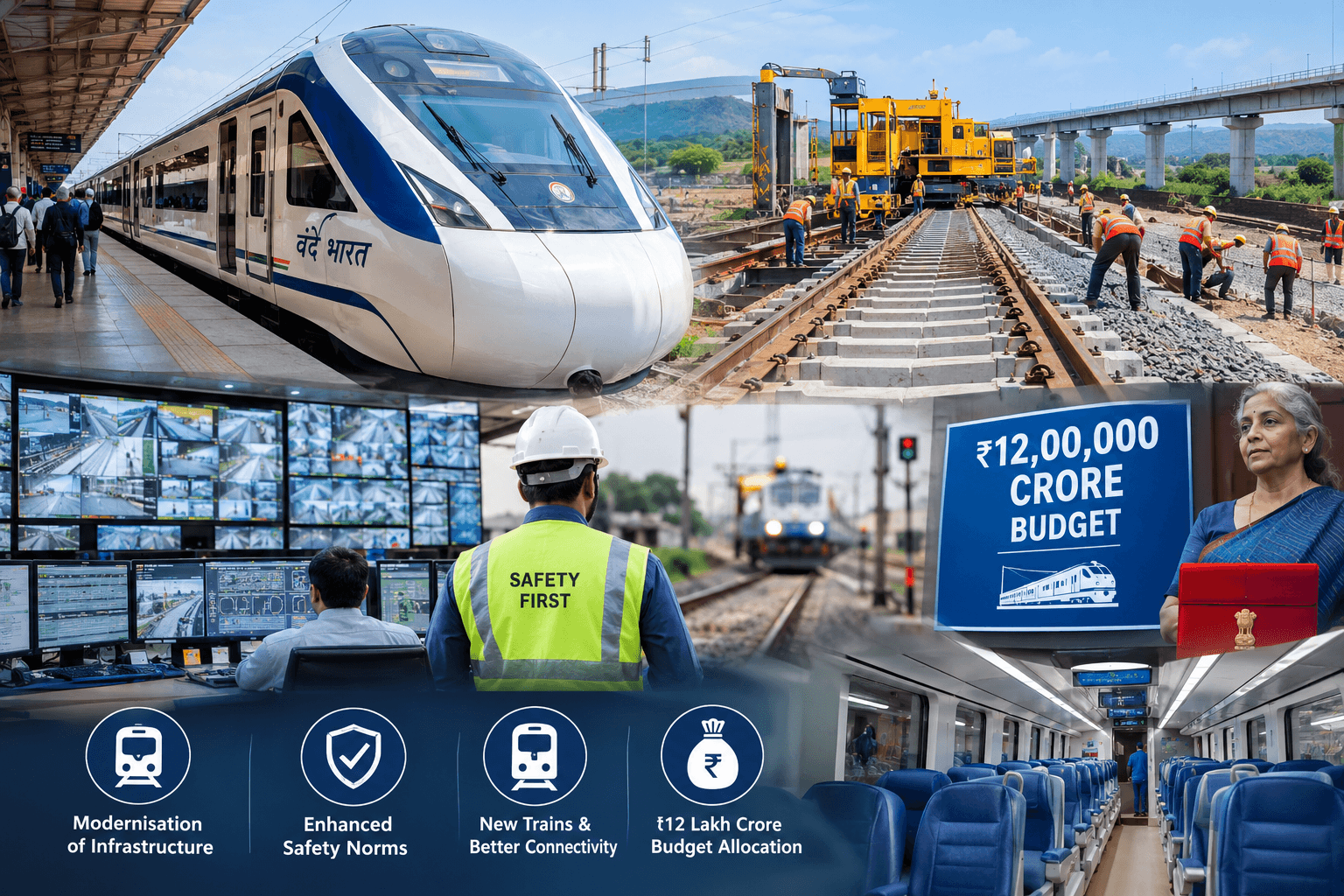
India’s railway network is the 4th largest in the world with 13000 passenger trains and 11000 freight trains moving every single day. The government of India has allocated 12 lakh crore for Indian railways in 2026 and has began a major modernization process. This budget is exceptional and well managed to enhance the growth of the Indian railways. It is majorly focusing on 5 sectors, the first on is change in rail tracks across India with new high-quality tracks to avoid accidents and for smooth travel for heavy-haul trains.
Changing old trains into Vande Bharat and rapid trains, exactly like western nations projects. Making it extremely luxurious and comfortable for passengers to travel and improving the infrastructure. Mostly using electrification across 99% of the network instead of traditional methods. Saving fuel and protecting ourselves from pollution and other harmful gases. Through the Amrit bharat scheme, 1300 railway stations would be provided better facilities with modern advancement by changing infrastructure across India. Along with that, Kavach technology has been introduced, which is a safety measure to protect from train accidents. It would help trains to track accidents with the help of AI management systems.
All these initiatives have been taken to upgrade Indian railways and eventually introduce bullet trains also in the coming years in prime locations. To improve overall connectivity by making India a developed nation by 2047 is a significant step towards major modernized infrastructure across India. It would definitely help overall economic growth and visitors from western nations as tourists would increase as the connectivity would work effectively. The government has 24% growth and wants to increase it by 40% by making a world-class railway network across the globe.
Bura Anirudh Yadav
September 21, 2026
 Economy
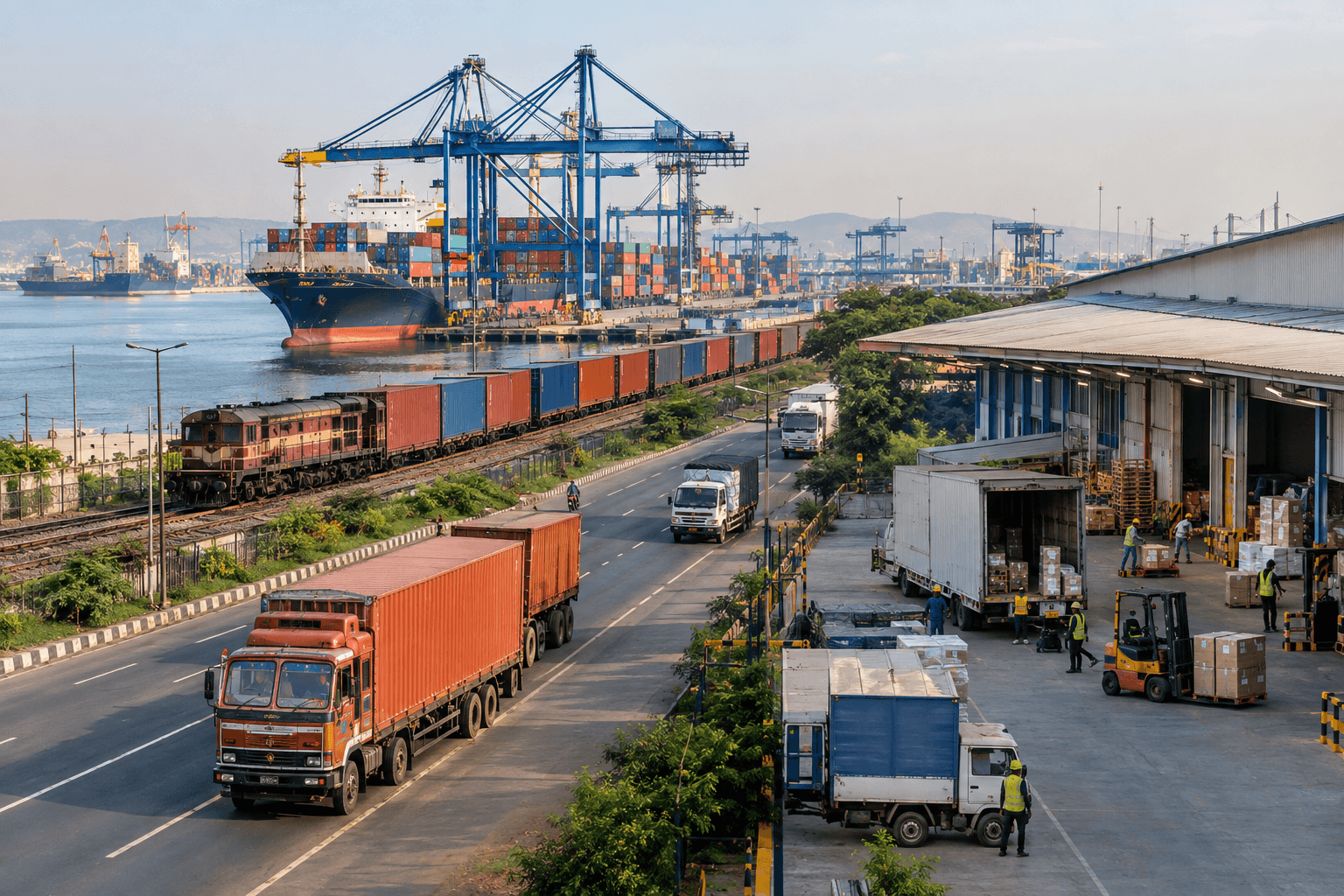
The supply of goods and services shows the economic power of a nation. According to the World Bank’s logistics performance index, India ranks in 38th position. The overall logistics and supply chain plays a significant role in enhancing the country's development. The production and supply of goods decide the market value and efficiency of how well the system is working. Logistics is not only a particular segment of road rather it works through air, water, machinery, warehouse, supply chain and ports.
Today the USA is rich not because of wealth or any other things. It is rich only because of its logistics and supply chain management, which makes it an economically developed state. When you compare India with other nations, we lack behind others for various reasons. Logistics and supply chain are considered a lifeline for every country. After the launch of GST in India and the impact of trade and supply has taken a sharp rise across India. The government also launched a national logistics policy along with PM Gati Shakti and a national master plan to develop the overall logistics infrastructure across the nation. According to data, India wastes 16% of its goods on agriculture just because of logistical and supply chain only. Right now, India has approximately 22 million employees working in the logistics industry and the increase is expected to rise with time. The market value is around 28 lakh crore, but it has the potential to reach up to 48 lakh crore.
The biggest drawbacks of logistics are infrastructure shortages in roads, ports, supply chain system, toll fees, taxes, high fuel consumption and cost, long delays in delivery and making it expensive to deliver across India. Previously, the policies which we lacked put us behind and almost 14% of India's GDP came from logistics costs only. India wants to achieve the time frame compared to other nations from 48 hours to 24 hours. Even government-run logistics have turned into a profit motive, especially when India Post is trying to compete with private players like Delhivery, Ekart, Shadowfox and Ecom Express.
In the Logistics Industry, Singapore and Germany are key logistics leaders in this sector. Playing a significant role in the world logistics framework. They both handle key ports and entire world logistics supply passes through these 2 countries, which makes them strategically and technically a rich logistic hub. When it comes to India, the vision towards supply and logistics is expected to reach great heights by 2047, making it a world-class logistics and supply hub in the world.
Bura Anirudh Yadav
September 14, 2026
 Economy
India’s middle class population is about 31%, which is expected to increase in coming years. There are many reasons for financial burden and problems in families. Few lost money due to health issues or debts, few had financial problems and lacked jobs or money. Apart from these reasons, there are a few major constraints which bring poverty and restrictions. They should avoid certain mistakes, which most people do and later deal with big problems.
While everyone takes loans at one point of time, either be it poor or rich, both their needs are different. While a middle class person only prefers loans, only when his life becomes tough. He takes loans from anywhere with high interests. Initially, it solves the problem, but later the interest rates kill happiness for multiple years.
Many of us in India have a status-driven and showoff culture just to prove that even I have it. People who have high earnings spend differently, and you can't compare your lifestyle with others. Buying a car, home and luxuries beyond your financial limit or capacity, might make you feel great, but during bad times, it will impact severely. Imagine you buy everything, and later you realize you can't manage it or suddenly an emotional event happens, like your father or mother is admitted to hospital, and you have to pay EMI’s and bills along with medical expenses. So, basically sacrifice and being alert are better than a few pleasures of life. Just skip it or limit it.
Social media and the digital world have increased the competition for comparing each other. Which disturbs your mind, mental peace and increases greed in society, but in reality you can survive with or without those lavish resources also. Many people have better lives with just 12,000 rupees a month and few have big amounts but no peace and time. What is meant and which fulfill your needs, handling life in that pattern would make you happy and secure rather than anxious and sad.
Never borrow or beg for money from anyone for enjoyment, it would create a debt trap in your life. A limited amount of enjoyment and a restrictive life is hard and tough but during a crisis you can help your family, loved ones and people with that saved money. So, Save and think about your future and growth. Putting the right efforts into the right things can make your social status better after a few years. Level up by gaining financial knowledge and growth, prepare a proper financial plan for your needs, wants and future outcomes. This would be delayed but would give long-term fruitful results.
These are a few mistakes and suggestions about finance. Which general middle class people do, a few impulsive decisions can cause life-long traps and burdens, trying to clear them for years later. So Be smart, grow better and be happy.
Bura Anirudh Yadav
August 18, 2026
 Economy
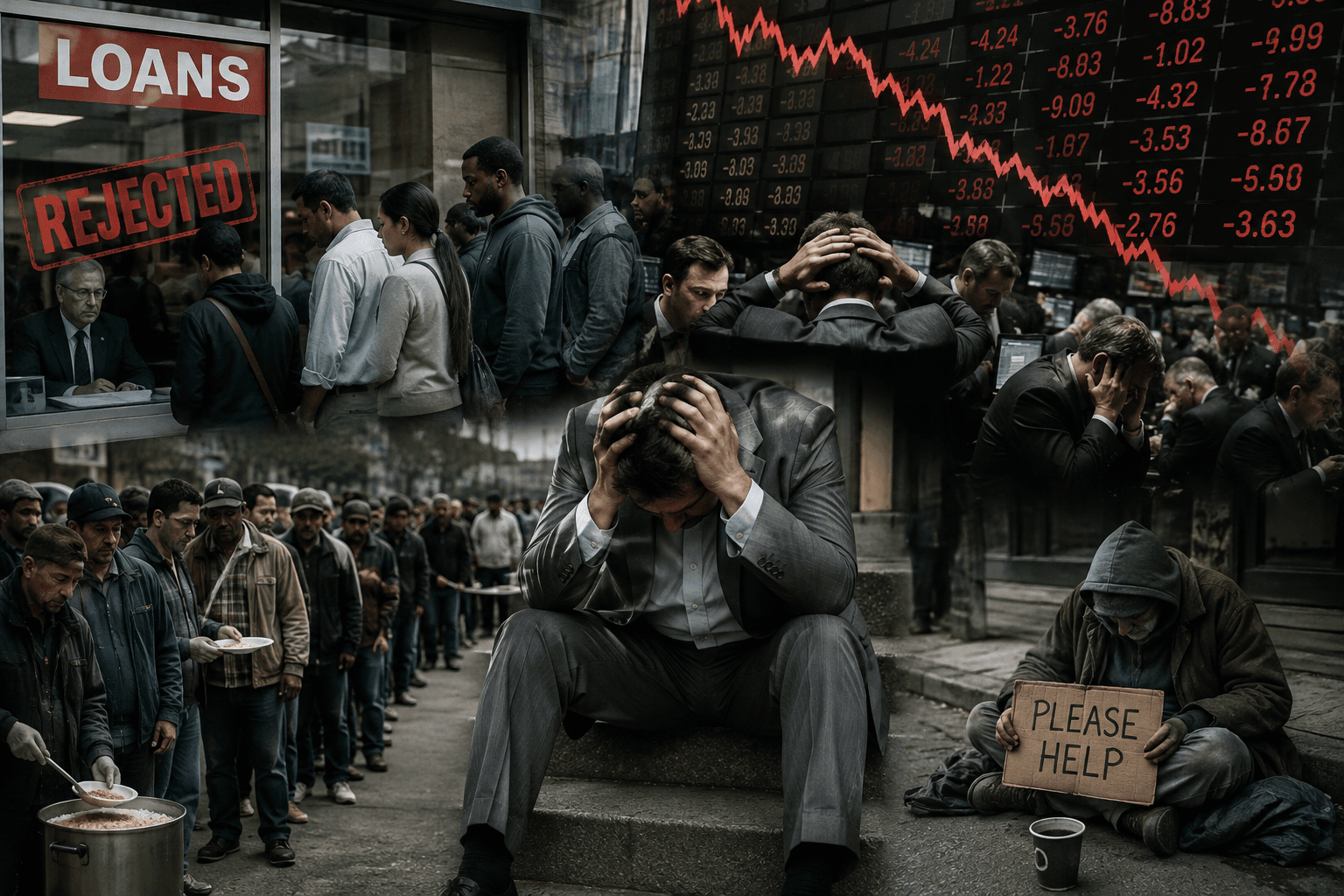
Human life is difficult without money. We all know when a financial crisis hits our family, we all get panicked and anxious. Thinking, how to repay it back with interest to banks. The pain of hunger and father’s responsibility to handle the pressure, rolling tears from eyes with uncertainty and lost hope of the future.
Imagine if the same financial crisis hit the world due to a few greedy individuals and self-interests. The world has started crumbling and the stock markets collapsing, lack of food, no jobs or employment for people, 1000s of companies losing their money. Such situations occurred a few years back, in 1999, the Dot Com bubble crash hit the market, which eventually led to the Great recession in 2008.
Basically, the United States federal bank has introduced new economic policies. As the real estate market was booming effectively, the banks decided to reduce interest rates from 6.5% to just 1.75%. This led to massive greed across the US. People started taking loans with less interest and the banks did not ask for proof of repayment or security. Instead, they gave loans on mortgages (property deposit documents ) in case if they failed to repay, banks could resell them.
As time passed ahead, more people started taking loans, but funds kept decreasing in banks. The banks kept neglecting, and eventually they collaborated with insurance companies for loans. Banks initiated CDO collateralized debt obligations with insurance companies. Even though insurance companies had no money due to greed, they started providing more loans to banks. We all know everything has a limit, the banks have crossed it completely.
The loans have been given, when it came to repayment, people paid them as interest was less. Banks realized suddenly that these interests can never be covered up, so the federal bank increased interest rates from 1.75% to 5.2%. This policy made people stop repaying interests, the banks have started recovering homes, protests began, and cash flow disrupted everything.
The news kept pumping out in the media, and financial crisis news was trending. Which led investors to withdraw money from share markets slowly. After the news, stock market prices fell 5% and, after 6 months, they fell 43%. This made the entire US stock markets collapse, making everything unpredictable. Another piece of news came out when Lehman Brothers, which was one of the biggest insurance companies, announced bankruptcy of a $3.9 billion loss. This began the Great recession in 2008, where the world suffered major economic and financial crises.
Bura Anirudh Yadav
August 17, 2026
 Economy
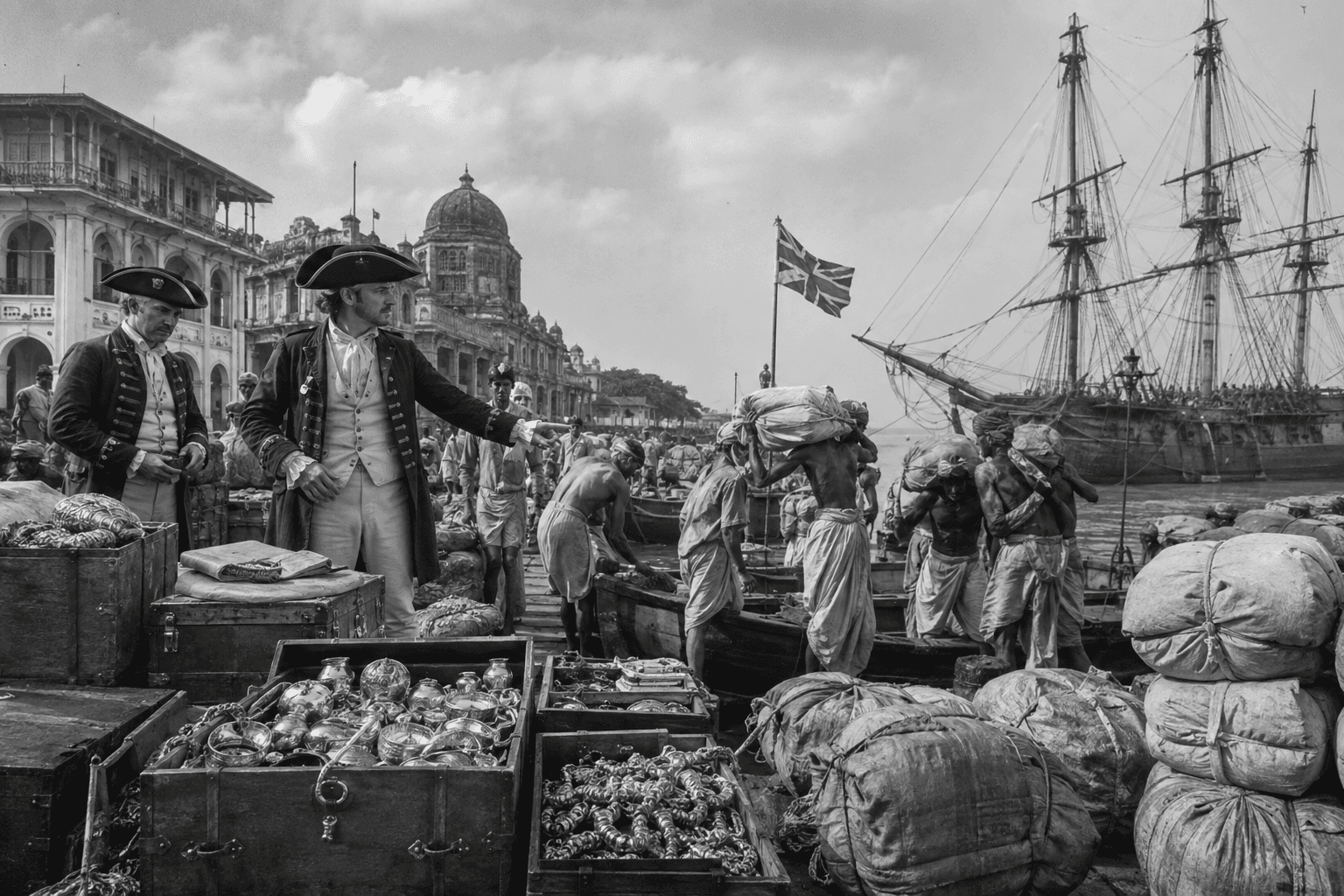
We have heard the devastating stories of history, a few incidents which are bone-chilling and heart-wrenching incidents. From poverty to revolutions, we have been kept as slaves for more than 200 years of British rule without even knowing. In the name of trade, the East India company emerged as a giant empire which ruled India later.
How did they loot India ?
During the expansion, India has been designated as a strategic location for the British. We Indians are surrounded by a rich heritage and wealth. The world used to call us ‘Sone ki Chidiya’ by controlling 25% of the world's GDP back then. From there, when the British left, we were with just 4%. Exploitative trade systems and values, which made it easy for the British to extract funds. Agricultural products and crops used to be exported to western nations by giving minimum wages to local people. The British used to pay back with special council bills, a type of check which is based on paper by taking actual resources. In those days, people used a barter system of exchanging goods without using any currency. The British manipulated with just a piece of paper.
The British used export and import but never used to pay, but used to impose a trade tax on India. They built railways, yes, but with the money collected from India and for Britain's benefit only. Exploitation of education, health, and trade systems has created big losses even today. The revenue which was collected from India is mostly used for funding wars, building Europe and the agricultural resources which have been looted, which led to famines, poverty and deaths. In World War 1 and 2, most of the funding was done through Indian money and more than 50,000 deaths of Indians were reported dead who actually fought for the British.
The most important aspects they looted are gold, diamonds, artifacts, which are one of the important and crucial assets which have been stolen across India, which have high value. All these historical crimes over several years have caused an abundance of pain, problems and economic loss of trillions. The British atrocities are far more unimaginable, unknown and unexplored. According to data, a tentative $45 trillion economic loss was lost for India.
Bura Anirudh Yadav
August 13, 2026
 Economy
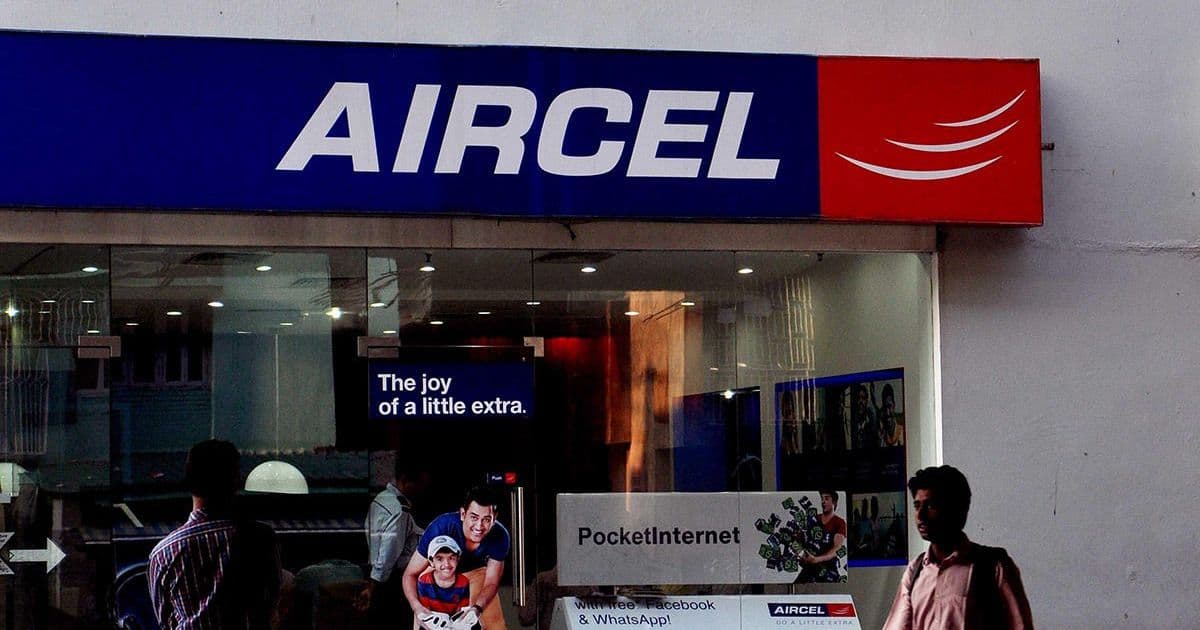
We have seen many telecom companies emerging in the 1990s. Have you heard about Aircel telecom network, which wanted to sell all their services at the same price across India? In the IPL, it was one of the top companies to sponsor. M.S Dhoni and actor Surya were the brand ambassadors to promote Aircel.
Shiva shankaran, a businessman, was into a sterling computer business selling them at profitable prices. When he entered the telecom sector, he wanted to provide telecom services in Tamil Nadu. He launched Aircel and expanded across India, he was successful and had a profitable business. The Aircel network had 7.5 crore customer base and was in the top 5 telecom networks providing quality services. It was the first network to launch 3G and pocket internet services. People predicted that it would be one of the top companies due to its services and quality.
The downfall
When competition increased in the market, users started obtaining new services. New features, better offers and involvement in the 2G spectrum scam. The licenses have been cancelled for many telecom companies. Due to some political involvement, people lost faith in Aircel and the quality of service has also been reduced.
Shiva Shankaran decided to sell his Aircel network to AT&T as they offered 8 billion dollars. It was a great deal, but again due to political involvement at every step, the deal couldn’t happen. Reliance Communications came forward to buy Aircel but still they couldn’t sell. Many big leaders with the highest authority were involved, and they wanted Aircel to sell to Malaysian-based Maxis for less price compared to the offers he received. Shivashankaran sold 74% to Maxis and 26% to Sindhya Securities & Investments for just 3,400 crore.
After a few years, Shivashankar filed a complaint to the CBI about his telecom network, saying that due to political involvement, his telecom network faced massive problems. From being one of the best telecom services to bankruptcy, the cases are still in the court premises fighting for justice.
Bura Anirudh Yadav
August 11, 2026
 Economy
-Money Laundering
-Data manipulation
-Inside Trading
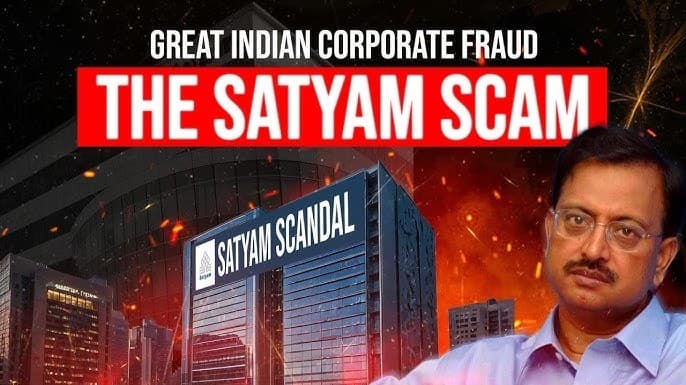
India has witnessed one of the high-level scams back in time. Few were caught, a few flew away to different countries and few got arrested. From 2G to common wealth scam, but have you ever heard of Satyam computers, which was one of the biggest IT scams in India back in 2007?
Ramalinga raju was one of the tech experts who was born in a middle-class family and pursued excellence in academics. During the IT boom in India, he started many businesses which failed in the beginning. He established Maytas infra, Satyam computers and real estate firms. He was given the best business award back then. When Satyam launched its first IPO, people had high expectations and Infosys, Microsoft and many companies were still in the initial phase of building. Satyam was also listed on the New York Stock Exchange, from that level of growth to how people lost faith and it was eventually declared fraudulent.
The Scam
Being honest is always the best choice, but satyam tried to choose data which was improper. They showed profits which were not applicable with fake data and fake revenue numbers. Due to such numbers, the share market prices have increased to 170 rupees. The people who invested hugely in Satyam had expectations of high returns. A sudden incident by Lehmen brothers in the world shook the markets and the world was under collapse.
The stock markets fell down, the impact also hit Satyam. So they decided to merge all his companies into one platform. This made the investors question the decision. An unidentified letter came out saying the data on profits, growth and employees working in that firm was fake and had wrong numbers. This brought Satyam Computer's shares to 6.50 rupees in just 48 hours.
The CBI investigation has revealed several new insights into Satyam computers, saying ramalinga Raju was transferring money to European countries and buying land for his family members by inside trading. People have lost 7000 crore but later CBI investigation allegedly found around 14,000 crore. Satyam computers were removed from Nifty, sensex and was later arrested in 2009 by the CBI. This news impacted entire IT firms and later Mahindra group acquired Satyam computers and named it Tech Mahindra today.
Bura Anirudh Yadav
August 10, 2026
 Economy
Poverty is a major problem across the world, and eradicating is the first priority for all governments. The Grameen bank (Village Bank) which is visible now, provides microcredit and loans for ordinary people to uplift them from vicious cycles of poverty.
Did you know it was started in Bangladesh by Muhammad Yunus, a professor by profession? He is currently the interim chief advisor of the Bangladesh government. He was also a winner of the Nobel Peace Prize in 2006. Grameen banks are across 100 countries, including India. That's the impact it created on the economies and people.
The Grameen bank Journey
While Muhammad Yunus was teaching at Chittagong university, he took a few students on a trip to a nearby village called Jobra. He saw a poor lady who was a bamboo basket weaver asking for money from local lenders, which was a tiny amount with absolutely no value. Yunus also saw high potential in those workers. He started visiting commercial and government banks, but everyone refused to support his cause. As the poor people had no documents or can take collateral-based loans.
After all his efforts, with his own salary, he started Grameen bank by giving them microcredits. It all started with trust and mutual respect with less interest than everybody. He initially gave $27 to 42 people for their small bamboo business. This resulted in huge success and large people started visiting Grameen bank for support and microcredits.
Grameen bank Model – Data
Bura Anirudh Yadav
August 6, 2026
 Economy
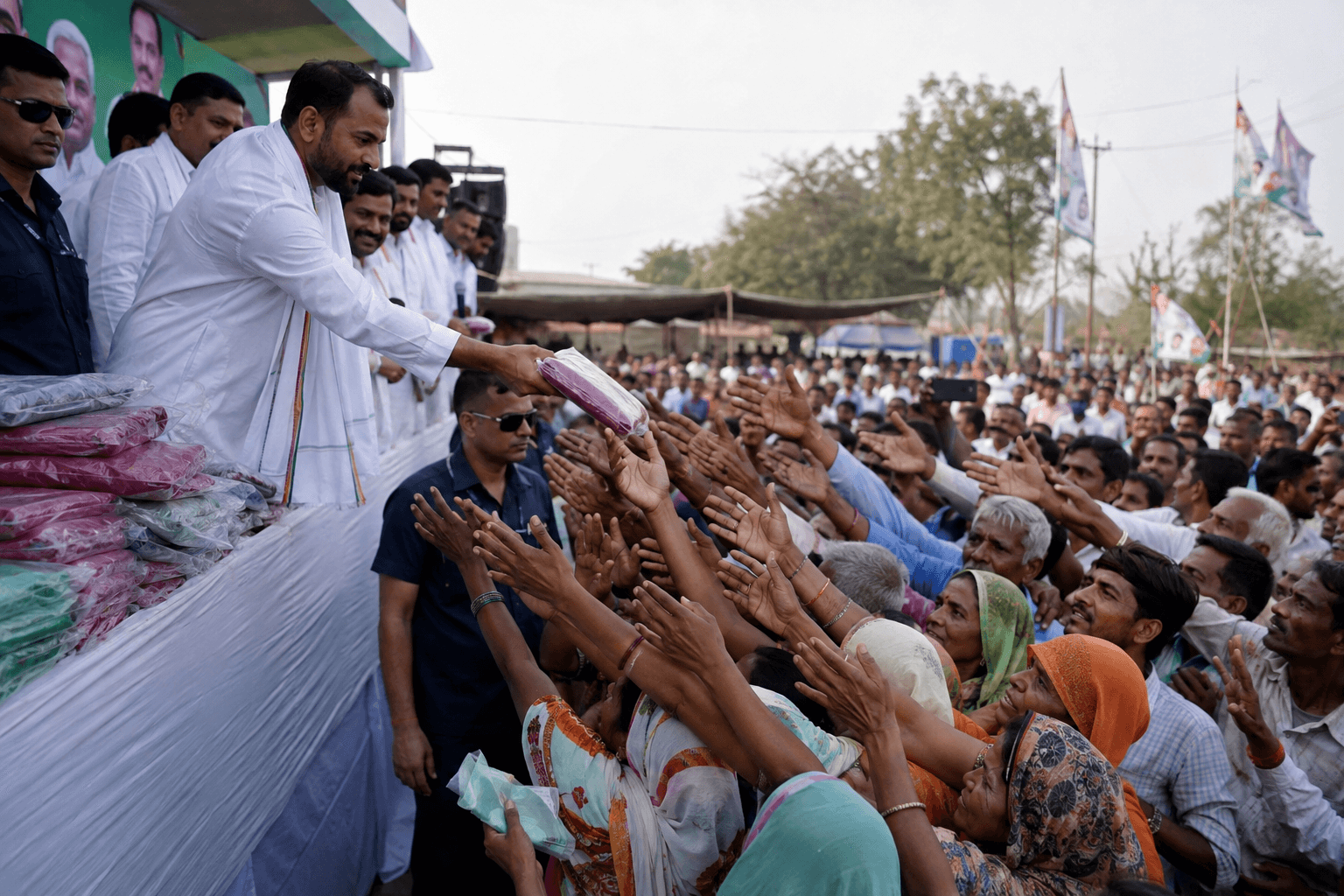
Politician: If you vote for me, the moment our party wins, we will transfer 5000 rupees in your bank accounts, along with free electricity and water.
Voter: Free of cost Wow! I would definitely vote for them.
Before elections, we keep listening to promises which have no authenticity from political parties. They do not even look into proper economic and financial values and promise the people free electricity, free water, transport facilities and farm loans for farmers. A tentative estimation says that India spends almost 7 to 10 lakh crore on freebies yearly by union and state governments. Which is equal to 20% of the national budget. Due to such initiatives, the government does not focus more on infrastructure or wealth building.
This freebie culture was never new to India, historically, it was only given as temporary support for people. As the democratic systems emerged, everything from welfare is turning into gaining votes. Most political parties provide and promise freebie policies for their self-benefit. This has become a habit since the 1960s and people would turn greedy for basic freebies and politicians would manipulate them.
We can see the same things happening due to freebies and other reasons in Sri Lanka, Venezuela, Cuba. When it comes to India, Punjab, Andhra Pradesh, West Bengal, Bihar have been in the prime states that are investing heavily in freebies.
How does it impact ?
*Freebies are never long term, and they are only for short-term use. When the financial dynamics are not mentioned or analyzed before providing freebies, then the next step would be the debt trap.
* Ability to spend on the right things would be reduced, and uneven expenditures would increase, including interest rates.
* Lethargy and lack of accountability in public would increase along with aspirations for more freebies. The mindset of dependency would bring more chaos to the nation.
* Reduced development, transformations and new innovations. It would also reduce the value of welfare schemes and policies.
* Rebellion from the society, conflicts and chances of protests if not provided.
* Economic crisis and overall GDP impact on the country.
The government has to strictly have proper economic and financial constraints over allocating freebies. There should be a law in which a limited portion of wealth can only be spent on freebies with having regulatory body to monitor it. The government's role is to provide resources indirectly through development and growth, not financial assistance. If the government is providing you free, they will take it back through taxes. Are you not aware of it ? Nothing comes free, it is all tax payers money which is being rotated just before elections. Freebies are good only when they are limited and genuine rather than random promises.
Bura Anirudh Yadav
August 5, 2026
 Economy
Indian society is always represented by peace, love, harmony and brother hood. We have never invaded any country till today. Our culture always wanted to support, provide and help each other in every situation. We can see that historically, and if any natural calamity occurs, India would be the first nation to represent itself in humanity.
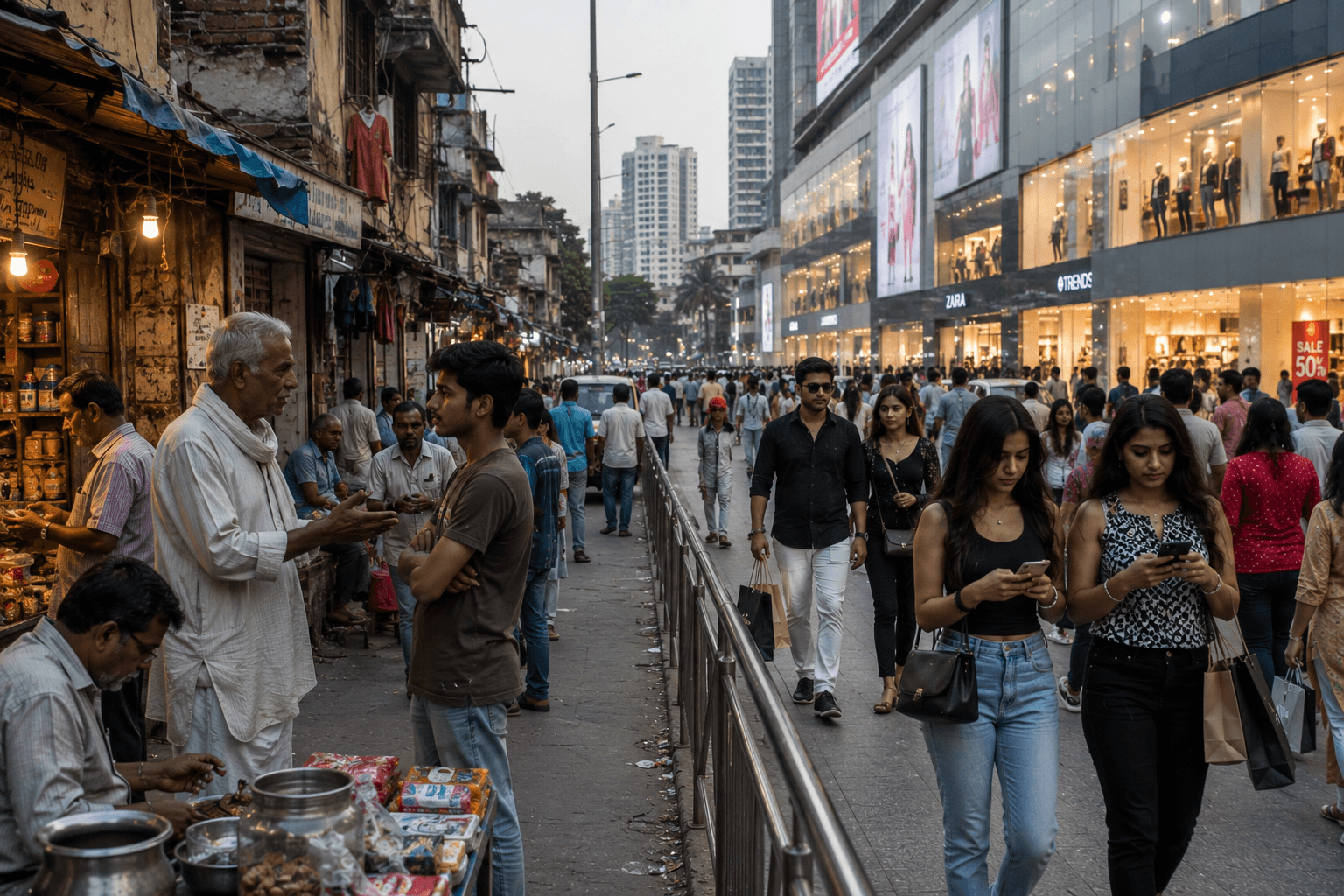
All these things have been changing recently due to capitalistic culture, which ruins the mindset of the people. From families to money, every nook of the culture has been diverted and is being copied from western nations. It directly imprints the mindset of the people and in their behaviour. Making Indian things look cheap and making them feel low in value. What India needs to take from the west is all about technology and innovation. The rest all are available in India. Our food, attire, language, values, ethics and thought process doesn't need any kind of a change.
How Gen Z is becoming influenced by the narratives, which have no value and making things over complicated.
If you compare your parent’s generation, their spending and lifestyle needs were minimal and based on necessity. The reason why Gen Z is adopting to new things, new ways, more options, which is creating a psychological pressure of comparisons in the society.
Rahul: Dad you have 4 pairs of clothes only since last 1 year, with minimal salary how did you manage everything.
Father: Son you have good salary with so many resources. Why are you still comparing with others ?
Why do we need 10 pairs of footwear, 20 pairs of clothes, 50 new things to taste and uploading on digital platforms. What is the purpose of doing this ?
Just to show the world you're better than others and to showoff your status saying, I am also enjoying it.
All this is coming from social media, western culture and capitalism. Previously, everything was minimal and simple, but now simplicity has vanished from the world, living life with artificial colours which have no depth and with missing reality. The EMI culture even after having a low income and iPhone buying syndrome to prove your status more than your needs, it's all about being brand conscious more than need.
We need to be modern in thoughts, mindset, innovation and work ethics, not in values or culture. The gen z is all about short time, quick thrills, lacking self-control, full of greed just to prove others. It's not the mistake of Gen Z, that's how capitalism works. Its all Profit motive, competition, a financial-driven agenda which helps the economy but never for cultures and humans.
Depression, health issues, anxiety, and too much stress at a young age are all the reasons for capitalism in society. The behavior of Gen z and older generations have gap because they followed a conservative path and have minimal resources. We're as the new generations who are following the capitalist path, which makes their opinions, habits, lifestyle, thinking, money spending and earning clash every moment.
Bura Anirudh Yadav
August 4, 2026
 Economy
Poverty has always been an issue in India and across the world. It can be reduced, but it can't be eradicated. This is life’s important fact. As the population is growing rapidly with people being unemployed and fighting for basic needs.
The major reasons are India’s core need for improvement. It needs to be the first priority and development measure. There have been multiple reasons for poverty, but in 2026, these 5 key sectors of productivity, manufacturing, skill gap, education and degrees and execution will play a pivotal role in the future.
Let's discuss one by one.
Low productivity is the first reason for less growth. When you compare China and Japan, our India’s productivity is less than theirs, but how ?
* Productivity is compared to the economic value you are providing for the time you spent on a particular task. In India, most of the workforce works in the agricultural sector and it is increasing every day. Agriculture is low productivity work and generates less income compared to other industries. Most of the farmers use traditional methods instead of modern tech-based systems. Therefore, other countries like China and Japan use labour forces in high productivity workplaces by transferring from low productivity work. GDP growth is not considered equal to productivity and economic growth.
* The manufacturing sector of India has low productivity and growth as most of the markets have been captured by China. During the late 1970s, this boom improved, but in India we were going through political turmoil and unstable protests. Weak and emerging rules and laws were the reasons we had to keep away from manufacturing. Imagine if tomatoes turned into Ketchup or any other food recipe. That sector would definitely increase its value and jobs. Following the same old patterns made us stay away from growth.
* Skill gap in India was never the reason. During the past, historically, many of India’s workforce were skilled and were totally dependent on skill-based work only. It was based on a few communities and sections of society used to work according to needs. After the British education system, we generated a brute workforce to obey rather than to create something precious. Leaving our traditional economic systems of hard work and skilled-based systems. It needs to be solved by providing proper skills and skill centers based on requirement.
* Education and degrees, as per a few surveys. Educated people are the most unemployed, due to lack of quality jobs and skills. Holding a degree cannot be provided with employment opportunities. China, South Korea, and Japan have introduced vocational, AI, and industrial skills which are needed. In India, we focus more on theory rather than practical approaches. The skills required and the education we need, do not match to the core needs.
* Execution is another big hurdle and hindrance in Indian policy making. We can make rules, laws and regulations, but if we can't implement them on the ground, then the policy would have no value. Our bureaucratic hurdles and corruption by officials regarding permits, take years of time in documentation. Eventually, things have changed and systems have improved after E - governance, but somewhere we still lack proper support from government.
These are the 5 major economic issues which need to be rectified based on the current situation. The workforce needs to be transferred to the high productivity zone from low.
Solutions
India needs to create jobs in non-farming sectors with modern methods and tools. Education and skills need to be modified according to modern requirements rather than rote learning. As time is moving quickly across the world, India needs to adapt to fast-paced systems for approvals. Instead of depending on already built cities, we must focus equally on tier 2 cities, it would help us provide better job creation and new economic hubs. The major population dynamics were women represented in numbers rather than in the work force. If we can improve and include women in jobs, it would create better economic growth. I hope India builds a better skilled force to deal with AI and other workforces to deal with poverty.
Bura Anirudh Yadav
July 30, 2026
 Economy
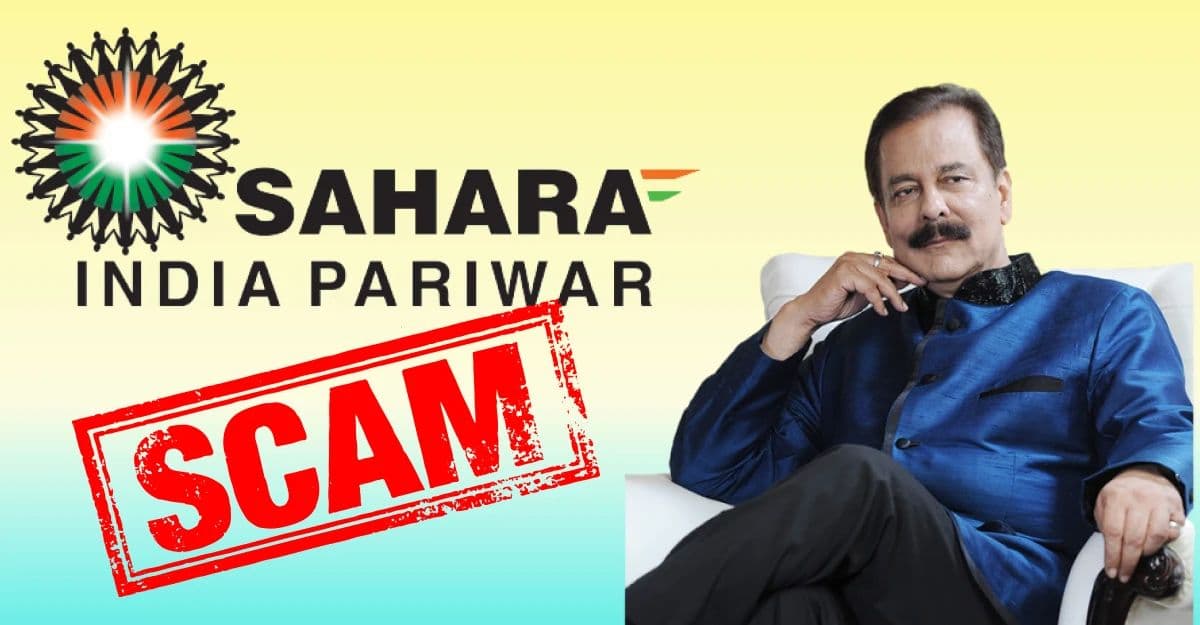
Subrata Roy was born into a middle-class family, and initially he used to sell snacks on the bike from village to village. While working, he had an opportunity to work with various people and his customers who frequently ate his snacks. Most of them were poor and unorganized. Subrata Roy had found his purpose while selling snacks. He decided to start a finance business by providing extra interest on the saved money. He started promoting and all the poor people identified him as a finance giver. This word of mouth became so popular that he started his own company, the Sahara group.
As time passed, almost 13 crore population, which is 11% of India, collaborated and invested in the Sahara group. The business was successfully running and eventually he entered real estate, hotel and hospitality industry, health, media and entertainment, IPL and sports. There was a time when Sahara used to provide the highest number of job opportunities after railways. That's the status Sahara group used to hold, Subrata Roy was also into social service and politics and had vast empire of wealth.
The Bad Phase.
Every story has ups and downs. The real chaos began when the Sahara group was under income tax radar. The search operations were conducted in 1996 but, due to his connections and circles, he was saved and the officer was transferred. The company began to fall apart from every sector slowly, investors stopped investing due to allegations and the biggest came when Sahara decided to list his company on the stock markets and wanted to raise an IPO. The SEBI regulatory institution identified many loopholes in the documents of the Sahara, through OFCD, they manipulated the regulation by asking them to invest more in the Sahara group by crossing the limits.
The only problem which was created was that Sahara did not follow the guidelines and permits required. The data provided to SEBI were manipulated, and the documents were missing proper information. This led to legal conflict. The supreme court and SEBI took it as money laundering and arrested Subrata Roy. Further asked the Sahara group to repay everything with an interest rate of 15% in 3 months. The first installment was paid and later the next installments were delayed. The Sahara group claims they have paid almost 22,000 crore but SEBI denies, saying they do not have legal papers of Sahara group. .
Bura Anirudh Yadav
July 29, 2026
 Economy
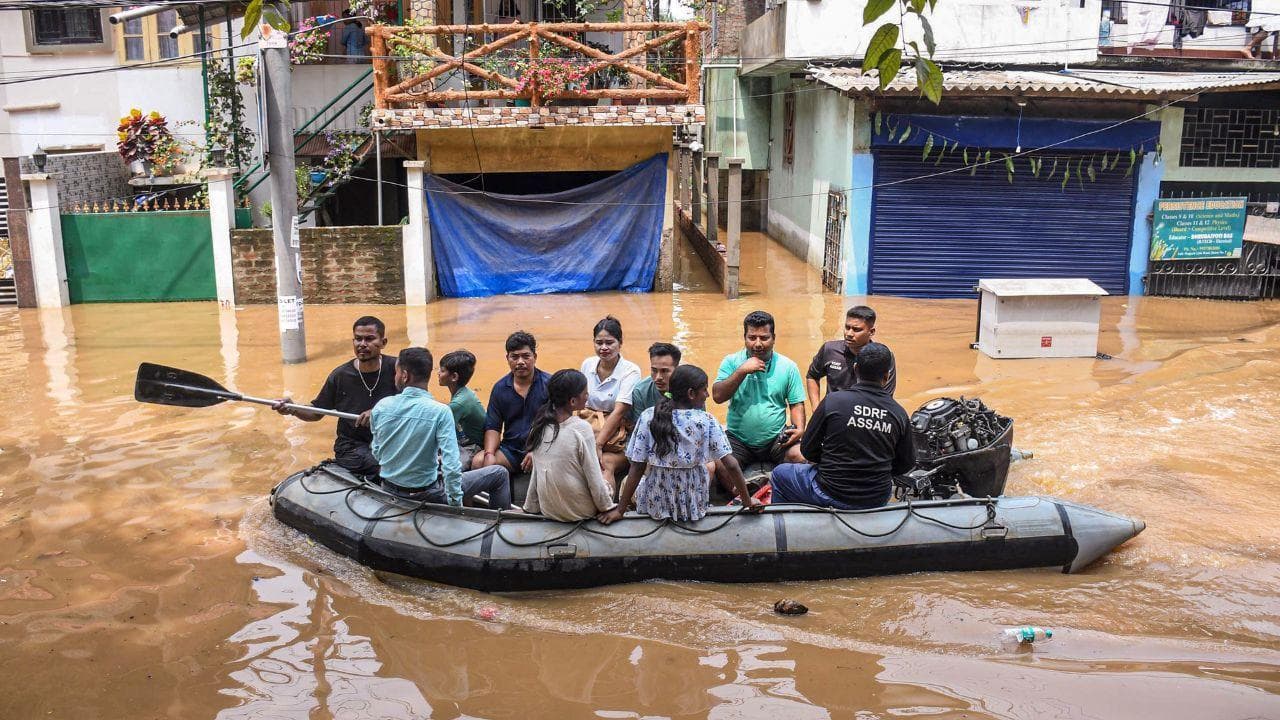
One of India’s popular regions is going through a severe flood crisis since few days, with scary rainfall across all north-eastern states. The Brahmaputra river and its tributaries have created a massive rise and marked it as a danger zone. The impact of infrastructure to climate change, water to livestock, environment to agriculture, wildlife to government relief measures. This impact is one of the largest in Assam’s history, with approximately around 5,000 to 8,000 crore overall economic impact on Assam. The government has to provide material relief, damage compensation, crop relief and overall management of the economy.
* Can you imagine those poor people who have to stay in relief camps due to natural disasters?
* Few people have lost their loved ones, few people lost their homes due to landslides and water flooding. Those innocent animals running around for shelter and food, creating massive chaos across the forest regions of Assam.
* Just think about the people who have lost their livelihood and livestocks.
* Imagine the pressure on the government and administration to rescue and bring things to normalcy. Schools, colleges, airports, railway stations, transportation, businesses, exports and imports have been completely stopped.
Data
As per the estimated data and predictions gathered from news agencies and sources, tentatively about 7 lakh people have been impacted with 62 deaths reported. Almost 12 districts have been issued a red alert with 883 villages submerged. Approximately 24,897 hectares of agricultural land with crops have been damaged. The most impacted district is Sivasagar, which is a sensitive zone directly impacting around 3 lakh estimated population. Assam state has 40% of land which is prone to floods due to low areas every year. It is estimated that 50,000 population are staying in relief camps and few poeple have been misplaced.
Bura Anirudh Yadav
July 28, 2026
 Economy
Back in time, Indian society had problems which are no longer effective today. Do you know why ?
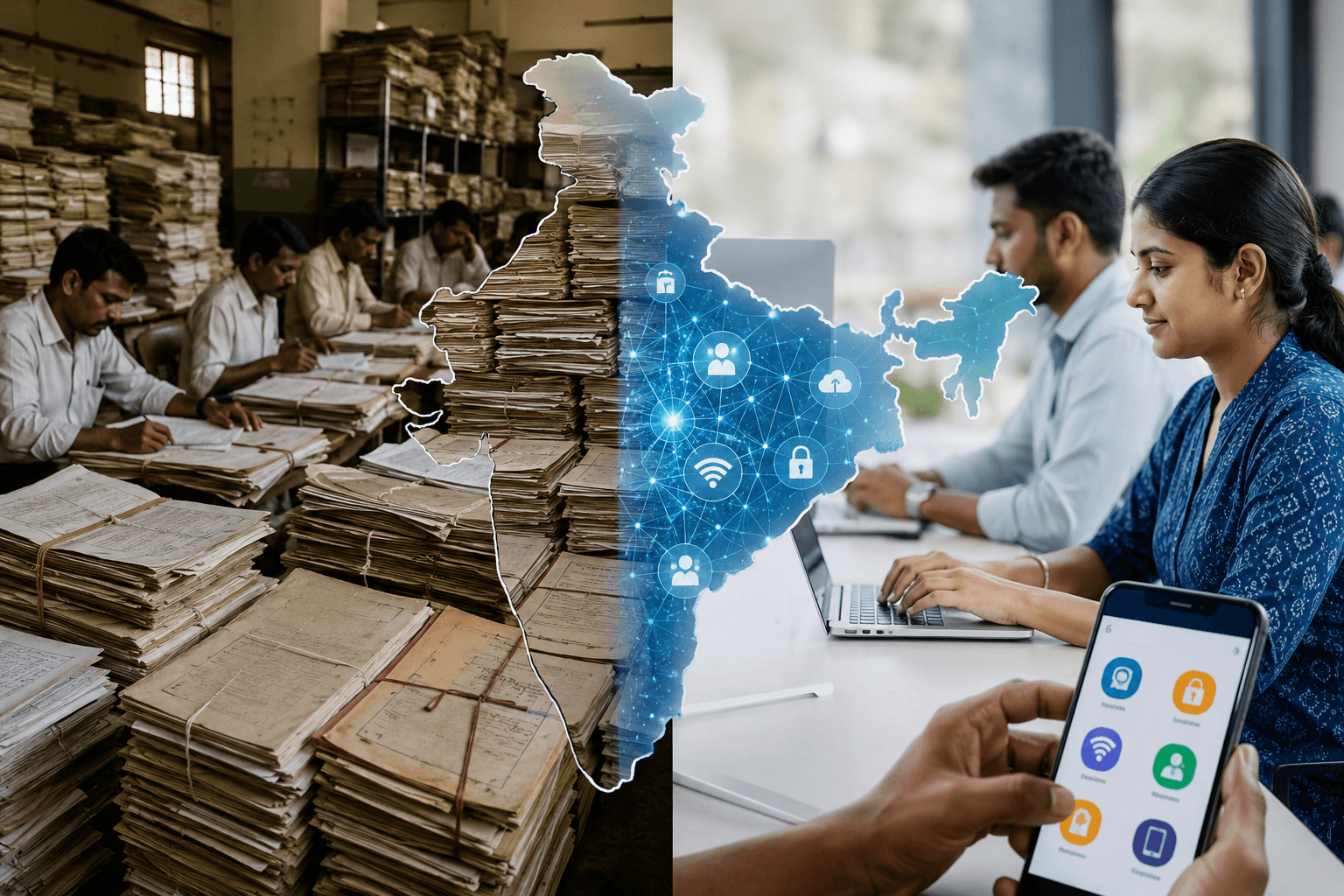
It's all because of Electronic Governance and the tech-based initiatives of Digital India. It came into limelight after 2015 aggressively, where people adopted those measures.
There was a time. We all remember standing in lines for hours just to pay gas, landline and electricity bills at the end of the month. We used to be extremely calculative and holding cash in our hands with exact money, holding the paper bill safely to pay. Transferring money, buying air or train tickets, everything was in long queues and time consuming. From school fees to college fees, everything was based on traditional methods of paying everything at the pay counter.
That only “Paper” was the valid ID proof for everything. For many business persons and CA’s, they can understand better how much paperwork was needed before the financial year. Just for college admission, you need to travel several kilometers, multiple times to fill in and submit that form with a few documents in the same traditional pattern. The pressure if the application is qualified or rejected without any tracking measures. Sometimes a few application papers keep missing, or in many government offices, officers give lame reasons, saying rats keep eating documents and a few important documents are misplaced. For a recharge of your mobile, you need to visit to the nearest store and scratch a paper card or ask someone else to recharge. Such problems were frequent and a daily dose of experience for all the older generations.
After E- Governance, none of these issues are considered as problems.
We no longer need to wait in a queue to pay for electricity or gas bills. Just few finger clicks from your mobile, we can pay it within a few minutes from any place. To pay school or college fees, we don't need to wait in queues, we can pay it through online platforms. We will receive digital payment bills, and can track any government activity online. Any student who wants to apply for university admission can see everything online. We have got the latest digital payment modes which make our life easy and hassle-free. For tax, you can apply everything through online methods by not providing any corruption to the government officials.
The benefits of E- Governance are quick and speedy measures by saving time and energy. It has reduced corruption and brought accountability, transparency and responsiveness of governments. It is easily visible from clear data as it provides openness. Previously, many government jobs were sold even after exams, but today, due to E governance, the results are available on the Internet with evidence of full data. People have been adapted to digital tools and tech-based systems. To prepare documents, all you need is to apply digitally. Everything happens online today. That's the change E - governance has brought in India. From paper to Paperless, it shows how things have changed over time.
Bura Anirudh Yadav
July 27, 2026
 Economy
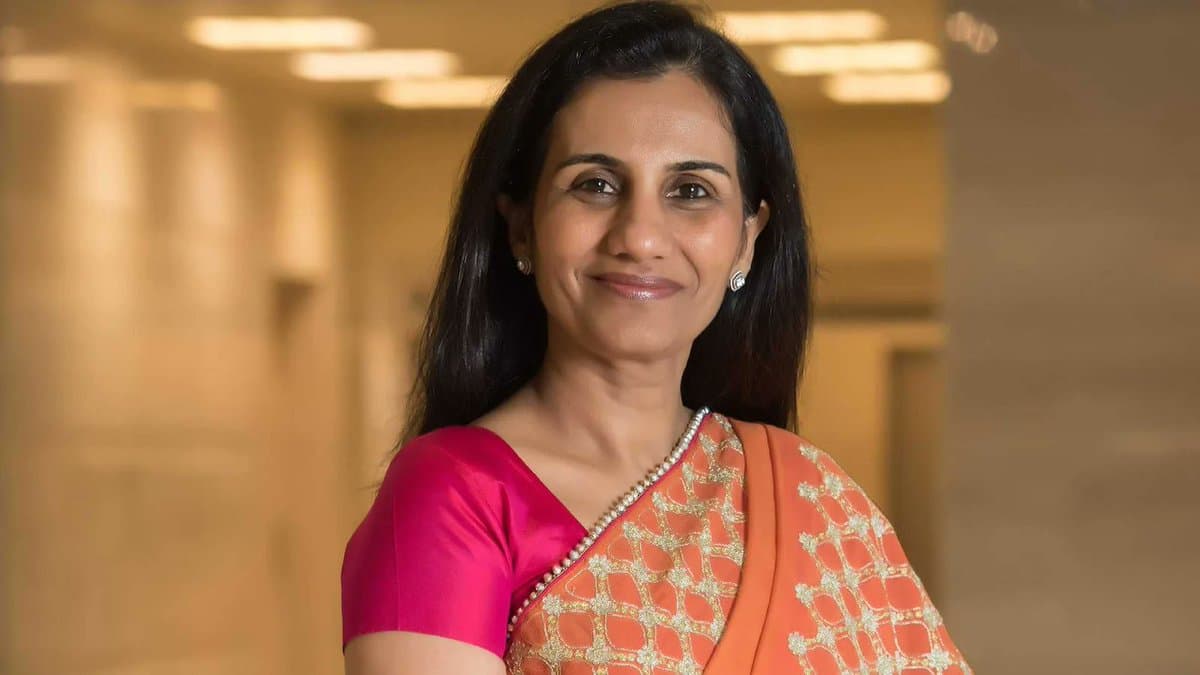
Once upon a time, Chanda Kochhar was known as one of the top influential women in India and was awarded the Padma Bhushan. During 2016, one of the shareholders exposed the mishappenings of illegal loans. Many investigation agencies, like CBI and Income Tax have taken up issues regarding Chanda Kochhar as she was the managing director of ICICI Bank back then. She was accused of allocating loans to videocon group multiple times with irregularities. In 2017 there were constant allegations and scrutiny of rumours and conflicts regarding ICICI loans. We all know the Videocon brand and its popular products. It is a Mumbai-based company which provides home appliances. Videocon hit the loss and downfall due to various investments in the gas, semiconductors, retail, power, Insurance and Telecom sectors.
Let's understand how the scam unfolded. Venugopal of Videocon had created a company named Nupower Renewable, of which 50% was held by Kochhar family's associates and 50% was with Venugopal. So the Videocon founder sold the rest of the 50% shares to Kochhar, making it 100%, and sold it for just 2.5 lakh rupees.
In 2009 and 2010, an amount of 300 crore was sanctioned to Supreme Energy Company and eventually, that amount was shared with Pinnacle company, which was owned by Deepak kochhar, the husband of Chanda Kochhar. It operated through Shell companies and the amount was sold at just 9 lakhs rupees. Chanda Kochhar was the managing director back then, so she was under investigation by the CBI and Income tax for a 64 crore bribe. This news has created massive controversy across India. It is alleged that ICICI group has provided loans up to 3,250 crore at multiple intervals.
Bura Anirudh Yadav
July 24, 2026
 Economy
We all know how important edible oil is for domestic use. It has a market value of worth 2.28 lakh crore. India imports almost 60% of edible oil in almost crude oil form; another 40% is produced in India. In 2023, we imported almost 47,295 tons, 804,000 tons in 2025 and finally, in 2026 almost 3 lakh crore worth of imports from foreign land. It has increased almost 17 times more than before. The question is are we not aware or skilled enough to upgrade ?
India is one of the largest importers in the world. We import sunflower oil from Russia and Ukraine, soybean oil from Argentina and Brazil and Palm Oil from Malaysia and Indonesia. It all comes from crude form without any refinery procedures, with refinery it would cost more. According to data around 2000 to 2500 crore loss per year, due to lack of edible oil refinery work, the Indian Vegetable Oil Producers Association has requested the Prime Minister Modi for reassurance to protect their indigenous work and employment which is moving outside the country.
We are importing a large chunk from Nepal, but the interesting fact is Nepal does not produce in their homeland, they import then refine and sell it to India. Actually, it is a long and lengthy procedure from import to refinery, then production to packaging and supply. It creates massive employment for everyone and economic growth happens overall in Nepal.
India has to shift its stand and produce 100% of edible oil to export various countries in large scale. We have to reduce external dependency to enrich our country. The undermining rupee's value would only regain if export get more than import. One war situation or economic crisis, if western countries stop supplying exactly like the LPG crisis. It would impact the nation in all aspects.
Bura Anirudh Yadav
July 23, 2026
 Economy
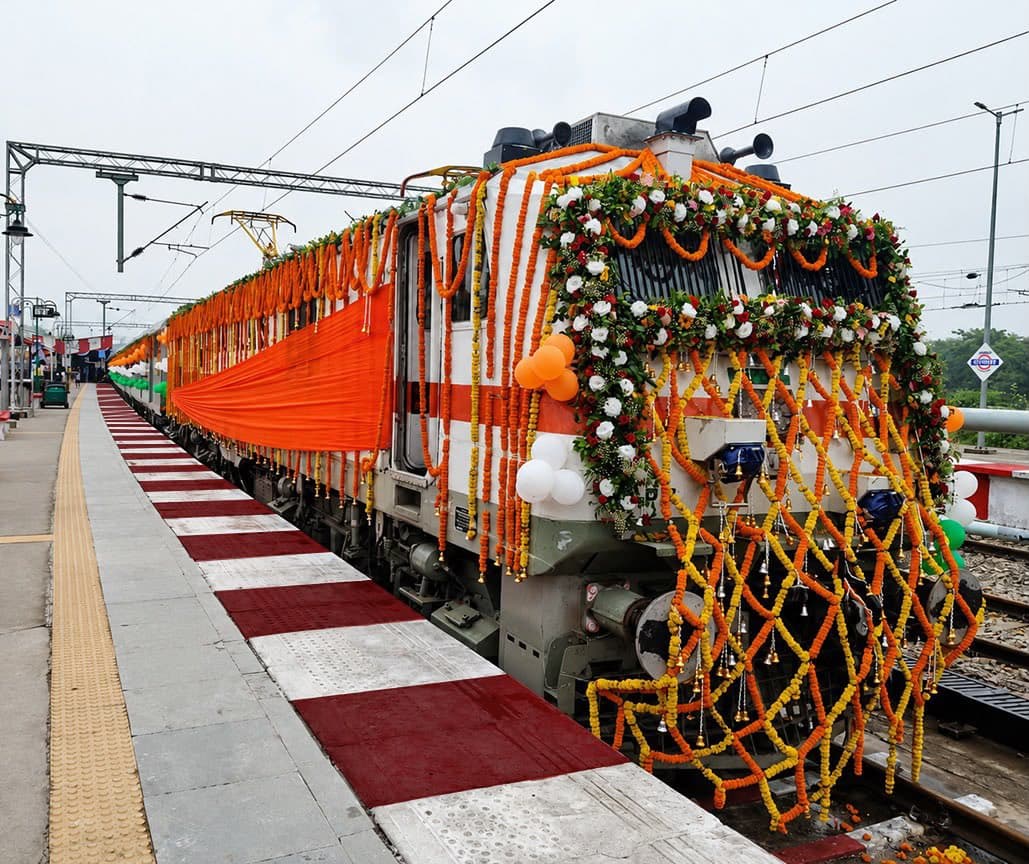
Indian railways is one of the largest organizations which operates for all the 150 crore population of India.
We heard Indian railways were built by the British. Yes, it was built but only for business purposes; the workers, land, execution, wealth. Everything was Indian, but most of the steel used to come from the British.
The Indian railways has one of the 4th largest rail networks with 68,525 km of access along with approximately 25,000 trains operating on a daily basis. It is one of the largest organizations after the Indian army to provide large-scale job opportunities. Almost 14 lakh workers work for Indian railways.
Revenue
It earns about 2,78,000 crore in revenue annually. It is a big profitable earning right, but its revenue comes from 28% from tickets, 65% from goods train carrying coal, cement, iron ore. 7% from MSME goods, advertisements, movie shoots, food, tenders, land, rental income and a few extra charges overall as convenience charges.
You might think Indian railways are earning great profits, but actually not. It is in losses all the time, but how ?
* Firstly, the salaries of the employees and for retired employees pensions.
* Maintenance and operations of all trains.
* Building new train tracks and routes.
* Cleanliness (Especially Gutkha, Paan, Tobacco)
* Tentatively 2 crore people travel without tickets.
* Violence, protests, train delays.
* Pillow and bedsheets theft.
* Railway property damage.
For such reasons, it gets extremely difficult for railways to operate and maintain, which leads to losses and restrictions. The government's budget and support makes railway work efficient. The simple logic here is the government is allocating all those funds from taxpayers money, which is people’s money. If you waste the government's resources and public property, you will be charged anyhow. So, the government deals with all these profits and losses together.
* It has an expansion plan of creating new trains and routes, increasing per day to 15 km of new tracks.
* Creating modernized trains with new facilities, reducing the general stores and increasing compartments.
* Constructing new stations across villages and interior areas.
The profits that seem perfect are actually not in real numbers and reality. Managing such a large institution needs constant monitoring and management. One single train delay can make things worse for almost the next 3 to 4 days to manage.
Bura Anirudh Yadav
July 22, 2026
 Economy
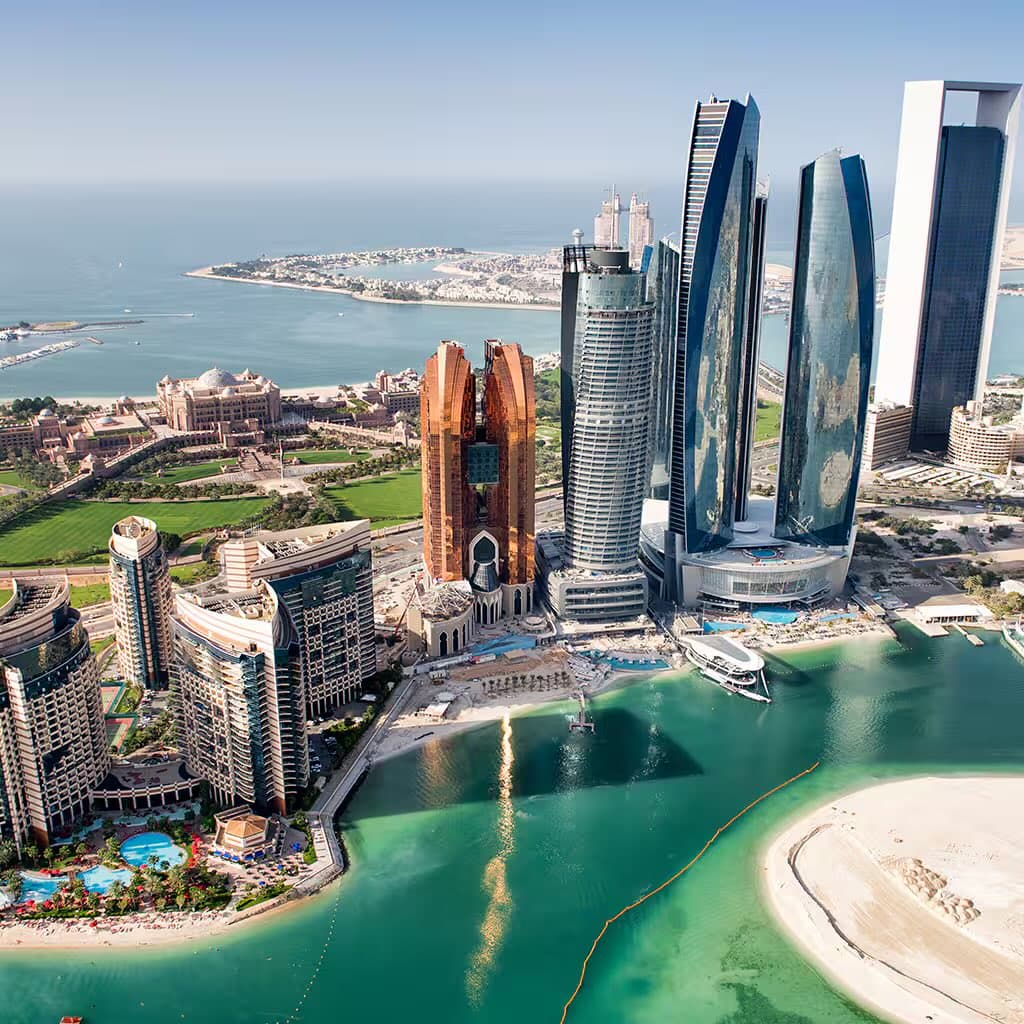
Back in time, during the 1890s, UAE survived through fishing and pearls which were their major occupation. The UAE was made up of 7 kingdoms. After the British left, all the kingdoms collaborated and created a new country. During the 1950’s Sheikh Rashid was the ruler. He is also known as the father of Dubai. In his visionary leadership, a place with no water resources and severe conditions has seen major changes. During those times, Sheikh Rashid wanted to expand Dubai as a trade, finance and tourist hub.
Initially, as it was covered with coastal regions, the ruler initiated the construction of ports across the UAE. They constructed port Rashid and made it a trade hub. Most of the world’s ships would halt and pave the way towards trade. As they mostly focused on trade and ports, Dubai started growing better than many places. They focused on skilled labour to build better infrastructure facilities, which later gave them growth.
*The real growth and change came when oil was discovered, and it started making millions of dollars. Dubai established themselves as an emerging nation but they had to build air space for UAE, so during those times the world's air traffic was secured by Pakistan as their safe place to use. Pakistan was strategically located a good location with proper communication systems. Due to that, Pakistan grew its civil aviation sector to great extent.
*The Dubai ruler wanted to do the same by giving Pakistan a huge amount. He started bringing aircraft from Pakistan. Eventually, from imports to making their own flights. Later The Dubai aircraft and flights became a hub of refueling stations for all countries dominating Pakistan.
*Another big milestone for Dubai was its tourism sector as it is a coastal place with tourists keep on visiting to experience Dubai. They started construction of hotels and restaurants by adding glamour to it by calling all the wealthiest, most intellectual people so that tourist growth would increase across the world towards Dubai. Scientists, actors, athletes, business man, and singers can get citizenship but will never get voting rights. To build such a large scale infrastructure, the requirement for water needs 10 times more than before, as the UAE is full of salt water and coastal places. The ruler initiated a desalination approach where seawater could be used as drinking water.
*To attract more visitors, the tax system of Dubai is unique and less compared to the world. These benefits allowed citizens to have a better lifestyle and earning capacity of profits. The investors and business leaders can feel secure while investing in Dubai. When it comes to security, it is one of the best cities for security and safety of citizens. A crime in UAE would deal with extreme punishments and penalties.
*To become Dubai and to construct such large-scale infrastructures it took years of time and need for skilled workers who were hired from India, Sri Lanka, Pakistan, Bangladesh, Nepal. As the labour cost was less and through the kafala system, where private players hire people from other nations and provide employment.
*There have been few incidents reported of manipulating the workers by making them sign wrong contracts and grabbing passports even after the contracts have finished. These led to severe allegations against the government by the media saying it was modern slavery. The women's laws are also extremely strict and laws try to create hindrances to freedom according to the western nations. A population of 4 million people overall with locals and skilled workers has created one of the richest countries in the world. Once upon a time it was called dry and tough with no scope of development, but today it is one of the safest countries in the world, attracting the world as an investment, trade and tourism hub.
Bura Anirudh Yadav
July 21, 2026
 Economy
In 2010, the US dollar was equal to 45 rupees. In 2020, it was 74 rupees and as of today it is 96 rupees against the US Dollar. On the one hand, the Indian economy is booming and has a great ranking, reaching up to the 5th largest economy in the world. The governments and people praise and applaud the initiatives taken in India.
Firstly, the currency is a valuable asset which world runs on, but who decides these currency values graph and its ups and downs ?
The answer is, nobody decides the value, it is decided based on supply and demand. The US dollar was finalized as the major trade deal across the world, as it created trust, had most gold reserves and control over the world after world wars. It has one of the best financial institutions and the size and strength of the economy also played a key role. We have 195 countries with 180 different currencies but the US dollar is considered the most trusted one. In exchange for goods from any country, people adopted the US dollar as the major currency trade.
* The factors affecting the currency value are inflation. Whenever the prices go high for goods, then automatically the currency value drops.
* If the government starts importing more goods than exporting things, it would create more challenges in rupee value. As we are dependent on others, the government has to pay more money in dollars. The cash flow moves out rather than coming in. The imports and exports are basically current account deficits.
* Our government has loans and debts, one is external and another is internal debt. The government takes loans for schemes, developments or even imports which create hindrances in currency value.
* Interest rates are another big challenge. If they are high, there is less business, so the financial institutions smartly keep things less to protect the overall impact, but it has an impact on the currency.
Whenever the currency value goes down, our Indian goods and products value gets cheaper outside our country, but whenever we export more goods than import, we will be on a profit side. Having a rupee value going down can create panic and signals towards betterment, but it would also improve more investors, capital flow, job creation from developed nations.
Bura Anirudh Yadav
July 17, 2026
 Economy
We all know about Rajasthan for its unique culture and royal palaces. Those king-size weddings of bollywood actors and celebrities. All of us admire the pink city and beautiful lakes with that hospitality of loving people. In India, every place, city or town you can see the Rajasthan community selling delicious sweets. Do you know once upon a time in the late 1980s it was under Bimaru, known for poverty, water scarcity and devastating circumstances in rural areas which lacked agriculture, industry and education too. The natural climate and environmental crisis have also made situations even worse with sand deserts createing large scorching heat waves reaching up to 51 degrees Celsius. It is unbearable to adapt for the ordinary person and impacting agricultural production overall the state.
How did they change themselves from such conditions?
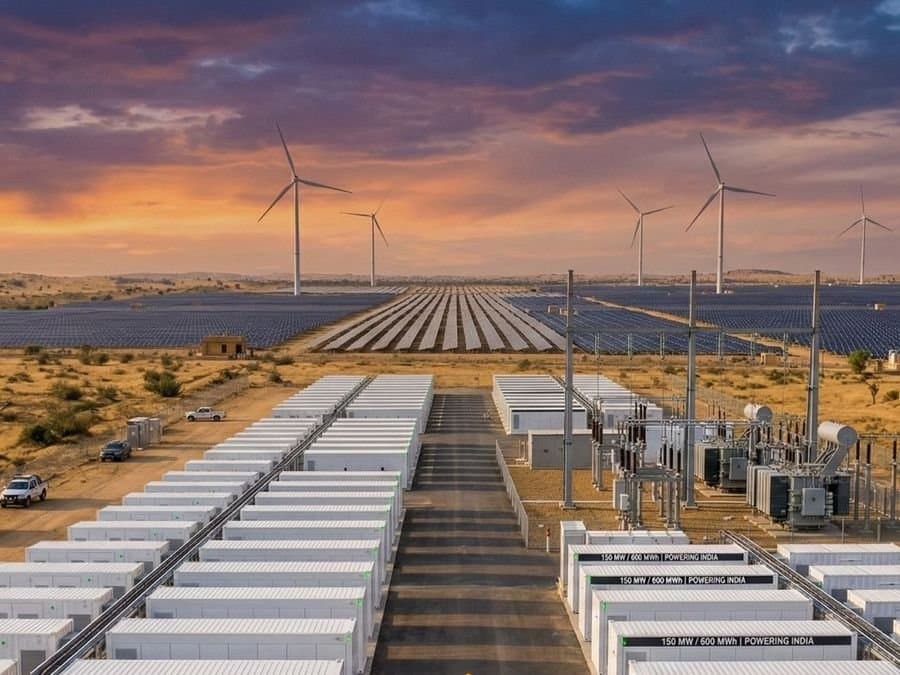
Today Rajasthan economy has been growing at a speed of 16.7%. It might have a harsh climate and fewer resources compared to other states. Yes, but they have one resource which is abundance of land bank, which can absorb hot scorching sun and heat, which has literally become an asset today. Back in the 1980s and 1990s, it was never considered an asset. Today, they are one of the largest solar power producers after the initiation of a solar power mission by the government of India. Everything has changed and became a massive economic boost. It is one of the largest clean energy producer, and also generates wind power. Recently, the natural resource of lithium, which is equal to gold for Rajasthan.
Lithium basically helps with the recharge of batteries, smartphones, chips, laptops and electric vehicles. India imports almost 80% of that from other countries. In the future Rajasthan and J&K will be the future of lithium industries. The land which lacked water, soil, agriculture, rivers, or coastal regions but with just land bank and open spaces, has changed the rural areas with tech-based renewable energy. Rajasthan is the best example of transformation, and it has proved how harsh climatic conditions can be changed with technology and integrity. It has 7 airports, 415 industrial parks, tourism, agriculture, food and hospitality and education. The state has transformed, and is far ahead of other states in economic growth. Today it has 17 lakh crore GSDP of the entire state, attracting 108 million tourists yearly and leading in renewable energy.
Bura Anirudh Yadav
July 16, 2026
 Economy
Our hearts feel wrenched and pained during war situations across the globe. Everywhere you see destruction, from infrastructure to human beings killed without any mercy. The devastating sound of bombing missiles and gun fires trying to occupy each other's territories. Trying to show dominance and power to gain control. We recently saw wars in Ukraine and Russia, Iran and Israel, India and Pakistan and more. For us, it is pain, problem and pressure. For the defense companies, it's absolute profit.
Imagine a company that makes weapons. If there are no wars, how will they survive ? Yes, they invest most of the time being around the governments to gain a good contract. These defense companies basically fund politicians in elections, which puts them in power for a long time. That power makes the defense budget increase more and later contracts are given to those private defense companies.
During the conflicts, defense stocks have seen a 30% rise within 3 weeks of any war. These conflicts are sometimes natural, sometimes they are created, and sometimes they take advantage of situations. There are few people who are always willing to create wars across the globe always. There are a few famous companies, like Northrop, Raytheon, Lockheed Martin, which are US-based companies that are always in contact with governments.
In other businesses, it's purely customer-based but the defense business is dealing directly with governments. The more wars, the more production of weapons happen, which are later sold at high prices. Overall, the more it is sold, the country's economy will grow with revenue pumping upwards. It is always a booming business with never-ending demand. The governments, politicians, businessman all work together in the world of wars.
Bura Anirudh Yadav
July 15, 2026
 Economy
We have been frequently hearing from governments, leaders, media, business and investors using the word FDI and saying it has been reduced or increased in this financial year. FDI term is used in parliament and by entrepreneurs on a daily basis. Have you ever thought about FDI, and what benefits we have?
Foreign Direct Investment is basically a person from another nation investing in India. The companies which have come from the USA, UK, Canada or any other country are FDI. They not only bring capital but collaborate with governments, construct industries, companies and development.
The advantages of FDI are increased money flow for development purposes, improved employment and opportunities for local citizens. Increased revenue and long term growth for India, which also enhances society's thinking in terms of growth. Along with money, they bring skills, knowledge, expertise and exchange of goods. It brings governments and countries help to form good relations and builds strong business ties. Our country would become economically stronger and build value across the world. It would create competition and avoid the monopoly of one entity.
There are a few disadvantages also. Whenever there is FDI, our local investors will lose their value or presence. Like British east India companies back in history would create dominance in India. External involvement in local issues would increase. The wealth they earn would move back to other nations rather than staying with us. Economic dependency on others would create tensions and blackmail at time of crisis. It can create loss and exploitation of employees by paying less and the government losing control over major decisions. FDI has brought growth and development but, at the same time, focusing on being self-reliant and self-dependent would give us freedom and leverage to be in control during economic and natural disasters.
Bura Anirudh Yadav
July 14, 2026
 Economy
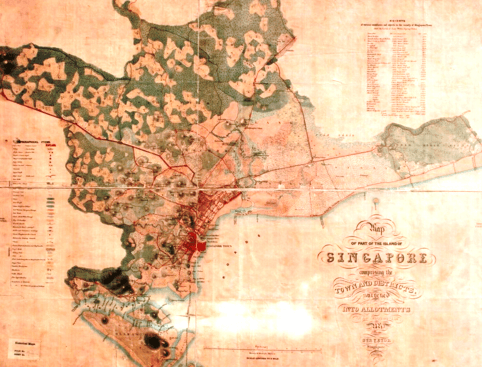
How could such a small nation create such large changes ?
Our prime minister and many other people across the world have praised Singapore and tried to cope with their model. The story of Singapore is truly inspiring to all the developing nations in the world today. Singapore is 4571 times smaller than India, with a small land area with coastal regions surrounded with islands and ports. The history of Singapore was extremely complex and crucial due to 30% of world trade happening from the Singapore region. It is a strategically located at an important place. The Portuguese and Dutch always had conflicts over occupying the Strait of Malacca, Sunda route and showing dominance over ports. Eventually, the British East India company occupied the Singapore region.
Due to British influence, the trade routes got popular. Most of the routes were only used for British trade purposes. The port of Singapore was the base area, which became ports hub back then. The British only thought of trade and extracting money but never about the local people and society. Which turned Singapore into extreme poverty, hunger, violence, crime, drugs etc. People started seeing it as a place of crime. The state was also complex in terms of population and regions, many communities were divided.
After the British left, the Singapore founder Lee Kuan Yew took charge of the country. He made a massive transformation from a British colony to Singapore. He established the national flag and anthem and united the people first. Due to the Chinese presence, local tribes and other communities had massive differences, which led to frequent protests. Lee established firm policies to stop all corrupt and illegal practices in the state. Development and foreign direct investments were allowed and EDB was created for economic purposes. From extreme circumstances to one of the safest countries in the world with a great economy. The government schools which have been created with less resources and quality education by the Delhi government were copied from Singapore. The impact of such a small island nation is truly inspirational to the world, many countries adapting policies from Singapore.
Today, Singapore is one of the top countries to have the best business environment and tax planning system and has a strong work ethic and quality in terms of administration. It is one of the safest and most expensive cities, from struggle to one of the safest cities. PM Modi said it is an inspiration to all developing countries and the contribution of Lee, its leadership and Singapore as leading nation in the new era.
Bura Anirudh Yadav
July 13, 2026
 Economy
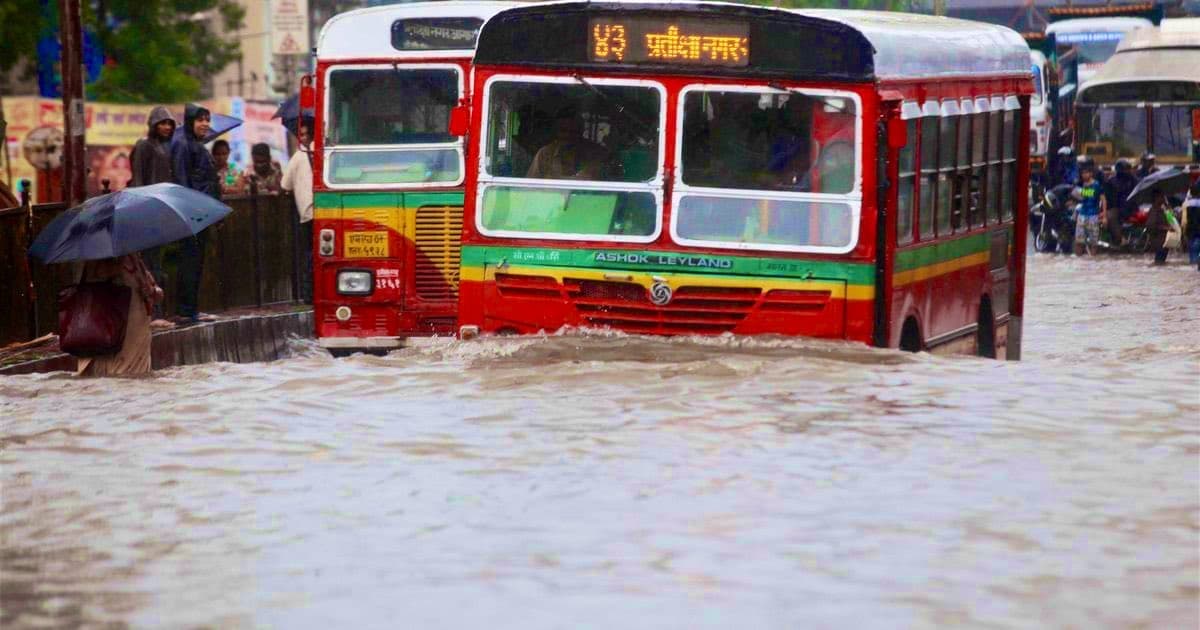
The rainy season has begun with full of water flooding across the streets, from north to south and east to west. The sudden humid climate which irritates us, after that a massive rainfall follows for the next 3 days. That's the situation which has been happening for the last few days now. We all love rain and once upon a time as kids, we all used to play in the rain. We used to prepare paper boats and play with them in the rain. We also played football and cricket in that rain, which we had great pleasureble time. We also go through some kinds of obstacles due to these severe rains. While travelling to the office or school, we suffer from massive water flooding all across the streets, it is difficult to travel with cars and bikes honking on roads or due to traffic jams.
Have you ever thought of the impact of the Indian economy due to rainfall? What are the consequences our country goes through? How much burden we go through during this time. The monsoon season is called the real Finance Ministry by a few individuals as it decides the real future of India.
Agriculture
Whether it rains or not, it's always a problem for us. Almost 50% of India is dependent on agriculture. From soil erosion to its nutrients, crop failures or growth. Farmers are the major people who get impacted due to rain, as they would lose their livelihood opportunities.
Supply chain
Once the heavy rainfall begins, after which the water logging and excessive drainage leaks creates problem, the entire transport and logistics ecosystem is disrupted. Especially in urban areas and top cities like Mumbai, Delhi and Chennai, this creates a financial loss of 1000 crore a day. That's the estimated value of loss per day across one city. What about the other cities?
Jobs
From street vendors like samosa sellers, tea stalls, fruit sellers and other small businesses which abruptly lose their earning source. The governments, municipal authorities and police forces struggle to protect them due to severe rain water impacting the streets.
Due to all these losses, the chain system of India reacts to the monsoon with farmers and crops being impacted. It creates a hindrance to revenue and the supply chain of goods. The finance ministry holds an estimation of the next budget and makes changes to those losses. The food inflation and prices increase, the export stops, the vendors and businesses get impacted due to water logging. It creates chaos and impacts the banks. RBI increases the interest rates to balance the economy and the business owners would get loans on higher prices. So all these issues are interlinked and connected, the monsoon decides the future of India with brutal chain reaction.
Bura Anirudh Yadav
July 9, 2026
 Economy
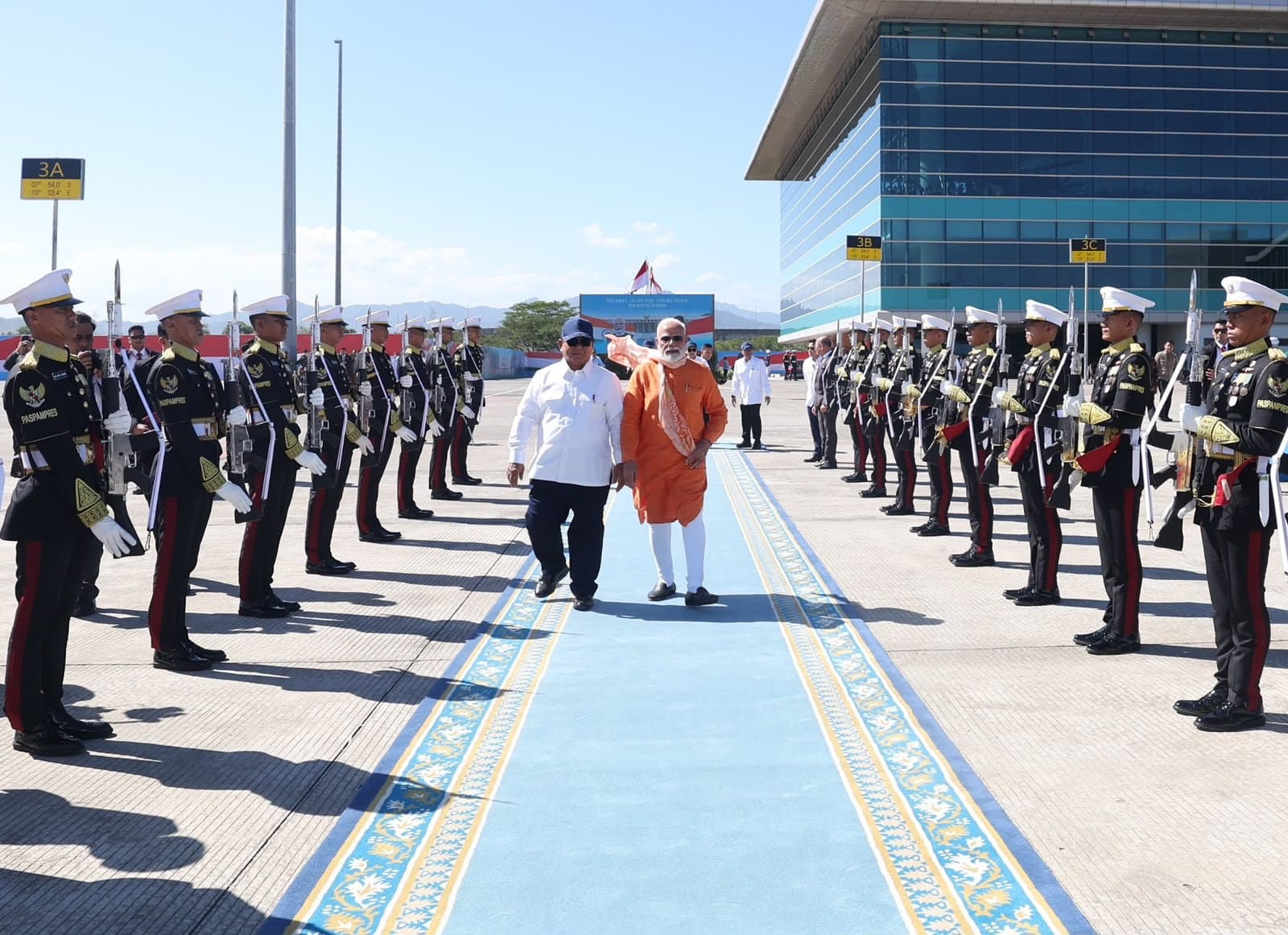
Prime Minister Narendra Modi visited Jakarta on a 3-day visit and shared deep economic and bilateral relations with Indonesia. He was given the highest civilian award by the government of Indonesia. While on his visit, he spoke about various sectors of trade happening and how both the countries are trying to exchange values and economy. The Indonesian PM Prabowo Subianto said his DNA matches with Indians. He praised PM Modi for his governance and policies, and said he copies his work sometimes to develop Indonesia.
Key Highlights: India–Indonesia signed major strategic agreements.
* Indonesia to buy BrahMos missiles from India.
* Astra Mk-1 missiles to equip Indonesian Su-30 jets.
* India and Indonesia to strengthen maritime security.
* More military training for Indonesian officers in India.
*UPI–QRIS cross-border digital payments to expand.
*Indonesia to adopt ONDC-based digital commerce network.
* ISRO–BRIN space cooperation strengthened.
*New pact on telecom and emerging technologies.
* Education ties grow with IIM Bangalore campus plan.
India and Indonesia deepen medical regulatory cooperation.
*Cooperation on the strategic Sabang Port project.
*Direct Delhi–Bali flights to increase.
*Partnership on nickel and critical minerals.
*SAIL and PT Krakatau Steel to boost steel cooperation.
Bura Anirudh Yadav
July 8, 2026
 Economy
The Swiss bank is always in the news. We keep listening, about crores of money being hidden or money going out of India frequently. Have you ever thought about why people keep their wealth only in Swiss banks rather than any other banks? People who have accounts in Swiss banks have no identity or governments have high difficulty in tracking those who are hiding behind the number-based accounts.
Swiss banks have unique policies and rules. In 1713, they announced a law saying people who save money in our banks would never ever share details and keep their accounts secret from the rest of the world. This regulation gave all the elite people to protect all their wealth. People started opening bank accounts from various countries, which made banks popular.
In 1934, it implemented another law saying sharing information was a punishable offence and people would be jailed for 5 years. This built confidence among many powerful people. Switzerland has never fought a war in a long time and people trust their initiatives and security. It has never created any controversy and always acted as politically neutral. So, citizens from various countries keep their money and most of the revenue comes from corrupt, drug lords, unstable governments, kings, political circles or people who have unacceptable revenue have started saving their money.
Swiss banks verify the profile thoroughly before opening an account, but the account's money is not monitored from where it is coming. All these rich and elite people send or open accounts from 3rd party profiles, Hawala and names regulated to other persons or governments who have less credible and weak financial rules. It has rules which are so unique that ordinary people can't open it. You should have at least 1 million Swiss franc currency to run the account successfully.
All banks provide IFSC codes, names and personal details, but Swiss bank provide code and number-based accounts, It gives absolute secrecy to the costomer. In India, whenever you keep your money, you get interest right but in Switzerland you have to pay them interest to protect your money and to keep your identity safe and secure.
Due to this unique political structure, the banking system has made Swiss banks popular and many individuals, criminals, business tycoons, politicians, drug lords, dictators kept their unorganised wealth secretly without knowing the identity of the individuals and to hide from government scrutiny.
Bura Anirudh Yadav
July 7, 2026
 Economy
Silver is the new gold as per experts.
The world is moving forward quickly and advancing in every other sector. The dependence has increased in all the sections of precious metals. As you recently saw on the news, that a sudden crash in silver prices has decreased. All the experts were predicting that Silver would be the future. Silver will cross more than gold. Then how come silver prices have increased and fallen drastically? It has been predicted that 50% of rates have been reduced so far.
During November 2025, the price was about 1 lakh rupees per 1 kg of silver approximately, but as of 2026 February, it saw a major skyrocketing phase marking 4 lakh rupees per 1 kg of silver. It was 3 times the growth from the past. Silver has a small market and people see it as investment and has strong industrial demand. Whenever there is some kind of financial issue, currency depreciation or geopolitical issues, silver will protect us from financial strains.
Why such high demand for silver all of a sudden ?
It has been proved that modern technology is highly dependent on silver. From Electrical, Thermal, antibacterial and corrosion resistance. Silver is the major source of production for modern technology. It is used in Solar, EV vehicles, Electronic gadgets, Medical equipment and Defense systems.
After AI entered the market and started prepareing data centres, the silver requirement has increased. It has created strong investment demand for future potential. A few rumours and speculations have also impacted the rise of silver. The expectations of society have risen so high that prices have increased drastically and fell immediately. Silver mine's extraction has also been reduced, and its market size is small compared to gold, so the volatility and fluctuations are normal in the silver industry.
Reason why it crashed.
* Speculations and high expectations.
* Massive price rise instantly and expected high returns.
* Increase in US dollar potential.
* Geo political risks have also impacted demand and supply suddenly.
* Inflation and interest rates changes.
It has created waves in the world, but the reality is, many experts say that silver will be the future. When we look into the demand and requirements of the future, the prices have high potential in the long run.
Bura Anirudh Yadav
July 6, 2026
 Economy
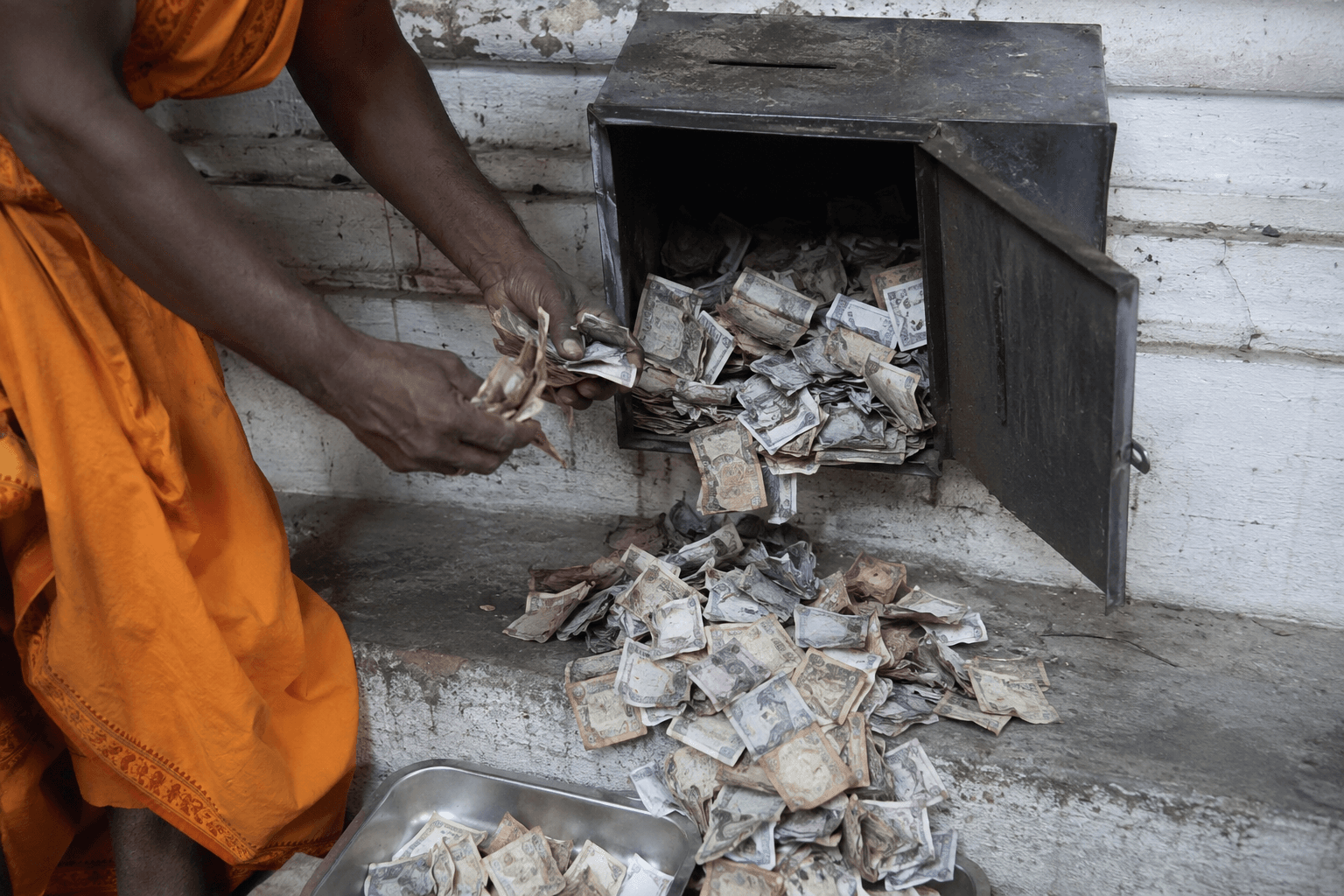
India is spiritually rich, its history, philosophy, and culture have always been inspiring for generations. It has a devotional presence with deep values and ethics. The recent incident has shocked the nation, a few strong allegations of Ram Temple Donation Funds have been missing, which sparked a big controversy across the nation.
Reportedly, almost 80 lakh rupees have been found along with foreign currency in Ayodhya as per the SIT. Many political and spiritual organizations have been questioning the temple trust and members. It was not only in one temple, but few top worship places have been accused of fraud, misuse and manipulation.
The question here is, after being under strict security, how could they steal the money? Who is behind this misuse of funds? What about the ethical and moral values of the trust? Why are people not scared of those funds, which people gave for the temple's welfare?
According to a few reports and statements, India's temple economy’s value is worth 6 lakh crore. It is around 2.3% of India’s GDP. Many schools, colleges, roads, hospitals and social welfare help are happening only because of the temple economy. It has raised serious questions for the administration for not being able to handle serious allegations against the popular temples. Almost 140 million jobs in the country, which have been created directly and indirectly. After this incident, almost 40% of temple visitors have been reduced and people stopped donating funds.
If, in the future, these kinds of scandals increase and people's faith is being hurt, the number of public visiting temple towns would see drastic downfall. The new generation is comparatively less spiritual and less inclined towards belief in god or spirituality. The world views it as an opportunity and could demean the reputation of our culture and values. It would impact the jobs of people who are totally dependent on temple towns. The scamsters who have been behind these kinds of atrocities, should be punished.
Bura Anirudh Yadav
July 4, 2026
 Economy
There was a time when India had only cash transactions, almost everyone was dependent. Using a bank checks was prestigious and royal back in those days. As time quickly moved, the master cards and Visa cards for credit and debit cards have entered the markets. People never really believed in cards and the withdrawal system of currency. Eventually, people adapted to new systems and became totally dependent on Visa and Mastercards.
As the new India began its digital revolution journey, it has improved significantly and developed. During the initial days of UPI, it received massive criticism across the nation, saying
* Who would believe this, or how will the poor use it?
* Lack of Internet and mobile phones facilities is this possible ?
* People earn 100 rupees a day, and you expect people to spend money online?
* Few political leaders have made major sarcastic jokes saying that to buy potatoes and tomatoes. Will people pay 7 rupees online ?
Another big challenge hit India as demonetization of 500 and 1000 rupees notes were banned. Many of us felt the struggle to stay long durations to withdraw cash from ATMs. This has created a major impact on people, switching their lives to online and digital payments. From using debit and credit cards to UPI transactions now. Paytm, Phone Pay, Google Pay and many other platforms have improved the cashless economy of India. All you need is a bank account, mobile phone and QR Code to access this transaction facility. Usually, Visa and Master's cards worked as middleman from banks to customers, but UPI eliminated that system and introduced direct bank and customer service.
Initially, trust was a big issue, as it was a big question, about linking mobile phones to bank accounts. After multiple campaigns and the COVID-19 pandemic, people had no other alternative but to use UPI. This created large-scale momentum across India with 8,800 transactions a second and a total of 314 lakh crore worth of transaction values after few years.
66 crore people use digital payment tools and many other countries, like Greece and African countries adopted UPI. The world is viewing it as a positive sign and is eagerly interested in the same kind of systems, which eventually harm VISA and master cards. UPI has become a problem to many US based currency transaction models.
Bura Anirudh Yadav
July 3, 2026
 Economy
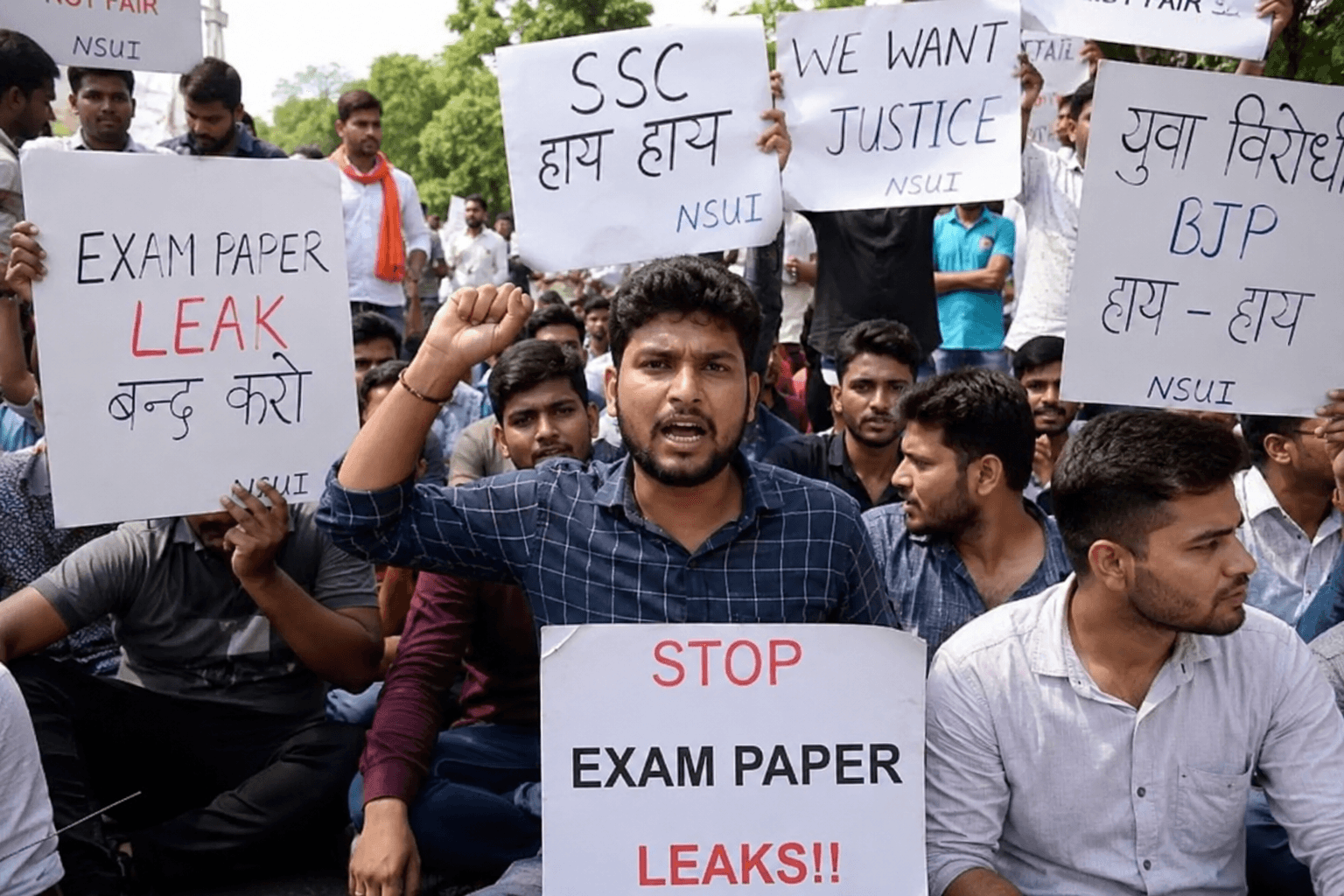
I woke up in the morning with a bit of heavy heart and anxiety. It was my exam day, which I had been preparing for the past 6 months. I invested my time, energy and family resources. Suddenly I saw the news, the media platforms debating over the paper leak and people protesting against the government.
Just before the exam, a few mafias, corrupt, incapable and gamblers started trading over exam papers. 5 lakhs, 10 lakhs, 15 lakhs that's the price of a 1 single question paper. WhatsApp and telegram are the major platforms for circulation of paper, as per the government. This situation looks tough and unimaginable.
A few questions in every student's mind.
* Why is the government not able to conduct the exam properly ?
* Why there are frequent paper leaks ?
* Don't they understand the students' pain ?
* How much time and energy are we investing ?
These are a few questions which everyone must go through. Did you ever think of how much money we have wasted on this petty exam leak?
To conduct an exam, the government spends almost 50 to 150 crore rupees. From papers, examination center, biometric, security, transportation and many more aspects. Whenever a paper gets leaked, it happens mostly in state examinations as the loopholes are more and lacks stringent procedures. But when the exam paper leaks, to control the damage and for re-exam procedures. The government spends almost 1000 crores on court cases, investigation and re-examination.
Another big role of digital tools is being halted for a few weeks before exams or ban on communication platforms like telegram and other applications. It would cost around 2000 crore approximately or sometimes even more. On average, 10 to 12 exam paper leaks happen across India. The system and government procedure have to take strict and stringent action against the culprits, as they are overall creating hindrances to the future careers of students and big economic loss of 15,000 crore to 20,000 crore. From governments spending money to student preparation and investment. When you consider everything, it is one of the biggest losses to our nation.
Bura Anirudh Yadav
June 30, 2026
 Economy
The unexpected low rains and trauma.
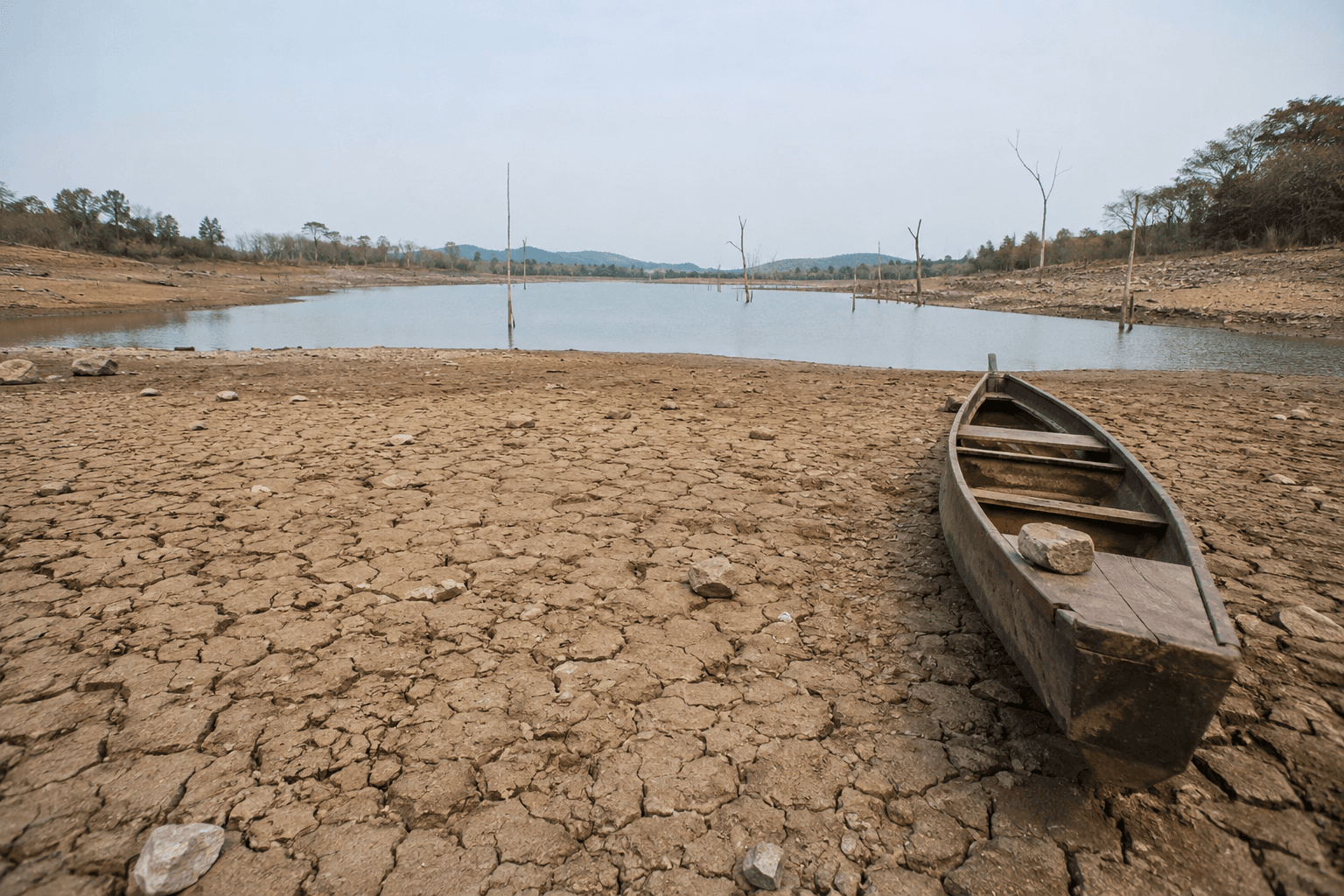
The scorching sunlight and heat waves across India, have created havoc for everyone. People are pressurized and pained due to such circumstances because of heat. From dehydration to sweat, from juices to air conditioners. People are demanding facilities based on their requirements as per the climatic conditions.
The major issues are farmers being affected due to less rainfall and droughts across various parts of the country. It has happened after 146 years, with June being so dry, with 40% less compared to previous years. The states like Uttar Pradesh and Bihar have had severe water shortages for the crops and in Maharashtra cotton and soya have dried up. A few states, like Gujarat, Madhya Pradesh, Jharkhand and Chhattisgarh have also been impacted.
The major reasons for less rainfall
* The El Niño effect, which is happening in the pacific oceans, and it has turned extremely warm in the middle of the ocean.
* Massive rain clouds which used to move across the earth slowly have not been happening, which delayed the rainfall.
* To get rain, you need strong sea winds to push air onto the dry land.
* The Indian Ocean is calm and normal without heating up like before.
The government of India has selected 111 districts across India which have been struggling for water resources, food prices, and water supply. These climatic and environmental changes need quick measures to deal with global warming from glaciers, water resources and rainfall issues.
The overall this year the economy would drop and the impact on food resources and cultivation of crops are being investigated. Especially the farmers who have taken massive loans and are eagerly waiting for crops, have taken a diversion to crops which are not seasonal or stopped due to massive water shortage, the Union Minister of Agriculture has told the media that farmers have to cultivate crops which consume less water this time.
Bura Anirudh Yadav
June 29, 2026
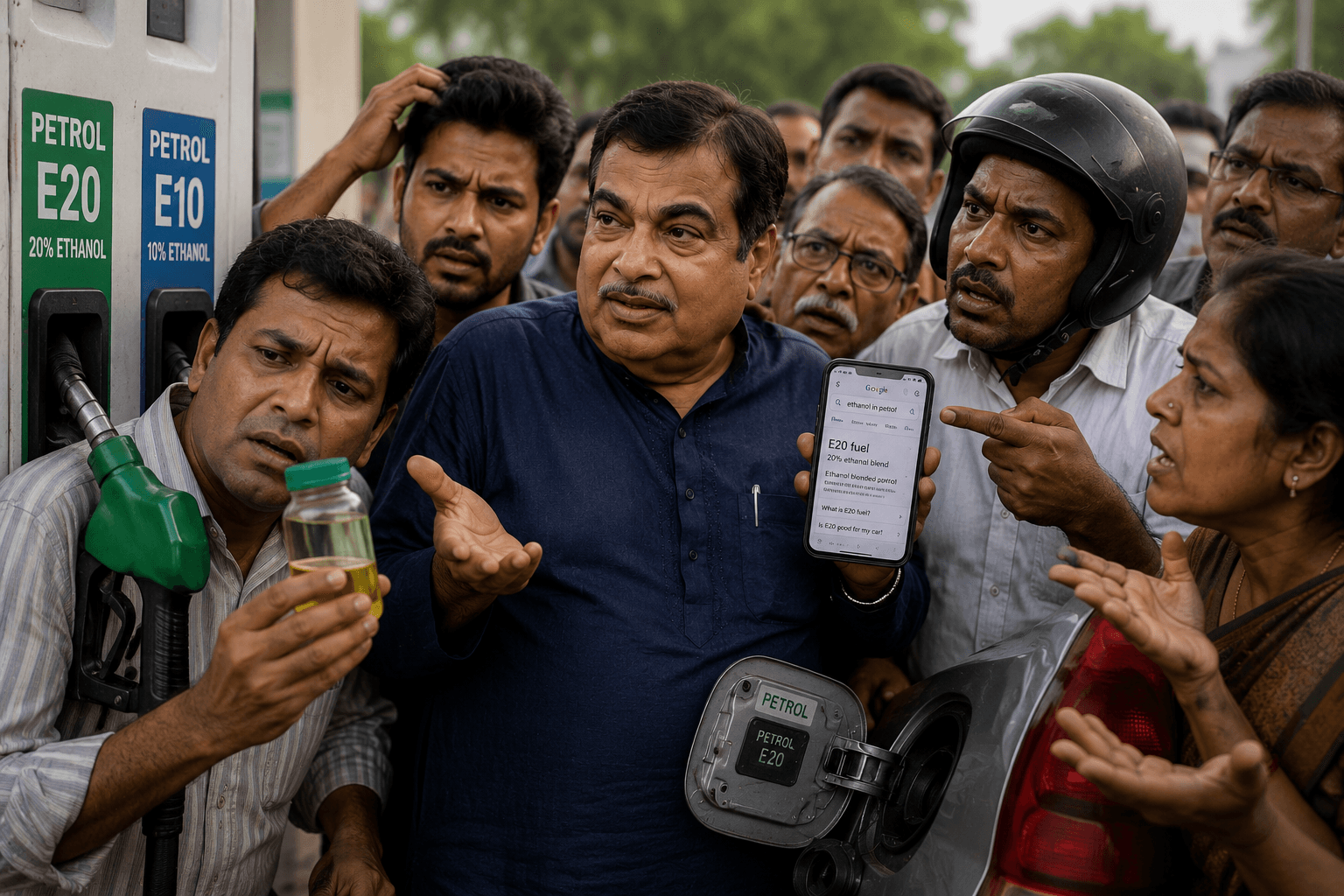 Economy
You have been listening frequently to the News of Ethanol blending. The E20 is making the rounds on television and people still have high levels of confusion and doubts about E20. Which is alarming to all and the major cause is the lack of practical knowledge and experience.
Is their any hidden agenda ?
Why their is so much confusion in public and governments ?
Why their is so much speculations going on ?
PM Modi also stated to use less petrol and diesel and work from home. After the LPG crisis and straits of Hormuz, which led to a major crisis in the world.
The major criticism from the public on E20 is
*Is ethanol going to damage our engines and vehicles?
Few people say it would react with rust. Vehicles which are before 2023, where Ethanols cannot work in those vehicles which are not BS6.
* Few studies have found 7% mileage reduction in vehicles and rumors have occurred about people calling for 20 % ethanol and few say 50% or 100%.
* It would reduce the challenges for the government to import and the burden on people for use of ethanol. In case of damage, there won't be any compensation.
* No Proper facts and reasons are mentioned in public domain.
* Major viral content which is trending on the internet is cabinet minister Nitin Gadkari's son. They both have companies which are doing business with ethanol-based products. The price skyrocketed overnight with a high rise in shares.
* Yes, as resources are vanishing and decreasing with time. We need new and modern needs, but is ethanol production that easy?
* The amount of water, sugar cane and maize which will be used is a natural process but the process of making it is highly polluted and factories are also in the red zone according to ecology.
* If we start using ethanol, what about the food we should cultivate? Will the water requirement be enough?
The media, words and statements are good.
But what about when it comes to practical scenarios?
The major question in public opinion is why the government is not able to provide proper information and facts regarding ethanol.
The government has to clear all the doubts and confusions on ethanol use clearly.
Bura Anirudh Yadav
June 25, 2026
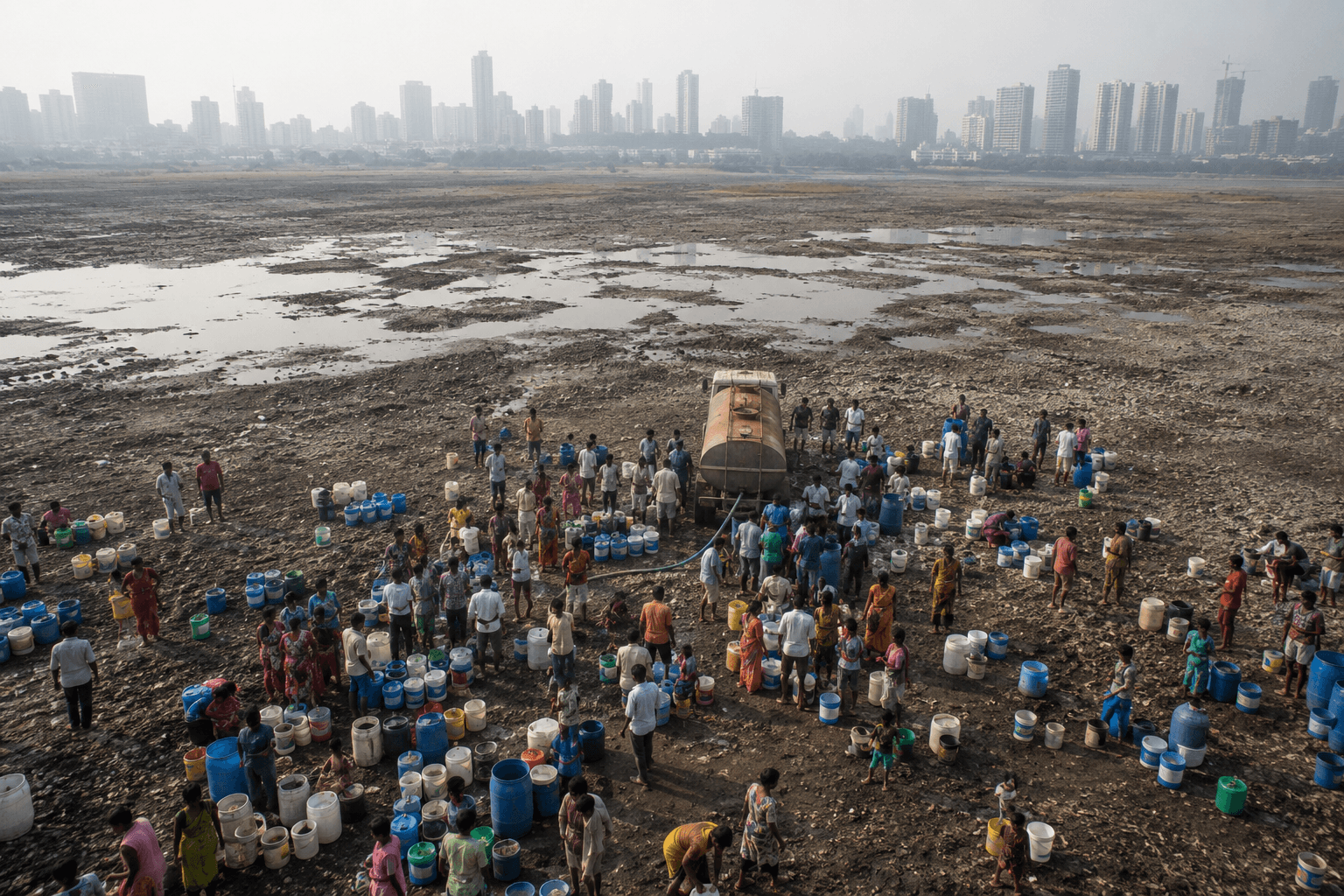 Economy
Aman: I am facing a severe water shortage at my home. In the name of real estate and illegal constructions. We have spoiled all our natural water resources.
Ayush: Yes, we have developed well, but we are not able to protect our nature. The system and government have to be more stringent.
You have constructed and bought a good house in a posh location, then you realize you have no water ?
The government says we have just 40 days of water left ?
This is current sitution of Mumbai. Sudden cuts in water supply for construction work and timings of just 30 minutes a day for every household. India’s financial capital, which has crores of deals every day but is struggling for water ?
2 crore population with taxes being paid, but why are there no proper facilities?
The Major Reasons
* Mumbai has no desalination procedure or development. Which is still on the papers.
* Most of the rain water is not saved and mixed into the Arabian Sea.
* Mumbai city water depends on 7 districts nearby.
* Still old British era water systems in some areas. The water mafia is trying to disturb the supply chain of water for commercial activities.
* Population and overconsumption of water in urban areas.
* Real estate and illegal construction which do not follow rainwater harvesting procedures.
* Mumbai does not have its own water storage facilities properly. Only 10% of water is left due to lack of rains.
This is not only happening in Mumbai but all urban areas. Last year it was bengaluru and hyderabad. Excessive use and climate changes with governments providing weak facilities or unprepared work. Can you imagine how much loss it would create, and it would directly impact our overall GDP.
Bura Anirudh Yadav
June 22, 2026
 Economy
The recent incidents which have taken place across the world are worsening the situation. From the USA to Iran and Ukraine to Russia. As the LPG crisis hit India, other economic halts have taken place across the globe.
India aims to take loans, due to the overall international situation. As the government has to give a fertilizer subsidy. According to data, 3.4 lakh crore subsidy burden and along with food subsidies. Then fuel-related pressure, impact of oil prices. To createing large scale jobs and industrial development. The banks at the international level provides better interest rates and a longer period of time to repay them. These are a few reasons India wants to take loans. It is basically to balance the economic circumstances of the country and to deal with capital expenditure.
The loans which the government takes are for the welfare of people and nations. It brings less impact of taxes and borrowing domestically. To reduce the burden on citizens during this critical time. The government is taking assistance from the Asian Development Bank and World Bank.
Bura Anirudh Yadav
June 20, 2026
 Economy
Do you know once upon a time, it was a luxury product used for premium and elite people ?
As time passed, it became a nightmare and became a necessity for all of us. As the pollution levels and human error have caused massive distraction to the climate and the environment in urban areas.
Air purifiers have increased rapidly in society and are creating a large amount of awareness to stay healthy.
In India, the demand for air purifiers is increasing, as the situation is getting worse due to harsh climatic situations. Especially in the urban areas and the capital regions of our country. To protect ourselves from harsh pollutants which are present in the air.
"PM2.5 levels were recorded at approximately 101 µg/m³" in Delhi, and it was once a luxury product, and now it is a necessity. Most of the sales happen in the northern part of India during winter seasons.
It protects us from allergies, dust, pollution of industrial waste, stubble burning of left-over agricultural crops like paddy and unnatural chemicals. Many individuals have been going through severe respiratory diseases, asthma, skin, and long-time cardiovascular and breathing issues.
As the situation worsened, every problem was an alternative solution. The markets have initiated Air Purifiers with different brands to protect us from harmful pollutants which are creating hindrances in our daily lives. To overcome these circumstances, private entities and business industries have created innovative Airpurifers.
Data & Analysis
In India there is high availability of air purifiers with a cost of 4500 to 30,000 based on the room size and filtration type. Air Purifiers are available on e-commerce websites like Flipkart and Amazon.
The famous brands, according to the data provided by Motilal Oswal Phillips, hold 36% market share and hold high performance and are trusted according to people. Which basically protest from Quiet operations & NanoProtect HEPA. It is a highly reputed brand in this sector. Honeywell comes under number 2, it offers high-capacity CADR for heavy winter smog and holds a 15% market share in the market. Sharp, which holds 13% patented Plasma cluster ion sanitization technology. Eureka Forbes with 6% market occupancy and offers Native 360-degree air intake designs.
Over all, businesses across India.
According to data, in 2024, almost 1.2 million units were sold in India. It is expected to reach 4.23 million by 2032. The major reason for the increase in buying of air purifiers is air pollution due to industrial, vehicular and of human origin hazards.
After analyzing the data and predictions. The situation is immensely tense. As pollution levels have increased day by day. The air purifiers market will be increasing, and it might turn out exactly like water purifiers, which we are using and dependent on right now. The future market will have more products with unique and better facilities.
Bura Anirudh Yadav
June 19, 2026
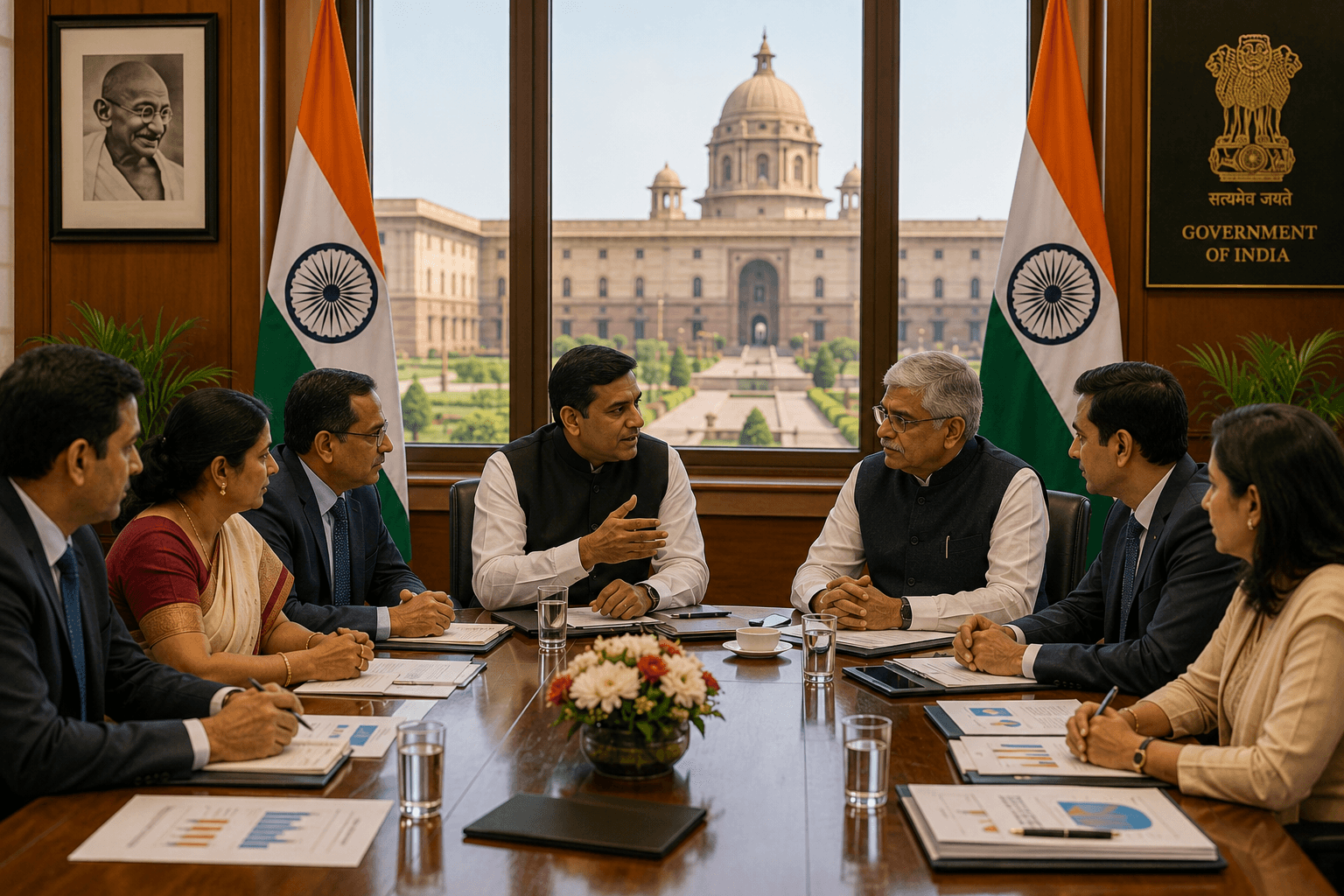 Economy
Do you know how business is interlinked with Governments ?
You might think governments, what is the need for it ?
I don't need help or loans. I can start my own, and I am not accountable to anyone. I will pay tax and I am done.
No, governments and business go hand in hand. How ? Let's discuss
*During 1991, LPG reforms were initiated by PV Narsimha Rao's government. It had a direct impact on Indian and world markets. The competition between the world and India has increased. In terms of economics and more opportunities, from job creation to reduction of barriers to export and imports.
*The government creates rules, regulations, tenders, facilities for the tax and legal system. Acts as a big brother to your business to work efficiently and safely. It protects you from law and legal procedures in case of problems. It collects revenue from your profit through taxes and allows you to enhance it better through loans and policies.
*The leaders who travel and sign MoUs for the nation are creating a path to your business. what kind of products and materials you need for the future of India.
*Job creation on a big scale, promoting better rules and regulations leads to great business, and it eventually helps employment creation. Your business is considered as a data pointer for the government to say what we have done.
*A country with good business is equal to better economic growth, and it shows how developed a country will be in terms of safety, wealth and economic growth.
*Note ban had an impact on businesses or not ?
Yes, absolutely it had. The government and business are the backbone of our country. It projects and creates an estimation of how good a country is based on parameters of the business model only.
Bura Anirudh Yadav
June 16, 2026
 Economy
PM Modi's visit to France plays a key role in India and French relations. It will strengthen their strategic partnership with a wide-ranging set of agreements covering technology, trade, defence, space, education, and innovation.
Together, these measures aim to expand bilateral trade. Boosting economic cooperation, supporting startups, enhancing digital infrastructure, and deepening collaboration in critical sectors.
13 Deals which happened during PM Modi’s visit.
*Adopted “Innovation Roadmap 2030” for joint tech R&D and education.
* Created a Joint AI Working Group on global AI governance and responsible AI.
*Agreed to incubate 10 more Indian startups at Station F, France.
* Set up India–France Centre of Digital Sciences.
* Target to double bilateral trade to ~$32B in 5 years.
* Launched Economic Security Dialogue on supply chains and critical minerals/semiconductors.
* Expanded UPI acceptance at major French airports.
* Signed General Security Agreement for classified defence intelligence sharing.
* Boosted space cooperation via ISRO–CNES LoI, including Gaganyaan support.
* Agreed on cooperation in high-speed rail and railway infrastructure.
* Established aerospace training centre at NSTI Kanpur.
* India–France collaboration on AI-driven digital health research (ICMR–Health Data Hub).
*Created ICCR Chair at Université Paris-Saclay on AI, innovation & culture.
Bura Anirudh Yadav
June 15, 2026
 Economy
India’s Independence was not that easy, from fighting against the British to partition. The journey we had was never easy.. 700 years of Mughals and 200 years of British India. During those conflicts, we had effective leaders and popular personalities who handled those important political, Social, economic things…..
But what about India after 1947 ?
Right now, we are in 2026 and seeing all those developments and the new world alltogether.
*Have you ever compared both leaders of 1947 and 2026 ? Have you ever thought of it ?
*What about the Nehru regime and what about the current situation of the Modi government ?
*How are these 2 leaders being compared too ?
*How have they handled India as per the time ?
*India got its independence after a long struggle and pain.
So Let's start with 1947. India had 34 crore with minimal resources, with only 2% graduates and 89% illiterate. India had a budget of 171.5 crore for the first ever time. With conflicts from caste to religion and partition, millions of people were migrating from India and Pakistan. We didn't even have a constitution. 500 princely states were also creating ruckus, especially Hyderabad Nizam and Junagarh king. The biggest thing is the population, which is not well-educated and skilled.
During such circumstances, there have been developments in creating a new system of institutions like IIT’s, AIMS, ISRO. They have been building India from the grassroots. Nehru truly followed democratic principles. He initiated Non-alignment at the time of the Cold War, which was happening in the world between the USA and the USSR. There were 2 groups with support from multiple countries each.
Major criticism
* Nehru alloted the indian territory Aksai Chin to china, the Sino and Indian war, as he ignored warning signs of the initial phase.
* In J&K conflicts he gave free hand of Plebiscite and supported free autonomy.
*Directly made Indira Gandhi into politics and made her the president of Congress, which was criticized as nepotism.
Right now, the Modi government, which was formed in 2014. He is the tallest leader of the BJP till now,
He became the prime minister and crossed Nehru, the tallest leader of congress leader's record as the longest serving leader of India.
After he became prime minister, the circumstances were different. The population is around 140 crore with a budget of, as of today, 34 lakh crore budget in the year 2025.
He majorly focused on social welfare schemes, which were never addressed before, from basic facilities like gas connections, toilets, girl child education, Digital India, electricity, water and houses. These welfare policies were on a large scale, which people wanted also. Basic needs were their 100% focus.
Whenever the issues of India and Pakistan have emerged, they have dealt with an extremely aggressive nature, from diplomacy to military operations like URI, Pulwama, Operation sindoor, Article 370 removal.
Construction of Ram Mandir, GST reforms, CAA and NRC, use of technology for the largest sections. Electronic governance and approach were extremely modernized compared to before. From new railways to 100 new airports and smart cities. Their tenure is around 16 years which is purely on policy and external affairs are the agenda.
Major Criticism
*Demontisation, COVID-handling, dictatorship, the crisis of the economy and the highest unemployment rate ever reported.
*Politics of religion and hyper-nationalism. Between the Nehru era, it was the initial stage, and Modi’s era, it was about expansion and regulating.
*Both have played crucial roles during their own tenures, but ultimately, India’s growth and development are important for us.
Bura Anirudh Yadav
June 11, 2026
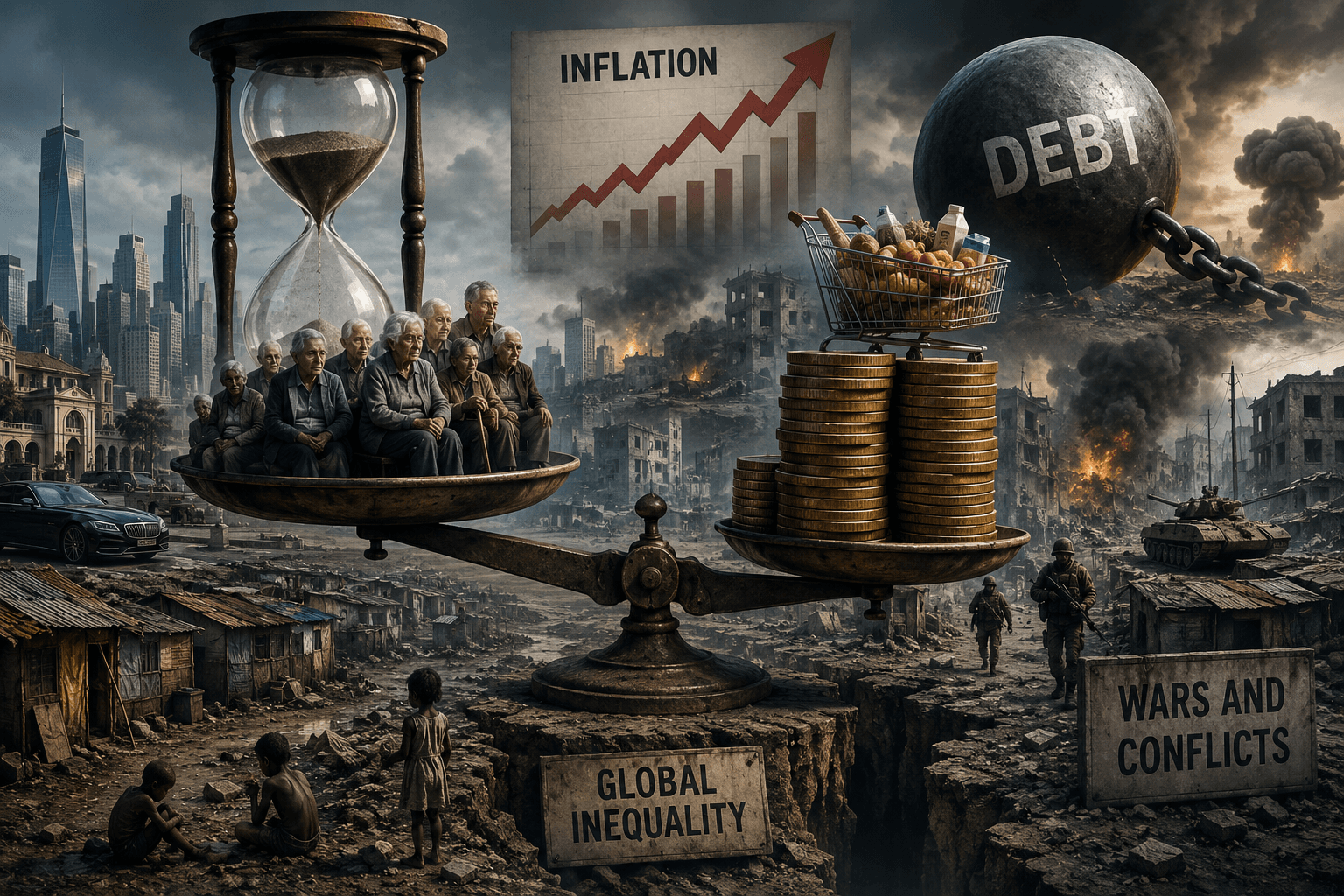 Economy
*Frequent change of governments?
*One single conflict in the globe ?
*Shift in population dynamics ?
Everything changes in terms of the economy.
The world is evolving every day and every time it grows, there are problems which are constantly haunting us. On paper, the economies are in big numbers. Fighting against each other, that we are ahead of you. The media's comparison on television screens of numbers on our economy with pictures and measurements. After a few years, there might be a few problems and some are currently visible right now too.
*Inflation is one of the key areas where the cost of goods is increasing every year by 2% globally. If the prices keep rising, what will be the future crisis? Already, due to inflation, countries are printing notes and few economies have already collapsed. From banks to government regulations, everything has to be improved to manage inflation.
*Global inequality which has always been and will remain, but there is a limit too. Today, only $2 dollars per day is the capacity of many people. Only a few individuals are making huge amounts of wealth as the capitalist culture has increased across the globe.
* The ageing population, which is one of the biggest issues in Japan, almost 1 in 6 are already 60 years old.
Old age is expensive, from health care to daily needs, and they can't even work. It creates a burden on governments.
* As the younger generation is the only option for support of work and growth. The average life expectancy has also increased by 72 years. They have been using robots and some countries are immigrating their work force from other countries. Almost 1/3 of the Japan population is almost 60 years old.
* Domestic and private debt from governments borrowing in terms of loans, pensions and other financial support systems are leading to a big debt crisis in the world. The United Nations alone pays interest of 1.2 trillion, which is 17% of the economy. What about other countries ?
Almost 100 countries have also halted basic essential needs like health and education.
* The world runs on realism and there are always going to have conflicts. Which creates hindrances to trade and halts supply chain management. We have already seen between Ukraine and Russia, USA and Iran. The constant chaos and man made problems will damage governments and businesses in the world, creating problems in the economy.
Bura Anirudh Yadav
June 9, 2026
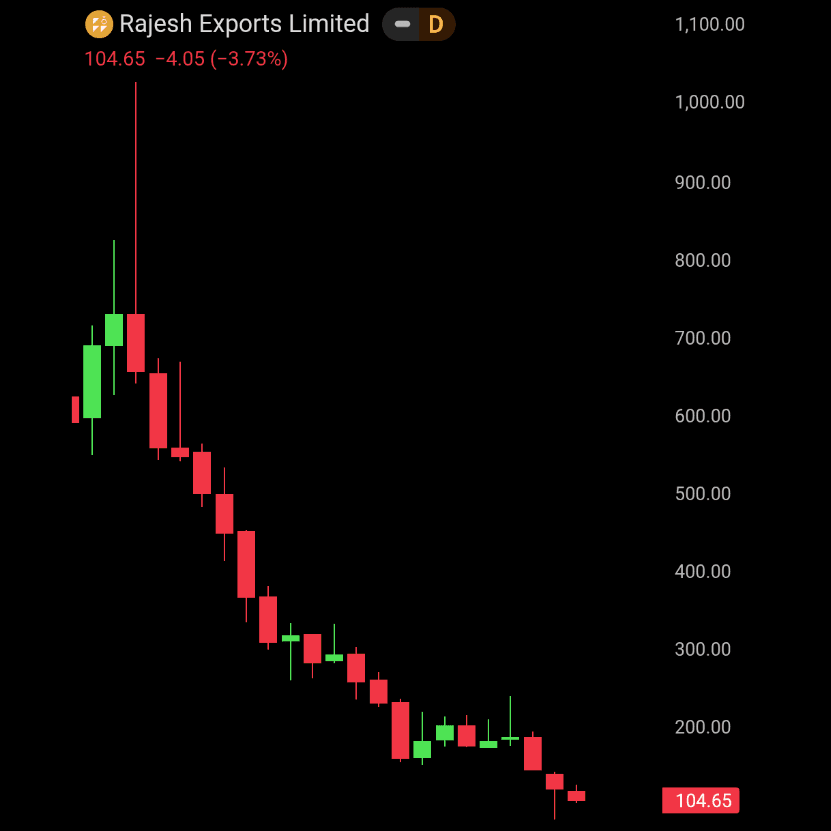 Economy
In 1992, Harshad mehta scam
In 2009, Satyam computers
In 2026, Rajesh exports if it is proved.
A sudden chaos occurred as SEBI raised concerns about Rajesh Exports, which is being reported financial issues.
Rajesh exports is a gold refinery and manufacturing company. Which has shown unclear data by manipulating the revenue and numbers. It has come under the lens of SEBI and, as one of the inflated companies in the year FY 21 to 25, the numbers don't match. Rajesh exports, according to SEBI, 97% of finance have irregular data. They tried to defend SEBI allegations on wrong numbers provided.
Due to this manipulation of numbers, as it was a publicly listed company on the stock markets. People have started to trust and invested huge amounts of funds in their stocks.
*According to a few sources, retailers have lost 12,000 crores.
* The Ministry of Heavy Industries has removed it from its major list.
* Many banks who gave them loans have already called it Stressed asset.
* LIC 10.8% shares are also involved.
If this scam unfolds and will be proved by the authorities, then it would be one of the biggest scams in India. The authorities are investigating the matter, which is not yet confirmed.
The major losses in India right now, loss of trust among investors and foreign investors and many people have already started raising concerns about SEBI and investors taking out money from stock markets. There is a high chance of the stock market collapsing. SEBI and the government of India have to take stringent action against those who are making financial frauds.
Bura Anirudh Yadav
June 6, 2026
 Economy
Do you know how our Finance Ministry works ?
While watching parliament sessions or on television screens, seeing a large amount of wealth being allocated.
How do they manage ? How do they function ? All we know is, it is regarding money and tax. Ask anyone near you, the answer would be minimal and short. Finance is all related to how much the government is spending; tax systems, revenue, banking, investments, Budget, asset management and overall economic review.
The Ministry of Finance has 6 departments internally, through which their operations work effectively.
* Department of Economic Affairs: Their role and responsibilities are preparing the Budget, macro and micro economic policies, public debt, stocks, dealing with the World Bank and overall economic affairs of the country.
* Department of Expenditure: Working of public financial management systems, how much money is being spent by the government, implementing finance commission recommendations.
* Department of Revenue: Managing national and state financial resources with Tax Administration. Like GST, Indirect and Direct taxes. Also Investigation into financial crimes.
* Department of Investment and Public Asset Management: The major work of this department is to handle the government's investments and check its maintenance of all assets.
* Department of Financial Services: Are linked to banking operations, financial institutions like SBI, SIDBI, insurance and pensions.
* Department of Public Enterprises: They are looking into government-owned companies and monitoring assets to be working effectively.
The Ministry of Finance effectively works and coordinates its financial work through these departments. It is one of the most powerful and complex ministries to work in.
Bura Anirudh Yadav
June 5, 2026
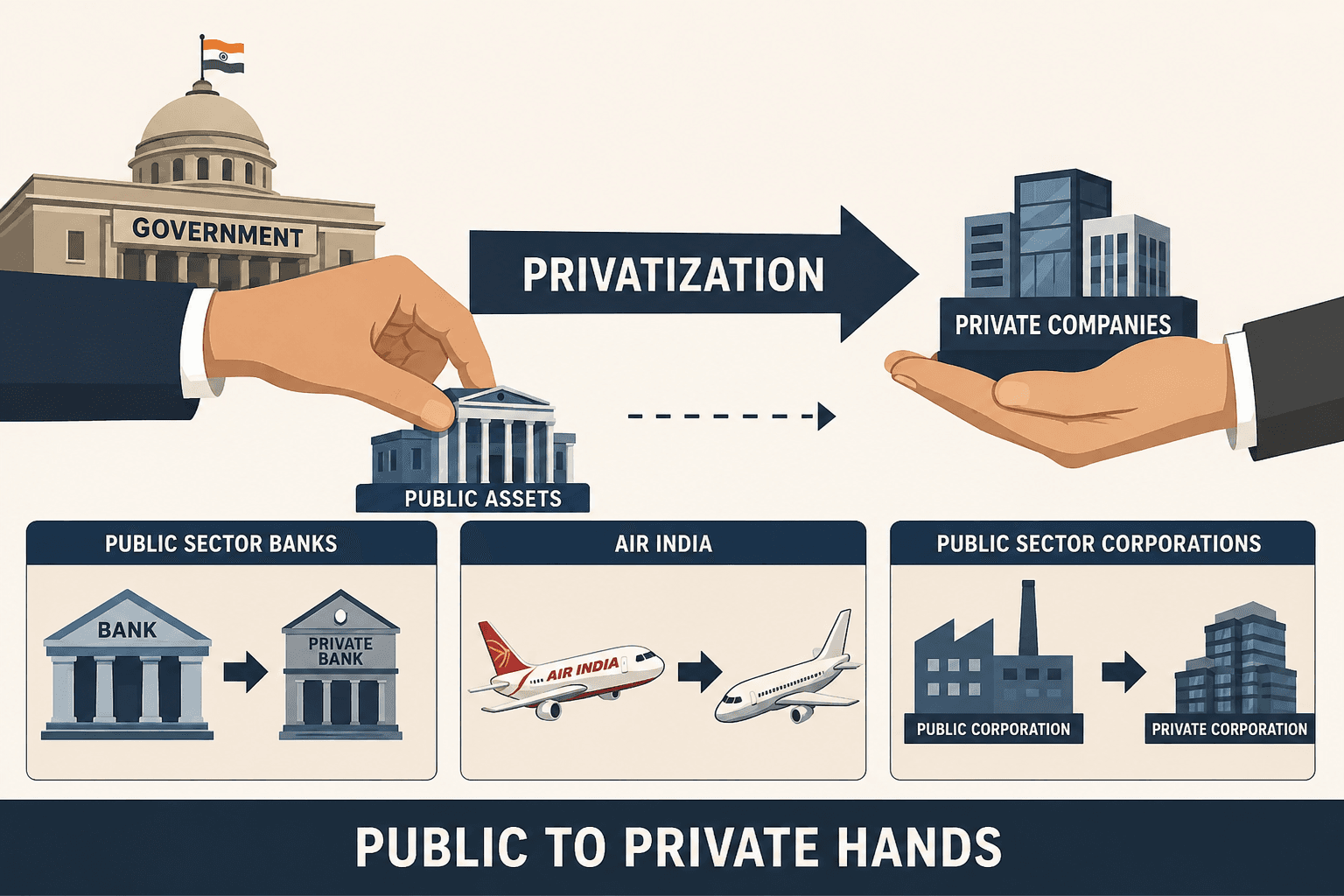 Economy
In the past few years, have you heard people saying that,
Is the government selling everything to private players ? Taking a few big businessman names and frequently debating about it.
Instead of criticizing, have you ever thought of why they want to do this ?
Have you heard about minimum government and maximum governance?
The government wants to establish firm boundaries while involving less in the day-to-day activities of the public sector and handing over to private owners. As they were creating a vast number of hindrances and problems. Government involvement is creating delays and obstacles. The decision to hand over many loss-making and low productivity institutions to private entities.
The reasons why governments want privatisation?
The institutions which have low productivity and high cost. Creates imbalance and excessive expenditure rather than profits. Would it become a liability to the government, right ?
* In many areas, there are excessive employees but with low productivity, including pension and other facilities. Can you think the government can pay all of them for 60 years and more ?
* Lack of jobs for young people and the older population working for a long time without proper output ?
* Lack of innovation and adaptable minds regarding the latest technology.
* Less investment, more expenditure and time-consuming
* The government management is a slow and rigid system.
* Bureaucratic hurdles and stagnant growth.
If these institutions are given to private players or business owners.
The government would only take tax, the rest of everything is handled by private players. It would increase the staff, innovative methods, and more funding independently. Quick methods and high productivity as the government is out of the major work process. It helps in less dependency on the government and builds an entrepreneurial culture in young people. The organizations would work on merit-based and performance-based rather than government rule-based. The competitive mindset would increase the speed of economic growth and less burden on the government. The reduction of politics, unions and protests would be reduced. Quick recruitment procedures and more vacancies.
Criticism of the government selling to private players by people.
*People frequently say that privatisation will reduce the caste system and reservation based jobs, and it is a plan to reduce jobs.
*Only a few individuals would earn more money.
*What about the underperforming employees or old employees?
* Even governments have become commercial now.
Overall, privatization will be the future of India. As the government can provide only few jobs with minimum number of vacancies. The entrepreneurship culture and the mindset of jobseeker to job-giver should be the mantra for India.
Bura Anirudh Yadav
June 3, 2026
 Economy
Ramesh: I Just completed My BBA
Suresh: Wow, that's good news. What is your next plan ?
Ramesh: I am going to USA for my Masters.
Suresh: Why, you can do it in India also.
Ramesh: Yes, but western nations give more financial growth and a better lifestyle. If I work 5 years there, my life will change forever. I cant see bright future in India.
A few days later
Suresh: Mom, you know Ramesh, he went to the USA for higher education.
Mom: Really, even he left.
Suresh: Yes
Mom: If all the people leave, what about India ?
*What about the people who can't afford that much money ?
*Studying in our country doesn't hold any value ?
*If you study here and work for some other country, what about our India then ?
Data
Yes, these are some conversations we hear frequently in society. The NRI community of India is about 35.4 million and every year 2.5 million people leave India. Around 2 lakh yearly shift to foreign passports.
*Many Indians go for higher education and technical work in the USA.
* For blue-collar jobs and labour work in the UAE, Saudi, Kuwait, Qatar.
*Europe for the health and IT sectors.
This is the current trend which has been going on.
The unemployment crisis in India and economic situation are leading citizens to migrate. As the population has increased massively, competition for every sector has increased 10 times more than before.
Major reasons why citizens leave
*Higher Education
*Quality living and lifestyle.
*Jobs and opportunities
*Merit-based growth
*High pay
*Lack of opportunities in our country.
*High competition and population increase
Impact
*Loss of skilled citizens in our country.
*Studying in India and investing their knowledge in western countries.
*Government funds being misused and loss of investment.
*Institutions collapse due to lack of skilled labour
*Growth for other countries more than ours.
*Slow growth of the economy.
*Tax loss and overall development
These are some reasons where brain drain damages our country’s growth in the sectors. We know we are having problems. As long as educated and skilled people keep moving, our country's growth will be slow and mere advancement.
Bura Anirudh Yadav
June 1, 2026
 Economy
Due to few Political statements and some diplomatic tensions, India and Canada have created a rift but in 2026, the circumstances have come to a better place than before.
Both nations have agreed to further enhance the economic growth.
After a long time, India has sent almost 100 people business delegation to Canada to enhance economic growth and business opportunities between both nations. As Canada aims for a 140 crore population market, which would increase the overall GDP and were as India, it would receive pulses, coal, fertilizers, petroleum and India imports pharmaceuticals, chemicals, iron, seafood, garments, electronics to Canada.
The free trade pact, where recently Piyush Goyal, Minister for Commerce and Industry visited Canada. His recent visits indicate that both nations want trade to increase upto 50 billion dollars by 2030.
The long term vision of Canada and India’s current purpose helps both countries with financial growth.
Data
*Almost 600 firms are already in India and more than 1000 firms are ready to move.
* Canada Invests almost $100 billion in India
* Comprehensive economic partnership, will build $6.5 billion growth for Canada.
* Benefits India through Advanced technology and Canadian energy resources.
* India and Canada trade in 2024 was $23 billion and is now aiming for $50 billion.
As relations were disrupted slightly due to some political turmoil. currently, the situation looks positive and will have long-term economic growth for India and Canada.
Bura Anirudh Yadav
May 29, 2026
 Economy
Have you ever thought about how a bank earns money ? Unless you have a problem with a debit card, open a new account or want a loan, you would never like to visit a bank. After that, we don't even know what happens. Am I right ?
My salary comes from the bank. I deposit money and withdraw it. What kind of benefit do banks get because of this ?
How the banks run, they keep all my money safe. How are they profitable ?
Do these questions keep coming into your head ?
Yes, let's understand how banks make money.
The banking system is one of the important aspects of our wealth. The amount of money which you deposit will be given to others.
* Yes, others through loans with higher interest rates. The more deposits happen, they try to give better loans. It is the major source of their profits.
*Have you seen messages on your phones regarding bank messages or emails? They do charge quarterly or yearly for the services they are provided for safeguarding and informing the bank details.
*Debit card and credit card transactions and the allocation of new cards in case of new ones.
*Minimum bank balance charges and failed transaction charges.
*Banking fee for monthly maintenance and ATM usage.
*Late payments on EMI’s.
*Foreign transaction charge, when you transfer money to your friend who is abroad studying.
This is how they earn and the banking model works by protecting our wealth. The banking system is complex and has constant pressure and misunderstanding. It is basic awareness to learn regarding financial systems, to have a safe financial journey, while going to banks. Banking knowledge would increase our capacity to have monetary awareness.
Bura Anirudh Yadav
May 28, 2026
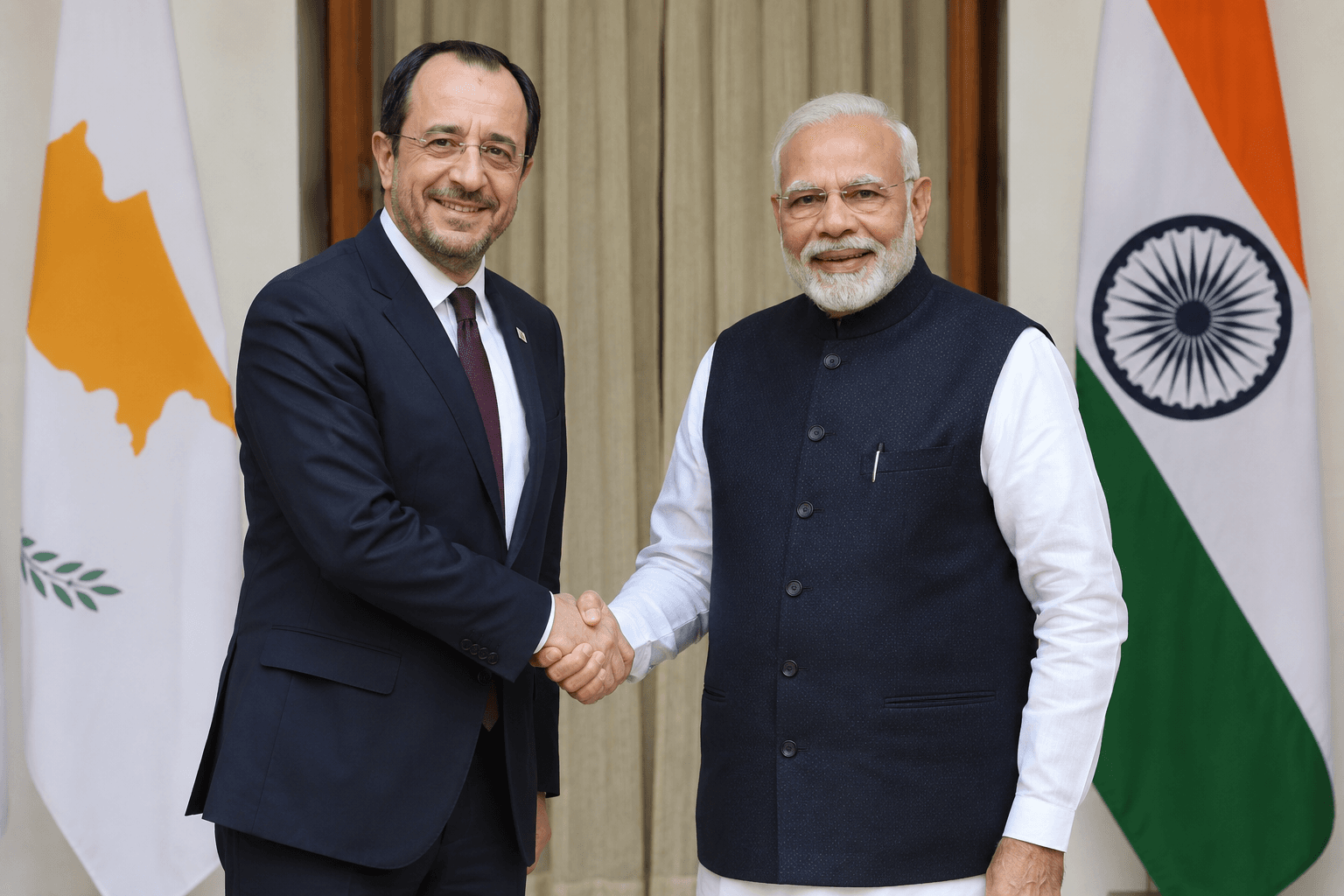 Economy
The President of Cyprus visited India and met Prime Minister Narendra Modi to discuss trade and to improve relations between the two countries.
Both leaders had a positive and fruitful meeting.
They talked about improving trade, business, and cooperation in different areas like technology and security.
India and Cyprus already share good relations, and this visit helped make them even stronger. The meeting focused on working together for mutual growth and better future opportunities for both nations.
Key trade deals
*Defense Cooperation Roadmap
A long-term plan to boost military ties, including possible Indian defense exports to Cyprus, joint maritime training, and stronger naval cooperation.
*Cybersecurity Dialogue
A new platform to work together on fighting cyber threats, improving digital safety, and sharing security expertise.
*UPI Expansion to Cyprus
India’s digital payment system (UPI) will be introduced in Cyprus, making fast and low-cost digital transactions possible there.
*Trade Centre in Mumbai
Cyprus will open a dedicated trade centre in Mumbai to boost business, investment, and economic partnerships with India.
*Support for IMEC Corridor
Cyprus launched a “Friends of IMEC” group to support the India–Middle East–Europe Economic Corridor, improving trade connectivity between Asia and Europe.
*Six Major MoUs Signed
Agreements cover counter-terrorism, space cooperation, higher education, science & technology, cultural exchange, and economic collaboration.
These deals show a strong push toward defence cooperation, digital connectivity, and trade expansion between the two countries.
Bura Anirudh Yadav
May 25, 2026
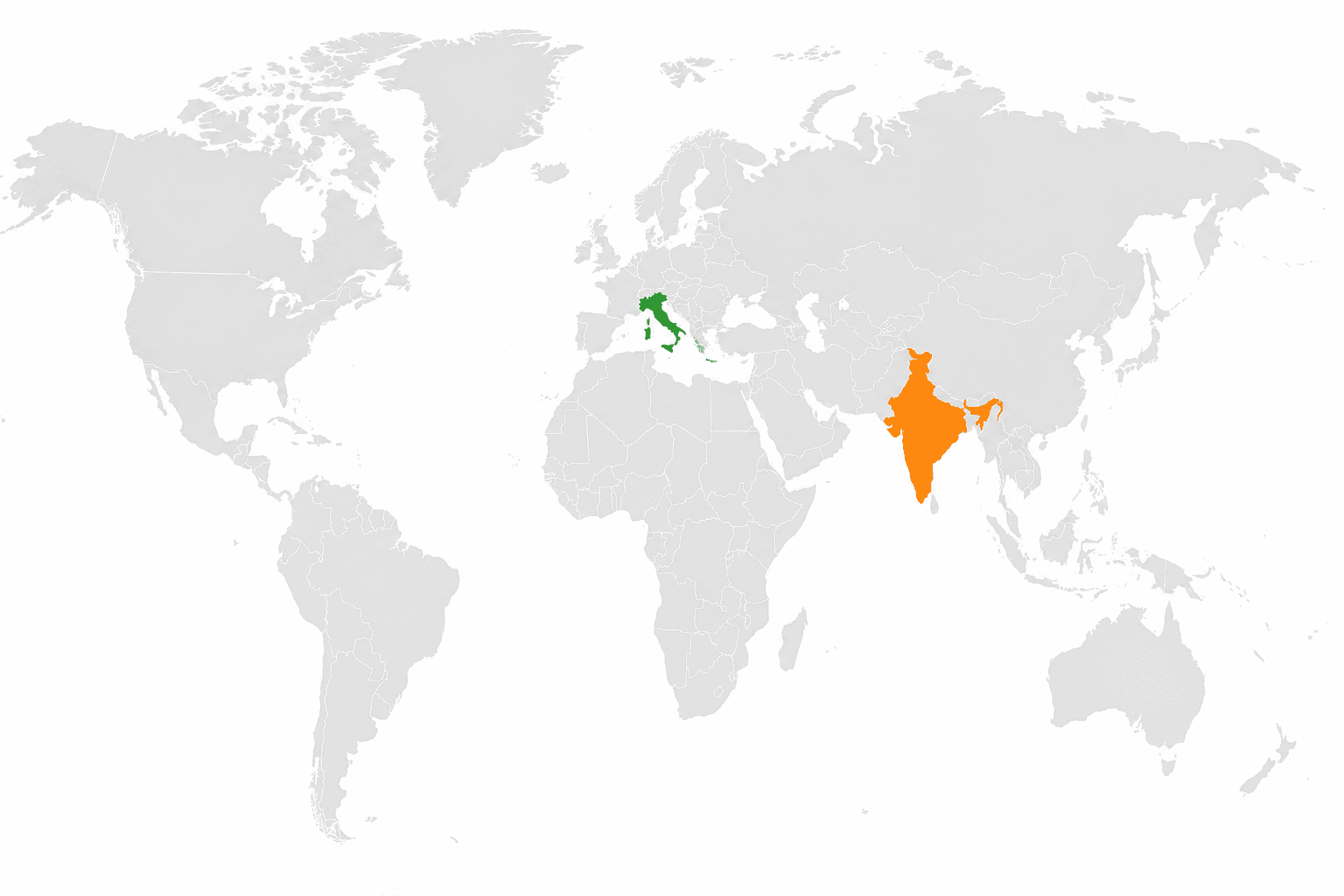 Economy
Have you seen PM Modi's recent visit to Italy?
Yes, the melody video which went viral across the internet.
But do you know what all the trade deals happened between India and Italy ?
India and Italy have never had great relations or agreements before. We have always had good partnerships with the UK and Germany.
The visit, which was declared as a special strategic partnership, shares a new journey.
From trade, culture, tourism, small industries, cooperation dependent on sea trade. These are some key areas in which partnership to further move ahead.
Trade Deals
* Defense strategic partnerships, where India and Italy both countries would manufacture military goods and equipment together. India wants to export Atmanirbhar bharat and make in India equipment which we produced in our homeland.
* Defense industrial road map with technology, helicopters, warfare, innovations would be further enhanced.
* Joint geopolitical issues between India and Italy, like terrorism, threats, sea trade, Mediterranean Sea issues, will be a strong partnership.
* Companies like Leonardo S.P.A in the field of aerospace and Fincantieri, the world's largest ship-building company, would work closely with India. Already the Adani group has made huge contracts together.
* India and Italy are situated in 2 strategic locations, having strong naval bases and warfare equipment. The Mediterranean Sea and Indian Ocean can both help each other in critical situations and trade.
* India wants to establish IMEC, which is India, the UAE, Saudi Arabia, Jordan, Israel, Europe, which is India's Middle East European corridor. In terms of railways, ports, ships, cables, pipelines.
* In the field of Technology like Ai, Semiconductors, quantum computers, space technology, telecom and innovation centers.
India and Italy have traded around 14 billion euros as of now, but both countries by 2030 expect 20 billion euros between both nations.
Bura Anirudh Yadav
May 22, 2026
 Economy
Do you know more than 1/5 th rural areas developed because of NABARD?
Are you a person from a rural area and want to start an entrepreneurship journey ?
You can get loans up to 1 lakh to 2 crore or more based on your project requirements.
Yes, we are talking about the National Bank for Agriculture and Rural Development which is one of the prominent regulatory bodies which is owned by the government of India. It is specifically made for giving micro credits and financial assistance for agriculture, infrastructure, village industries, poultry farms, cottages and artisans. It is 100% government owned under the ministry of Finance. Its vision is to improve rural empowerment and growth by giving them help.
You get loans with the interest rate, Agriculture upto 7% to 12%. Rural 8 to 12% and small scale upto 10 to 14% interest rate.
NABARD helps in overall assessment of rural areas and prepares detailed reports on all the districts of India. The financial and non financial requirements are done based on the necessity of a rural economy.
All you need is basic documents like Aadhar card, Pan card, sale deed of your agriculture land, were you would like to start infrastructure, project report, ration card, passport size photographs, recent bank statements.
The major objectives are to give a boost towards rural economy, introduce and help innovation in the rural sector, connecting rural areas with banking systems to overall growth. All you need is Applicant Profile: Indian citizens, individual farmers, agri-entrepreneurs, Self-Help Groups (SHGs), Joint Liability Groups (JLGs), and registered cooperative societies/FPOs.
Age Limit: 18 and 65 years old.
Land Ownership: clear land ownership or a registered lease agreement for a minimum of 15 years.
Income: schemes like Dairy Farming, preference is often given to small and marginal farmers with an annual family income below ₹1,00,000.
From subsidies to yearly interest rate with affiliation with state,cooperative banks,regional, district and rural banks. It is the most affordable and policy model of government to empower and uplift the rural economy. NABARD works closely with banks to assure rural economies get wealth and generate new entrepreneurship.
Bura Anirudh Yadav
May 21, 2026
 Economy
Did you know India ranks 63rd in ease of doing business.
Once upon a time, it had stingy rules and regulations which created hindrances to business. How did we improve better ? Do you know Ease of doing Business shows confidence in countries to invest ?
Ease of doing business excel due to minimal bureaucratic restrictions, smooth administration, digital infrastructure, proper legal frameworks and favorable tax policies.
Ease of doing business have parameters like procedures, time, cost, tax systems, allocation of land to FDI companies or local and bureaucratic structures. There are the top 5 countries, according to the World Bank, which are the best in the world: Singapore, Denmark, Canada, the United States, Switzerland. India’s journey with the ease of doing business shows how the country changed from a slow, bureaucratic market into a fast-growing global business hub.
Here is a simple breakdown of how it works, what changed, and the problems that remain. A few years ago, the World Bank ranked India 142nd out of 190 countries because it was very hard to start a company there. To fix this, the government launched the "Make in India" plan. By 2020, India made a massive jump up to 63rd place. Today, the world uses a newer, stricter system called Business Ready , and India is working hard to match its high standards.
How things have improved
The big jump happened because the government cut down on confusing paperwork and rules:
*State Differences: Some states are highly advanced and business-friendly, while others are still slow and struggle with heavy paperwork.
Bura Anirudh Yadav
May 20, 2026
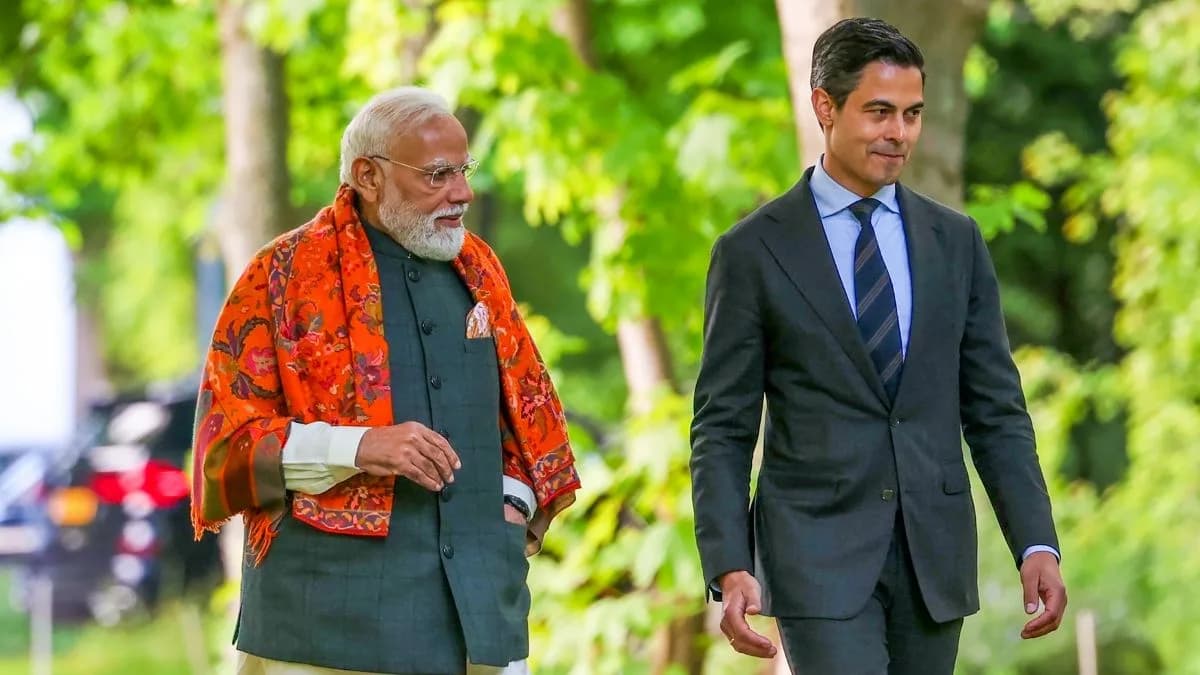 Economy
Microchip Mega-Factory: Dutch company ASML will help India build its massive microchip factory in Gujarat.
Supply Chain Boost: Both countries will link their semiconductor organizations to help startups and trade.
Bura Anirudh Yadav
May 18, 2026
 Economy
Have you ever borrowed money from your friend ? What happens if you don't pay back ?
If you repeatedly borrow from your friend, what would be your friend's reaction ?
Yes, even governments take loans and have high levels of debt as of 2026. As per the Fiscal Health Index, India has an overall debt of 3.5 trillion. On the one hand, we feel proud of our economic growth and, on the other hand, we need to check our national debt as well.
Reasons why governments have debts ?
*The governments borrow in various situations like investment in infrastructure and development.
* Emergency and crisis management like COVID-19, war, natural disasters. It gives revenue to solve issues quickly and balance the overall economy of our country.
* To repay past debts of previous governments.
From where the government takes loans?
The government takes loans from external and internal procedures. Like domestic liabilities, government bonds, treasury bills from internal and when it comes to external, we take it from Asian development bank, World Bank and other countries.
States which have high debts in India.
*Tamil Nadu
*Punjab
* Uttar Pradesh
* West Bengal
*Kerala
* Andhra Pradesh
Reasons for high debts in these states are major problems with freebie schemes and subsidies. Which are given without calculations. The states are spending above their limit, which would further harm future generations. The revenue earned and revenue spent do not match. Some states are aspirational too, to build better facilities and large scale development, thinking about the long term. Borrowing money is not a bad thing, but when you cross the limit of borrowing, the debt trap begins and leads to an economic crisis.
Bura Anirudh Yadav
May 15, 2026
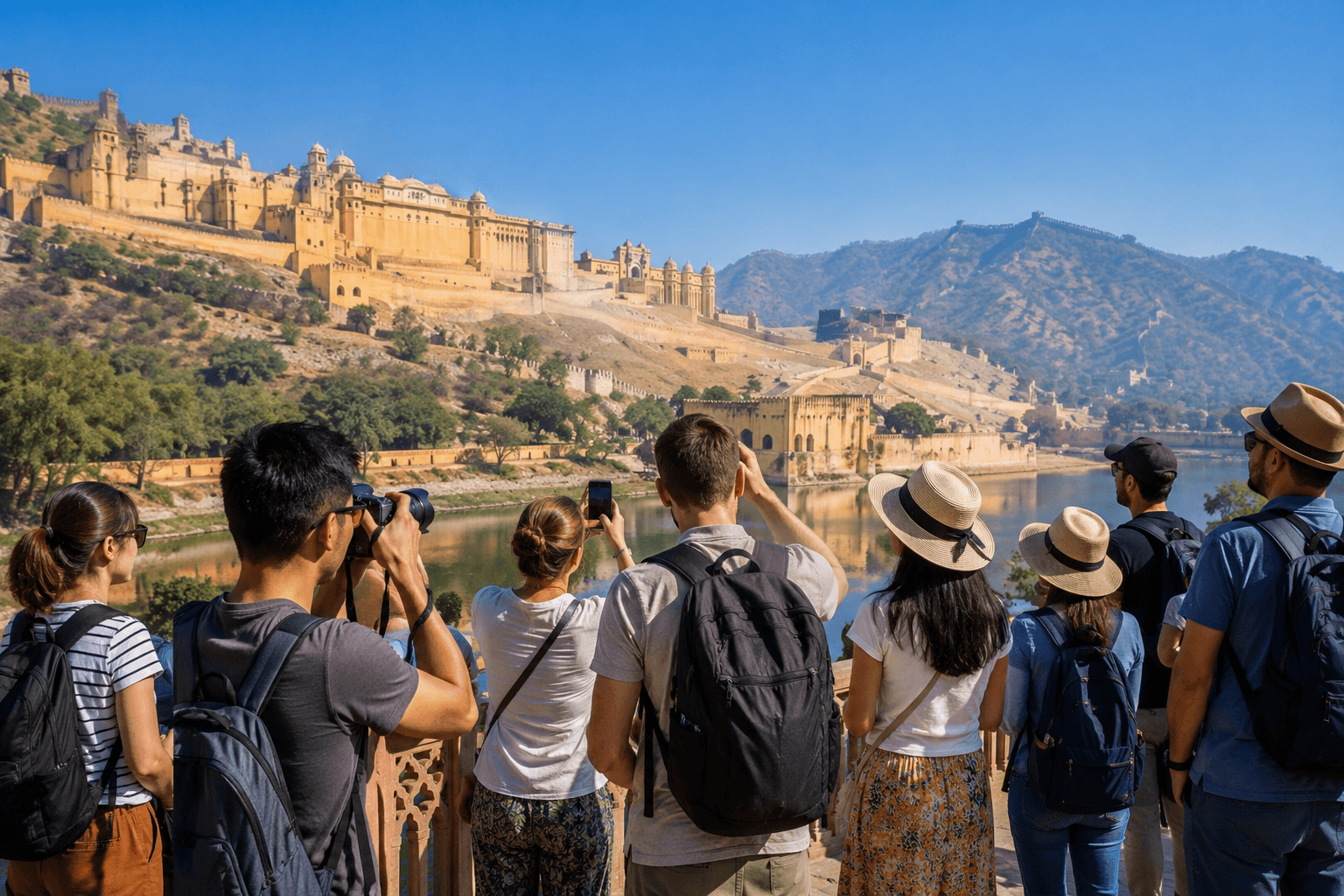 Economy
Indian culture needs strong tourism.
*Do you like to travel across the world ? What is your purpose for travelling ?
*Few travel for business, Few travel for entertainment and site-seeing.
*Behind your fun-filled trips, did you ever think about how the Indian economy is flourishing in the tourism sector?
*How many jobs are we building, and why does tourism have high potential in India ?
Tourism in India is one of the most booming sectors which has seen a great amount of growth in recent years. A country with lush greenery, the coldest mountainous regions and beautiful sunsets of coastal regions with a great place for holidays. The world views India as one of the best cultural and spiritual hubs of the world. Most of the tourism is circulated among pilgrimage and spirituality, but as a new generation comes into, the travel and tourism sector has reached new heights in exploring hidden places with YouTube digital vlogs and experiences. The governments also increased the budgets and connectivity. Where people from across the world can travel and enjoy an experience of the natural and cultural beauty of India.
Data and Analysis
The tourism sector contributes 15.73 lakh crores in revenue, which is 5.22% of national GDP. We have created almost 84 million jobs in the tourism sector. According to the World Economic Forum Travel and Tourism Development Index, India ranks 39th in the world. The majority of the countries which visit and are interested in Indian tourism are the USA, UK, Bangladesh, Australia, Canada.
Top ten tourist destinations of India are Jammu & Kashmir with 2.35 crore tourist visits every year. Followed by Varanasi, Agra, Goa, Kerala, Ladakh, Jaipur, Udaipur, Spiti valley, Somnath & Dwaraka, Andaman & Nicobar and the north-east. These are some of the most preferred places to visit and have popular destinations.
The world economy of the tourism sector is almost 12 trillion and every 1 in 9 jobs are linked to tourism. Almost 9% of the world's economy comes from the tourism sector. On September 27, World Tourism Day is celebrated.
Challenges
*Infrastructure and connectivity issues.
* Need for more tour guides that are more dependent on English, and must have multiple language guides.
* Safety and security issues as few cases have been reported regarding solo travellers.
* Crowd management in large events and pilgrimages.
Famous slogans
Incredible India
Madhya Pradesh: The Heart of Incredible India
Kerala: God's Own Country
Rajasthan: The Incredible State of India
Karnataka: One State, Many Worlds
Goa: Go Goa
West Bengal: Experience Bengal, the Sweetest Part of India
Odisha: India's Best Kept Secret
Jharkhand: Nature's Hidden Jewel
Jammu & Kashmir: Chalo Kashmir
Himachal Pradesh: Unforgettable Himachal
The tourism sector has high potential for growth and employment opportunities. Proper marketing and improving the required infrastructure can help us grow our country's overall GDP.
Bura Anirudh Yadav
May 14, 2026
 Economy
Reasons behind PM Modi's appeal.
* Use of petrol and diesel should be reduced, but why ?
* Work from home to be executed again, but why ? I have already gone through COVID-19 with severe lockdowns and emotional isolations, but why does the government want me to work from home again ?
* I might lose my job again ? What about my children ?
* One single statement from the head of the government. I feel the nation's economic situation is bad ?
* Why is the government imposing rules over my freedom ? I will do whatever I feel like.
These are some constant questions circulating across our minds.
PM Modi's appeal feels the nation will soon go through a tough phase. A day after his statements regarding fuel, which became expensive across the globe from $75 per barrel, it is now being sold $105. The intense escalation between Iran and the US made the situation cross its limits after the Strait of Hormuz was blocked and the supply chain management was impacted. As India imports most of the goods from other nations. Almost 85% of energy is being imported with almost 10% to 15% production capacity in India.
Yes, my fellow Indians, we are importing most of the energy from our foreign allies.
India imports almost $71.98 billion gold, mostly coming from Switzerland 40%, the UAE 28%, South Africa 10% and the other 22% from Peru, Bolivia, Ghana, Guinea. Recently, the government of India increased the import duty from 10% to 15% amid the escalation of the Middle Eastern crisis.
Our love for gold is never ending, especially during weddings, and Indians understand that gold is a compounding asset.
The gold which we buy mostly comes from other countries. We are not producing 1% either. The dependency we have created is what makes us panic today. The natural resources we have in Bihar, Rajasthan, Karnataka, Andhra Pradesh, West Bengal. We have almost 500 million tonnes of ore but the extraction cost and complications make it difficult.
Mother: Why are you not going to office ?
Son: Our country is going through fuel and oil crisis, to reduce the usage and to save petrol and diesel. Our company reduced the work force by 40%.
Why is work from home culture coming back ?
Work from home brings cost-effective measures and avoids fuel consumption. We import 85% of energy. The alternative sources of arrangements are electronic vehicles, public transport or bicycles.
*In a recent incident, a Madhya Pradesh high court judge ditches an officially allotted car and takes a bicycle ride to the court premises.
*PM Modi reduced his convoy by 50% amid the oil crisis.
* Many corporate offices have started work from home culture for employees with a reduction in workforce and staff.
* Political and economic circumstances are complex and must be sensitive. Questioning the government is easy, but understanding takes knowledge regarding global circumstances.
I want to get married in Milan or Italy and have a great time with my husband. It will be a joyful moment and a new beginning of my life ?
The reason to avoid foreign trips is to invest money in India. It would give employment opportunities for local people of India. As the government has already given a statement of Vocal for Local. It signifies a self-reliant government approach and creating our own indigenous products and exporting to the world. We have beautiful destinations in Goa, Lakshadweep, North East, Rishikesh, Jammu & Kashmir, the coastal region of Gujarat, Maharashtra, Karnataka, Keralam, Tamil Nadu, Puducherry, Andhra Pradesh, Odisha, West Bengal.
Royal palaces of Rajasthan in Udaipur, Jaipur and many more. With mountains to coastal regions, royal palaces and greenery. You can travel along with your family, have destination weddings and contribute to the local economy.
India is a beautiful nation with a culture which has colors and joy in life.
Let's protect our nation by just following few measures.
Bura Anirudh Yadav
May 13, 2026
 Economy
Today we all talk about the US and its influence of economic and military power. In many aspects, the world's future is decided by the US.
Do you know how the US established itself as such a powerful nation?
What made them grow so big with a 32 trillion economy as of today ?
After the British left the US, society was scattered and uneven with minimal resources and settlers of trade and educated people. The hunger for growth and survival was high, with government and leaders acting effectively, and they established a strong presidential system. To avoid military coup, armed rebellion and to avoid political instability. The government launched incentives for people, guess what the innovations and hard work began. The new foundation was full of committed people with passion and a survival-driven mindset. The natural resources of the US, like gold, gas, oil reserves from Nevada, taxes, Alaska, as it was called foolishness, but now it holds oil, gas, gold reservoirs.
The US has the 4th largest gold market and has a huge land bank too. From Alaska to the Panama Canal, Mexico to Saudi Arabia, Japan to New Zealand, the US has its presence across the globe through trade, business and military bases. Technology, from trains to Ai-driven technology and the latest tech-based advanced military equipment, is one of the tech giants of the world. The establishment of innovative brands and technology-based tools. Almost all famous brands are from the US, based on manufacturing to supplying goods. Creating patents of innovative technology, everything happens in dollars.
The supply chain of the US has the highest connectivity between roads and exports and imports, and logistics management of the US world has dominated.
Arms and ammunition: The US is the largest supplier of weapons, which controls 43% of the global arms market across 100 countries with companies like Boeing, Northrop Grumman. Infrastructure investments give you 3 times more profit in the long run as the US invests in projects in Asia, Africa and America.
After 250 years of journey towards colonial control to Data-driven AI systems, the US is the leading country in the world across the sectors. It has made its presence in the world.
Challenges
The economy of the United States faces many challenges today.
*Rise of Inflation in the country, also has a lot of debt because the government spends more money than it earns. *Poor roads, bridges, and transport systems in some areas need repair, which costs billions of dollars.
*Climate change is another challenge because storms, floods, and wildfires damage homes and businesses. There is also inequality between rich and poor people.
* Some families have great wealth, while others struggle to buy basic things.
*Competition from other countries like China also affects American businesses. To solve these problems, the government, companies, and citizens must work together, create jobs, save resources, and support education and new ideas.
The competition for United States
China is a close competitor of the United States because it has a large economy, many factories, and advanced technology. China exports products all over the world and invests heavily in science, education, and infrastructure. It also has a huge population, giving it a strong workforce and market. Chinese companies compete with American companies in areas like electronics, trade, artificial intelligence, and space research, making China an important global economic power.
Bura Anirudh Yadav
May 12, 2026
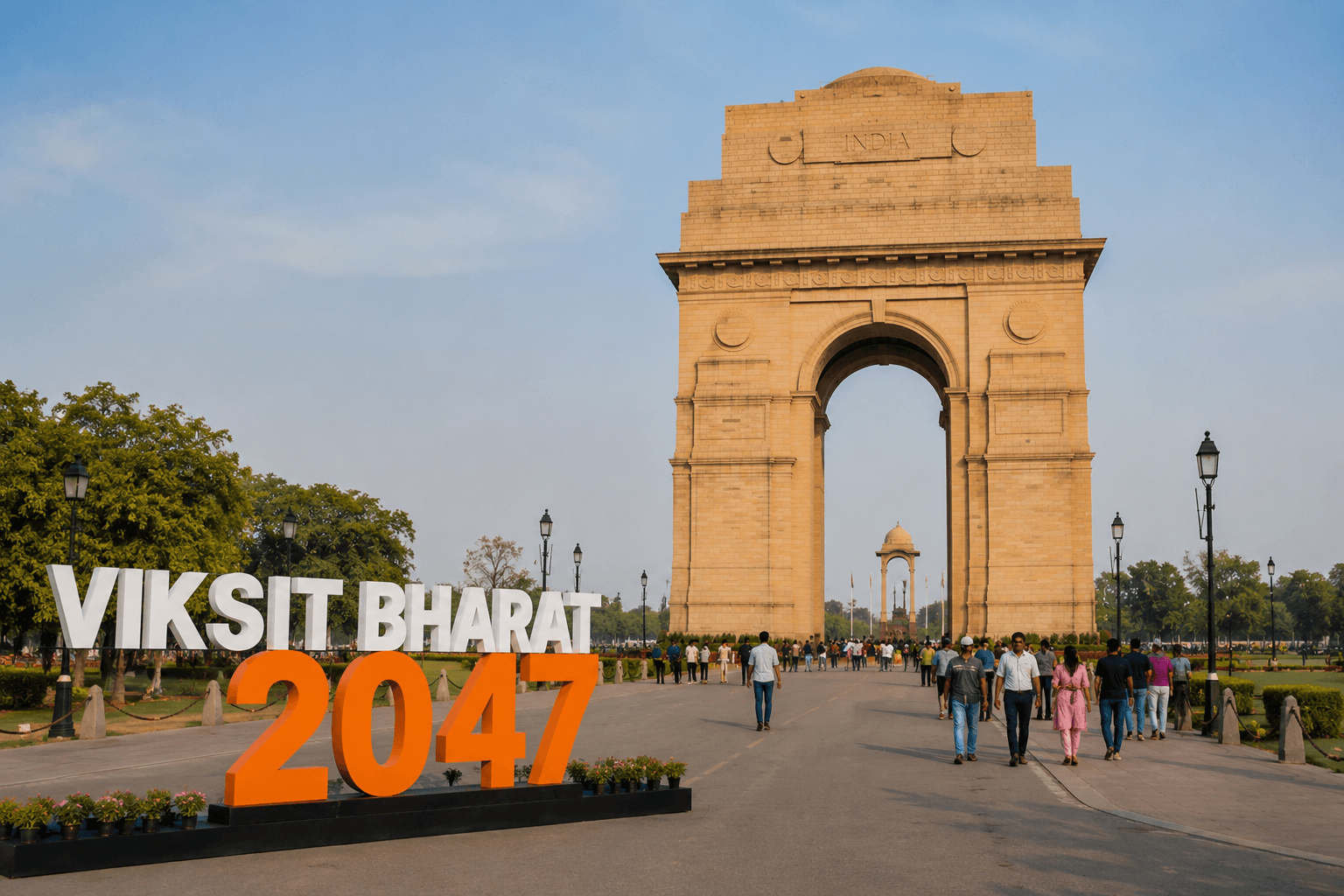 Economy
Every nation has ambitions and desires.
Yes, as of today, the US has the highest economic growth with 32.4 trillion, followed by China with 20 trillion and Germany with 5.45 trillion. What about India ?
*When we compare ourselves with other nations, why are we lacking behind ? But we have more than 140 crore population with the youngest workforce ?
*Why are we still with a 4 trillion economy ?
Our economy is 3 times less than China. India is larger than Germany by 9 times, but how do they have a better economy than the us?
These are certain uneven questions entering our minds. The government of India has a vision plan for the economy, a vision which speaks for the future of India. The Viksit Bharat 2047 is the vision plan of India to turn India into a developed nation from a developing nation.
Would this vision prove how the future of Bharat would contribute as a nation ?
The future map of Viksit bharat has a vision of a 30 trillion economy by 2047. We as a nation would ensure in establishing manufacturing hubs and creating our own production to export more goods than we import. The reduction of imports helps us build our self-reliance and be vocal to locals. As India is on the path of aiming for a global presence with the aim of becoming Vishwaguru in the period of Amrit Kaal.
The major sectors India wishes to change and create growth are
*Gyan: A mission which says Garib, Yuva, Anadatha, Nari shakti. To effectively create employment, poverty, safety and security. For all the sections which are always on discourse.
* Make in india 2.0 to manufacture and build vocals for local products to enhance export capacity, where the world depends on us rather than us. With an aim for a global manufacturing hub.
*Building world-class infrastructure and connectivity and increasing the supply chain for goods and services.
* India is to become digital power with 100% capacity with Ai, 5G, Quantum computing and advanced level tech systems.
* Lakhpati didi with the aim of building women's empowerment by making them earn 1 money 1 lakh annually by themselves.
* Sports with top 10 Olympic contributing nations.
* from 14% to 8% logistical dependency to be reduced by 2047.
* PM Gati Shakti and the rail corridors of bullet trains across top capital cities, would initiate quick movement from one city to another. From Bengaluru to Chennai, Mumbai to Pune, Delhi to Varanasi.
* Amrit kaal is one of the prominent periods of time to establish the 2047 goals with a timeframe of 25 years.
* Semi-conductors, solar power, green hydrogen.
* Space and technology
* Agriculture sector
* Establishing world class educational institutes like Harvard and cambridge.
These are some major areas where india is looking forward to expanding and becoming a global leader in these space. The future of India and its mission has a vision to empower our country by economically trying to compete globally. Every state has its own independent vision document and a few states, like Uttar Pradesh, Karnataka, Tamil Nadu, Gujarat, Telangana and Maharashtra have the potential to become a 1 trillion economy by 2032 or 35 and few states are doing great to become a formidable economic powerhouse too.
We as a nation from 1947 to 2047, on the 100th anniversary, have created a sustainable economic model with ups and downs with constant engagement of growth irrespective of what happens.
Let's contribute to Viksit Barat 2047 vision and empower it with great economic strength globally.
Bura Anirudh Yadav
May 11, 2026
 Economy
A focus on the Health Economy of India.
Have you ever visited a hospital when your loved ones were going through a bad phase? How did you feel during those tough times ?
Bihar’s iconic teacher with millions of students, who prepare and learn under his guidance. He made a deep impact on students coming from humble backgrounds, earning huge respect from society for his affordable teaching. Many students from poor backgrounds have managed to gain tremendous success in their careers by getting jobs in the government sector, from IAS officers to constables, teachers to army officials. He trains students with at most conviction with minimal facilities, with just 200 rupees as fees. He got several opportunities to earn profits and offers, but he refused everything for social causes.
A teacher who showed a path by giving them hope and vision of how education can change many lives. He established himself in the field of teaching, but recently he sparked outrage in the news by starting a charitable hospital with low prices which caused major criticism from citizens targeting governments.
Sir Khan's hospital prices went viral on the internet, giving him huge applause on the internet. He said it was his parents' dream to establish an affordable hospital for poor and marginalised people. A hospital is a painful place where money plays a crucial role, with a heart full of pain, emotions, fear and tears rolling down your eyes. Every moment were you think about your father, mother, sister, brother and friends. The constant pressure of finance and unimaginable outcomes of treatment costs are painful.
The prices of Khan Sir Hospital.
Khan Sir Hospital.
Blood Test -7.
ECG-25
X-ray- 35
Ultrasound – 100
MRI screening – 1000
CT - 900
He even started a 24/7 blood bank and aspires to open multiple branches across Bihar.
Why is the government not able to provide the same hospital facilities like Khan sir ?
Have you seen a government hospital with zero beds ?
Patients are sitting on floors and families weeping and screaming over not being treated properly by doctors or inaccessible of doctors.
Only a bunch of doctors treating multiple patients with giving 2 minutes per patient. Many doctors have their own personal hospitals or work overtime in private hospitals. The pay between government doctors and private sector doctors has a difference. Over time work schedule and high emotional stress. The population who visit government hospitals are mostly economically weaker sections, from rural backgrounds, and critically ill patients. The pressure on doctors is extreme.
The government procedures are rigid, complex and full of hierarchical roles.
*Just to buy a little equipment, the government has to send notifications and public notice, order tenders and finalise orders. The tender system and allocation process takes time. Every injection to hospital equipments has to be tendered with responsiblity. If one piece of equipment fails, it takes at least a few days to replace that equipment. The delay in funds and bureaucratic hurdles makes things complex for even a small thing. The economic signature procedures of government institutions and permit processes need a serious change in our country, not only in hospitals but in every government body.
*The private sector hospitals are profit-driven, and they are independent incharge. The decisions are made quickly by a single entity, whereas government decisions are made by multiple layers with signatures from top to bottom.
*The governments cannot compromise on tax systems and allocation to multiple states; there are poor and rich states. The government also provides policies like Ayushman Bharat, national health mission, health and wellness centres and construction of AIIMS across every state. District hospitals, salaries and allowances for doctors. The allocations are based on economic inequality rather than charitable.
*The Khans Sir model is social and charitable with independent decisions and targeting only a few areas which is a phenomenal work. but the government needs a bigger picture to look, not only of a particular sector, and it is not an individual entity. The government allocates approximately 1,06,530 crore to the Ministry of Health and Family Welfare every year in the budget, which is 1.8% of India's GDP, less than the recommendations given by experts. They expect an allocation of 2.5 %.
The government's model and the Khan Sirs hospital model are poles apart. Surely he is doing a great job by doing great charitable work for the public in the health and education sector, but they do not have to compare that to governments work.
We need more charitable hospitals along with quality health services. According to Numbeo Report 2025, India ranks 44th in the health care index across the world. Understanding India’s complex social, political, economic, population, area, cultural contexts and geographical factors. It is a complex task to provide quality health care. There have been crucial changes after coronavirus pandemic. The improve in structures and awareness among people have made the government work effectively.
Bura Anirudh Yadav
May 8, 2026
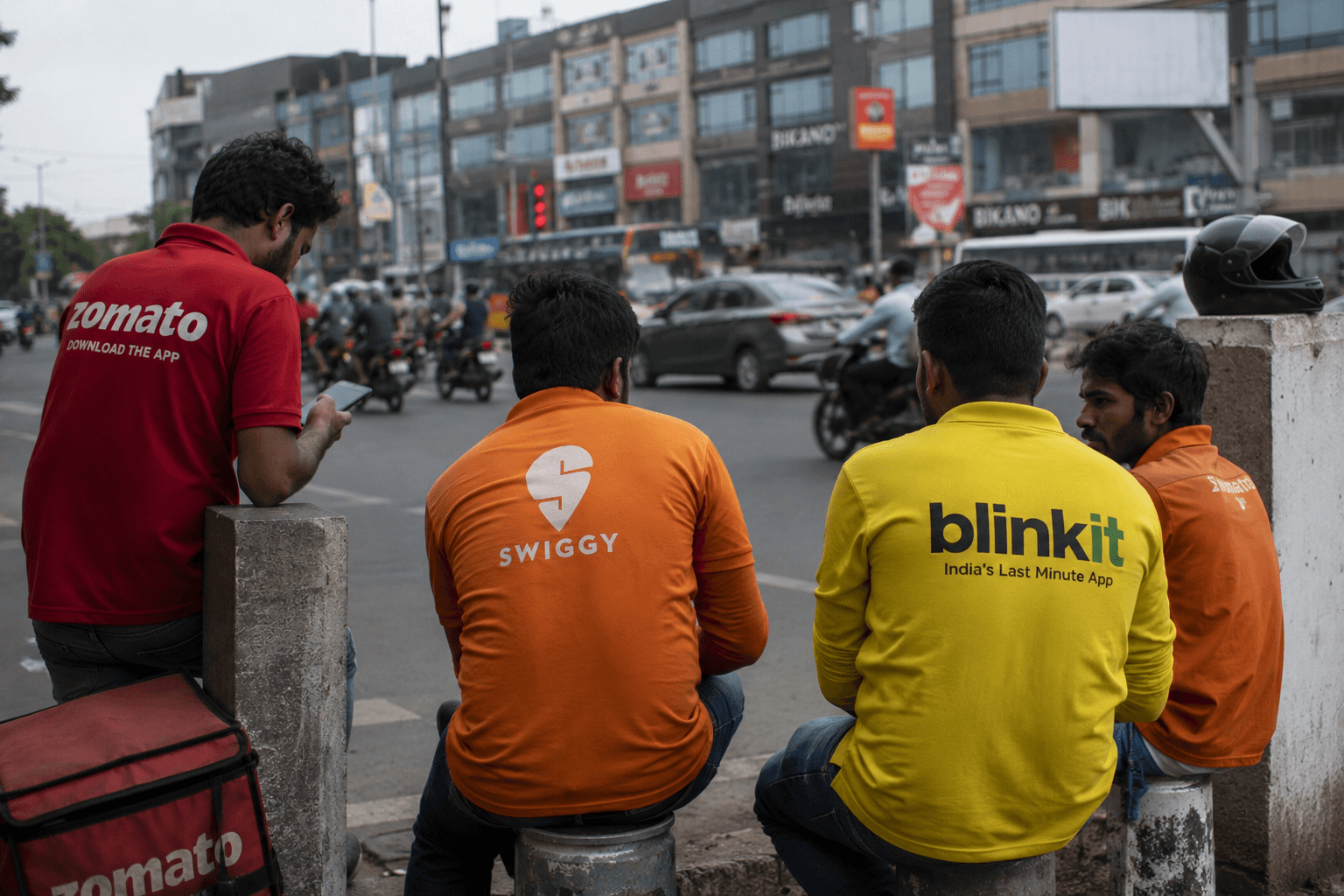 Economy
Do you know how much an average GIG worker earns ?
Do you know how much the GIG economy contributes to India ?
Have you ever imagined how many problems a delivery agent or freelancer goes through ?
India is the 6th largest economy, but the contribution of GIG workers is almost 1.25 % of India's GDP. As the population has also grown, the number of employment opportunities and creation has become a severe crisis. The competition in the market is 10x harder than before, so the job sector is constantly demanding more of the unorganized sector.
The GIG workers are basically contract-based and temporary jobseekers who work on rule-based with no future. They are delivery agents, temporary workers, part-time, contact-based workers, freelancers from Rapido to Uber and daily wage laborers who all come under GIG.
Most young people who have major financial issues and students who work during college and uneducated people prefer this job. In the metropolitan areas, they have a high chance of getting a temporary job for a few weeks or few months. They have to work according to the circumstances. After the digital India mission, there has been a high rise in Gig workers who are opting for employment in this sector.
Gig workers' economy contribution data.
Almost 2.35 lakh crore contribution towards the Indian economy, with 1.25 % of the overall by
By 2030, 90 million jobs have been created. The average earning 22,000 rupees a month, approx, but almost 40% of the population earn less than 15,000.
Problems
The gig workers are exploited by giving them less pay and providing them with minimal facilities. Some of the workers, for 12 hours to 13 hours a day, wander on the streets with no hope for the next day. Their career has high uncertainty and unpredictability every moment counting time with unexpected circumstances. Their work is not professionally recognized by the public nor respected with dignity. The companies do not provide extra income or facilities. If in case of problems, his salary would be cut from his own salary. They face high risk and instability with accidents, especially those working in delivery agencies and harassment from multiple food orders. Their dreams and personal life security are almost ignored. With just a basic income of 500 per day, all they can do is survive. There won't be any health insurance or policy for them to actively give security. One single health issue in a gig worker's family or his own health is at risk, suffers the entire family. The people aged between 35 and 40 have high instability in life in the gig economy due to family pressure and high stress environments. The government of India initiated NPS e shramik to extend social security workers who are working in the Gig sector Providing them with essential needs for a retirement plan.
Aadhar is based on PRAN (Permanent retirement account number).
How can the government help Gig workers?
The government has to ensure the gig workers get at least 20k along with companies providing essential needs for work. Security for his life and his family to provide them a better quality of living. As the population is growing, then more Gig workers will be generated and following a limited time limit at work.
The companies can hire employees for 8 hours in 2 shifts for multiple people. It would help more employment and gig workers can think of a 2nd alternative along with the work. Ensuring more strict rules and regulations for companies who are hiring Gig workers. exampl: In Karnataka, the gig workers need to update 14 days before removal of their job and 1% welfare fee transactions, with 15 days' grievance redress time for workers. its shows concern and well being of their work.
The future of India needs to feel secure, when it comes to work and security. The workers are the systems which provide a boost to bigger companies and the work force. The government needs to create more opportunities and control the population. The past generation had opportunities but lacked skill and knowledge, but the future has everything possible. It would be the concern of opportunities only. Overall, the gig workers' jobs should have government backing, without it wouldn't be possible to provide them with a quality of life. The contribution of 1.25% of overall GDP is the main workforce contributing to it. They are the backbone of the workforce in unorganized sectors, providing help for your needs.
From early morning food deliveries to working under unimaginable situations, from taking care of their family and personal life together. Sacrificing their own needs just for a few bucks is not by choice or wish, it is purely due to the responsibilities of family. Uber, Rapido, Ola, Zomato, factory workers, domestic workers all need dignity and respect because the contribution they provide to our well-being has to be evolved and make them feel secure. So many videos in the past have gone viral where Gig workers have been exploited near apartment gates by owners due to car parking issues or Zomato delivery workers' food being returned and not paying them back. Complaining about late deliveries and due to quick deliveries, many gid workers lost their lives in accidents. Let's respect every individual who is working hard for his life.
Bura Anirudh Yadav
May 7, 2026
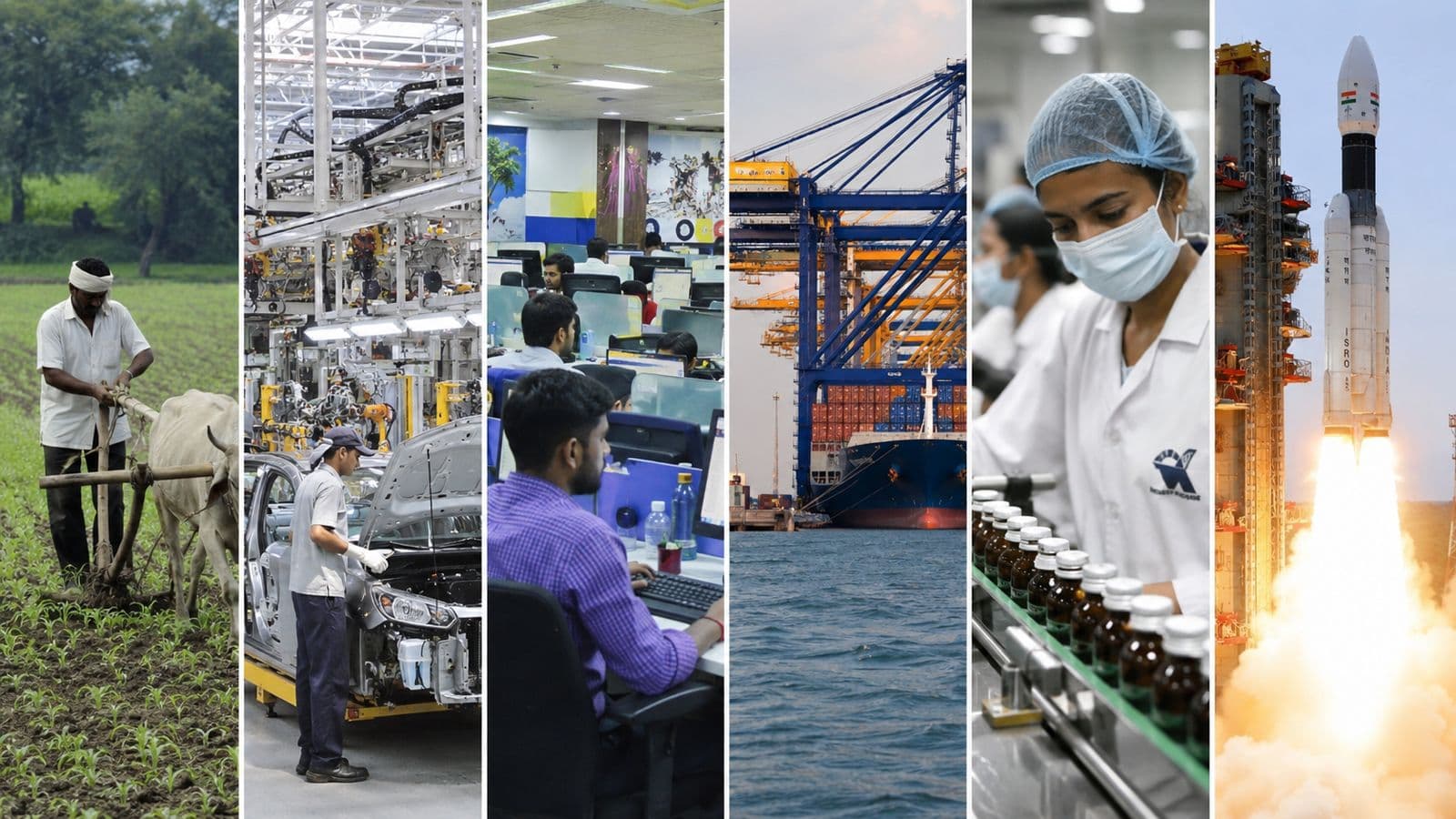 Economy
India’s Strongest Economic Sectors in the Global Market
Do you know which sectors India holds complete dominance in the world markets ? Today, India is the 6th largest economy in the world with almost 4 trillion. A country with a strong economy and technology with military capabilities would show a strong sense of autonomy in the world. Right now, India is significantly growing its economic power in the world. Since FY 2015, it has been around 2.10 trillion with an 8% growth rate and in 2026 it's around a 4.35 trillion dollar economy with 6.5% growth despite demonetisation and COVID-pandemic outbursts. It shows strongly that economic growth happened in the last 10 years of the time period.
5 sectors where India has made significant growth.
* The pharmaceutical industry, where 60% of the world's production happens in India, along with generic medicines.
*The agricultural sector was milk production and supply with 25% of global output.
*Digital Infrastructure and tech made a significant revolution across India with every other local trader using digital UPI methods with QR code transactions. The real-time payments are the highest in the world, and it is a successful measure where the growth is unimaginable.
*The Indian diaspora who settled in other parts of the world send almost 100 billion dollars annually through business and make contributions to the homeland through various methods.
*Renewable energy is one new initiative where the National solar mission that India is leading is collaborating with various countries.
In these 5 areas, India is a leading giant and contributing towards the Viksit Bharat 2047 mission. A few setbacks and crises surely reduced the numbers, but despite conflicts, it has made its mark in global rankings. The dream of a 5 trillion economy is not far away but needs even more proper policy formulations and executions.
Our competition is with China and the US and matching their economies, the instability which caused rankings to go down should be evaluated. The reduction of dependency on other countries and focusing more on independent growth would bring better resilience and growth.
Strengthen our economy with Vocal for Local and try to contribute more through creating and producing rather than depending on others.
Bura Anirudh Yadav
May 6, 2026
 Economy
 A 2- year-old political party won the elections despite economic growth by the previous government.
In 2026, high-stakes political battles in all 5 states were great. In Tamil Nadu, the previous government was led by MK Stalin of DMK. According to the data, the Tamil Nadu government has increased its record highest GDP growth of 11% in the entire country. It has increased in the areas of agriculture, automobiles, manufacturing and financial services, and tourism was the major source of growth in the last year, 2025-26 economic surveys.
But how come they lost elections with a new political party which was just 2 years old ?
Some of the experts made statements like that Good Governance has lost for freebies. You might think after development and economic survey reports, how could they lose elections.
The real answer is politics is more than economics or development. Trust and connecting with people helps more to win. TVK founder Vijay is a famous film actor with all dynamics suitable for politics. His stardom and films made him a public figure before he entered politics. People have firm belief in him, as he was doing selfless service rather than using politics for his career.
Actor-turned-politician Vijay and his party TVK gave a manifesto which was eye-catching and the public viewed it as a benefit for their growth. His charisma and public image drew huge public gatherings, where people believed his speech and words. Prashant Kishore, the political strategist, was behind his whole political campaigns and works. The people have saw DMK and AIADMK governance for a long time and both had alliances with national parties. They brutally targeted Vijay personally and professionally, which gained huge sympathy for TVK.
These were some basic reasons that paved the way towards the TVK party's victory despite DMK's 11% economic growth. Winning elections is all about ruling over people's trust more than economic surveys.
Bura Anirudh Yadav
May 5, 2026
 Economy
Rapid growth in Business & Economy after the BJP is set to win.
The Bharatiya Janata Party is set to form a government in West Bengal after a massive electoral battle with the TMC.
It is one of the crucial states in terms of national security and, being a coastal state adjacent to Bangladesh and Myanmar, it has become a strategically important state. During the times of Independence, West Bengal was one of the key areas where development and education were significant. After 15 years of TMC rule, the BJP is all set to rule West Bengal.
Sectors in which economy will be booming in a few days.
*Infrastructure development as the central government is keenly looking to invest in industrial sectors. With new projects and economic corridors to be established from roads to construction, the prices of cement like Ambuja and L&T would have high growth.
*The steel and coal sectors would see a massive jump as West Bengal is the 3rd largest coal producer.
*The health care industry would get AIIMS and Ayushman Bharat policy would be initiated in Bengal as a central government initiative.
*Logistics where ports can be established on a large scale as Bengal is a coastal state. The increase in imports and exports would be increased.
*Growth in fisheries and agriculture production due to union governments' support.
*Law and order would bring large scale investment in the state and belief in the stability of both double-engine governments.
* Jobs in Government and unorganized sector would increase.
Bura Anirudh Yadav
May 4, 2026
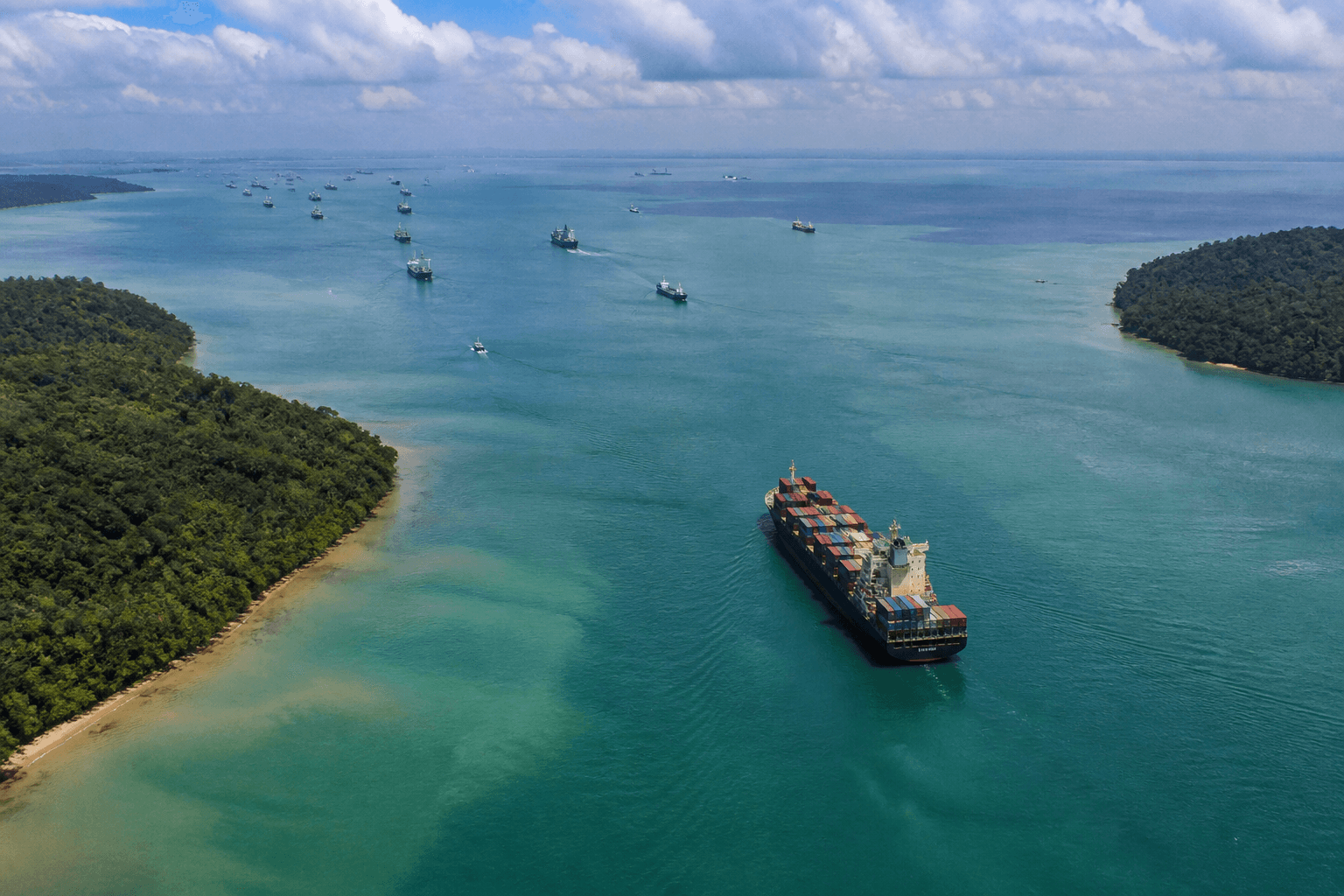 Economy
The US and Iran conflicts in the world have become critical, from increasing gas to oil prices across the world. Iran took a decisive step against America to stop the Strait of Hormuz. It has deeply impacted the trade dynamics of the world, the LPG crisis, where India had to import from other nations and prices instantly hiked up.
The recent news regarding the Great Nicobar project, which is adjacent to the Strait of malacca: India wants to build an infrastructure project worth 81,000 crore to have a strong presence in the Indian Ocean region, which has recently come under massive limelight. After the opposition leaders alleged a scam on this project.
The Strait of Malacca is an important strategic location for the world and particularly India. It has 25 % of the world's economic trade happening and China has most of its dependency on it. So India is strategically building one of the largest ports of military significance, dockyards, a submarine base. It will work as a choke point for India to control the entire trade.
It is a stretch of 800 km with over 35% world oil trade and 20 % gas trade. It is surrounded by Malaysia, Thailand, Singapore, Indonesia. With 60 %, maritime trade happens from the Strait of Malacca. It is one of the largest straits for trade, in the case of a conflict between India and China. It can counter the world by choking off the passage of trade.
Bura Anirudh Yadav
May 2, 2026
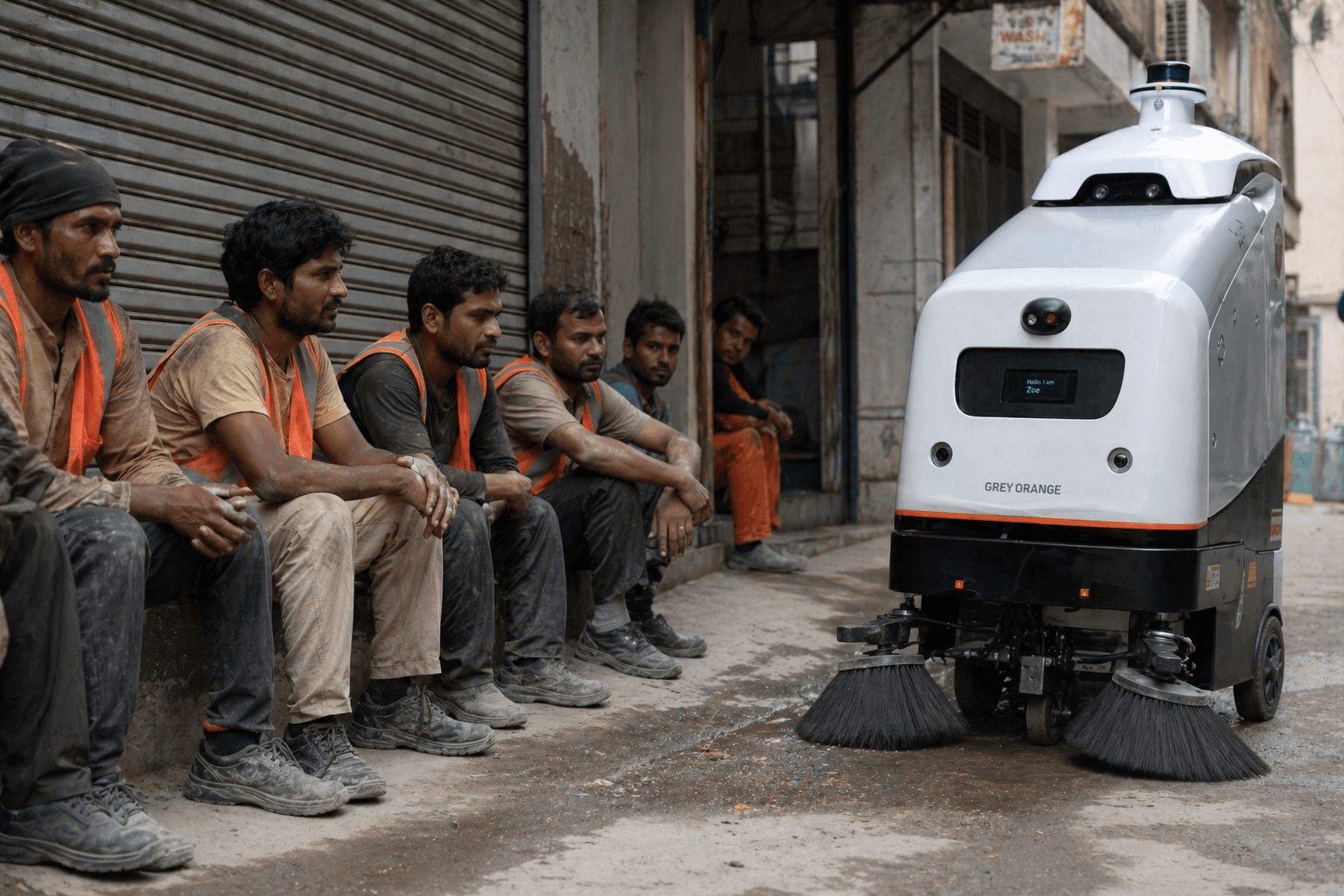 Economy
Mother: What happened, my dear son ?
Son: Technology is impacting my job ?
Mother: what type of technology are you talking about ?
Son: I am talking about AI, which can outperform many human activities.
Artificial Intelligence and technology has made an unimaginable impact on workers. It reduced the dependency on people. The future of tech-driven work will make things quick and easy. In the place of 100 people, 10 people who learnt AI tools can do the work. The recent incident of layoffs is a deep concern for human existence. All the professionals in every sector, from content to data-driven jobs, can be easily replaceable.
People who are updated with new trends and activities can have a high survival rate. The rest of the people who are unprepared or outdated can have major problems in life. The generations of the 1980s and above have to suffer with news trends and the tech-driven world.
It takes a lot of effort to adapt to the new generation with drastic changes in the world.
The traditional workers and jobs can be done within a few minutes, like data entry and entry level jobs with basic roles, customer and telemarketing, basic accounting jobs. If tech-driven agriculture procedures start, the manual labour role would decrease. The Content translator roles and language oriented jobs would also have a severe impact.
If you have to survive in the world. All individuals should be updated with new AI tools along with skills which are emotionally intelligent-based work. Creating useful products for human life and resources would create more jobs manually. Focusing on business which is based on manual functions, following humanitarian purpose more than commercial purpose. Using new Ai methods to create more Jobs and business models.
Stay updated and adapt towards modernised work.
Bura Anirudh Yadav
April 30, 2026
 Economy
The Indian Industrial Sector is one of the prominent, which contributes almost 30% of GDP. It provides large-scale employment to the young people in industries and helps our overall economic activity. From manufacturing, construction, automobiles, pharma, all sectors which are involved in mass production and requires huge procedure. Almost 50 million people work as employees in the industrial sector.
The major problems of Industrial sector
*In the tech-driven world, the skills which need to be improved and most of the skills are being mismatched.
*All the experienced and well qualified are moving to developed nations and all the brain drain happens on a large scale in india.
*Logistics and supply chain management of large goods and manufacturing is slow and difficult task. We require large scale supply chain systems where goods are transferred quickly from one country to another, via ships, air and land.
*Our trade policies have constant conflicts and halts between wars and world leaders. The relationships and trade policies should have strict and conflictless trade.
*Red tape and corruption in many industries and strict barriers make the industrial sector problematic. The facilities available to the employees during work and salaries are extremely less, this impacts overall productivity.
The recent protests in Noida indicate a harsh reality of how industrial workers deal with wages and mental traumas. Inculcating the high use of modern world learning and making bureaucracy even more effective to deal with it. The supply chain management and resources need adequate resources and road connectivity to supply goods for long distances.
The bilateral relations between the West developed countries and under developed nations need a better approach to improve our economic activity. Government has to ensure employee safety and security regarding industrial functioning. By paying them proper salaries and acting strictly against industry owners who are trying to exploit employees by paying them fewer wages with high work. The industrial facilities should have strict rule book and ensure strict fines. All these procedures would definately enhance the industrial sectors performance.
Bura Anirudh Yadav
April 29, 2026
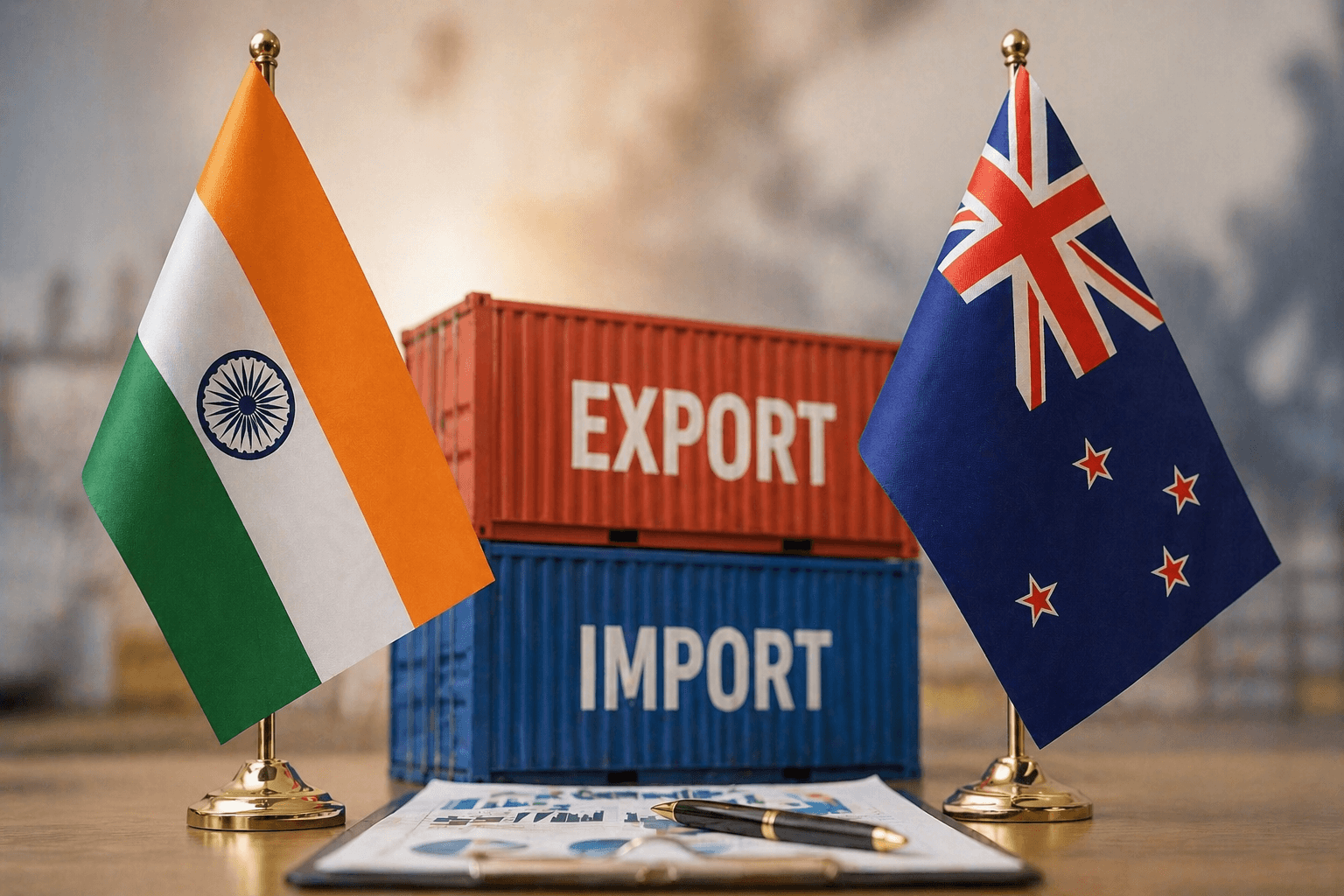 Economy
$20 Billion Investment Commitment by India & New Zealand, Signs Historic FTA agreement.
India and New Zealand signed a historic trade deal. It marks significantly how India's foreign policy is establishing its presence across the world. It deeply enhances the relationship of both countries in terms of economic and foreign policy effectiveness. FTA is an important deal for India and New Zealand as it gives assurance of 100% duty-free economic trade. This trade deal was initiated by Union Minister of Commerce and Industry Shri Piyush Goyal under the leadership of Hon’ble Prime Minister Narendra Modi.
Key areas of FTA agreement
$20 billion investment commitment from New Zealand for technology, manufacturing, startups and new trends in technology.
A 100 % duty-free trade deal from New Zealand shows trust and economic growth indications.
Across 118 sectors which enhance MSME sectors, exports and innovation.
It will enhance exports in pharma, agriculture and Ayush, which is now historic to have its global presence. It will help India be represented in Yoga, Ayurveda, and Indian goods.
Market enhancement towards Textiles, leather exports and processed food sectors.
Exclusive relaxations for students who study abroad and hold a visa for education purposes can work for 3 years after completion.
How India Benefits from this Once in a Generation Trade deal
Removal of Tariffs and smooth economic trade, which will enhance India's economic growth. It helps to boost India's overall economic growth and strong partnership with New Zealand. The Instant price reduction of Indian goods in New Zealand. Zero Duty benefits for both nations is the major positive change in this deal. India's strength and economic trade deal through partnerships can truly make phenomenal changes in the coming years.
If you want to start a business regarding imports and exports visit Onetick technologies for strategies to your business, we will enhance our goals towards Viksit Bharat @ 2047.
Bura Anirudh Yadav
April 28, 2026
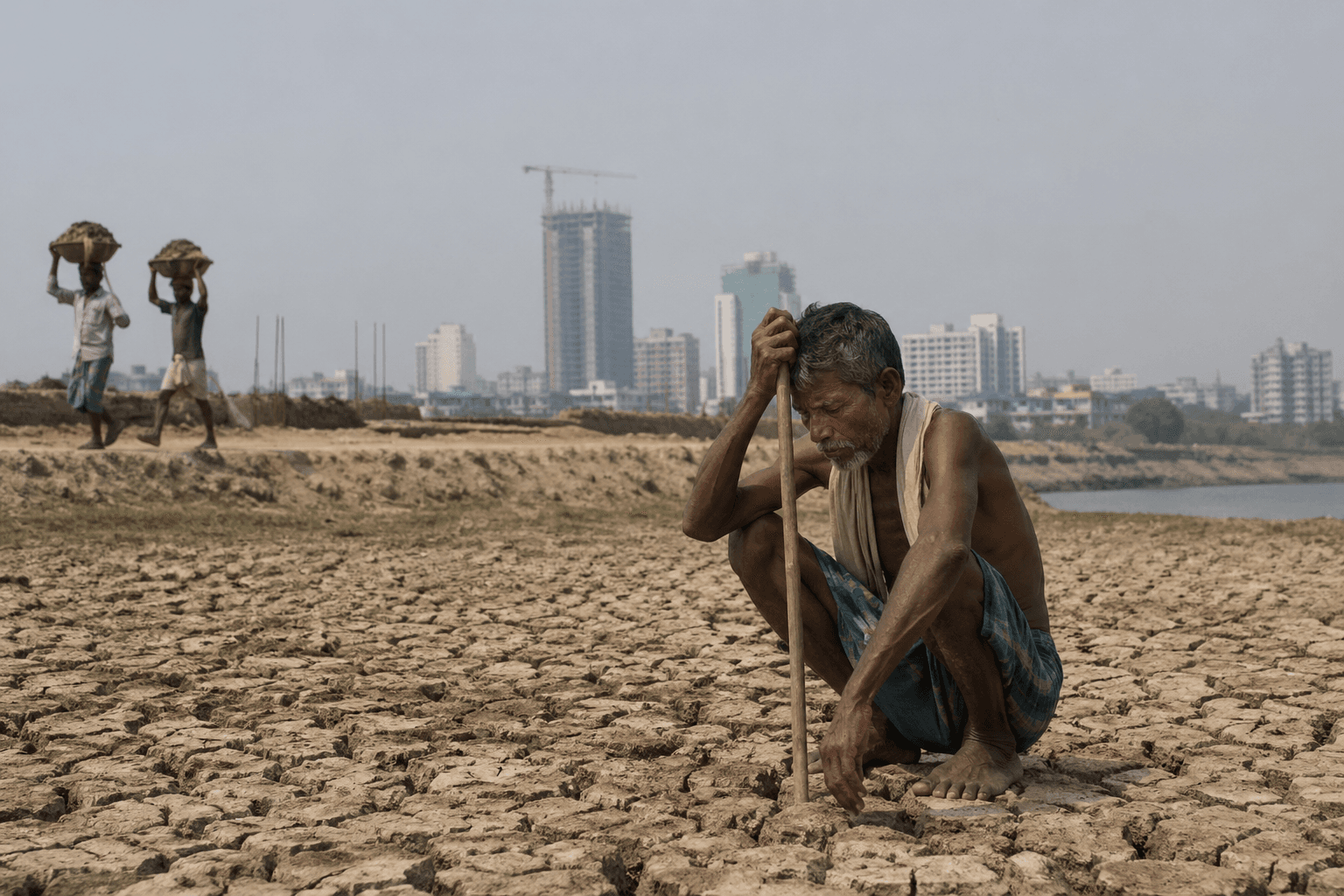 Economy
How hot summers create problems in indian economy.
The Indian economy is one of the top 10 economies of the world. It has increased immensely in the past few years with decades of hard work and decades of effort.
The economies are frequently fluctuating for global reasons and domestic issues.
As a rapidly growing state, India has suffered major economic crises in the past also, like the 1991 LPG reforms, COVID-19, the Great recession, Demonetisation.
Do you know India constantly suffers in summer also ?
*Agriculture & Food Security is one of the prominent and sensitive areas, where it impacts deeply. Nearly 60% of the above percentage of India is still somewhere dependent on agriculture sector. When it comes to food storage and supply chain management, food products are a big task. It has a high chance of food spoiling the environment due to heat and severe climatic conditions. Uneven rains due to global warming, water shortages, droughts. Food storage warehouses have many private and government places where protecting food is a difficult task.
* The labour force and management of India suffer a lot during intense heat waves, the productivity reduces, and the results are numb. The workers usually fall ill or skip work due to harsh temperatures. The lack of facilities in the workplace is also a critical issue.
* Health issues in summer seasons are normal, from dehydration to heat strokes, especially for the labour working in construction, industry and street workforce. There might be a cause of death in many workplaces.
The water resources are reduced to severe temperatures, droughts, rivers and lakes dry up. The lack of water impacts all sectors, which has a deep impact on the economy.
According to the past data, around a 159 billion dollar loss in 2021 and in 2022, a 219 billion dollar loss hit India economically. What about 2025 and 2026? Its astonishing figures totally change the dynamics of the economy. Every part of our country needs to be taken care of and analysed to rectify the issues which can reduce the crisis. These are a few examples which we have provided. If we think deeply and the government analyses the problems even more deeply, it could save billions of dollars.
How should the government handle economic losses and productivity?
* Help the labour workforce with incentives and facilities to work efficiently and provide them with equipment for productive work.
* Facilitating subsidies and crop assurances to the farmers for summer losses.
* Campaigns and promotions for safe summer work progress.
* Water resource management systems in summer.
* Special teams for assessments for summer productivity meetings at the top level.
* Strict rules for public and private insitutions for paying less and avoiding facilities to labour when they work.
* A committee should be formed for losses during summer seasons.
Bura Anirudh Yadav
April 27, 2026
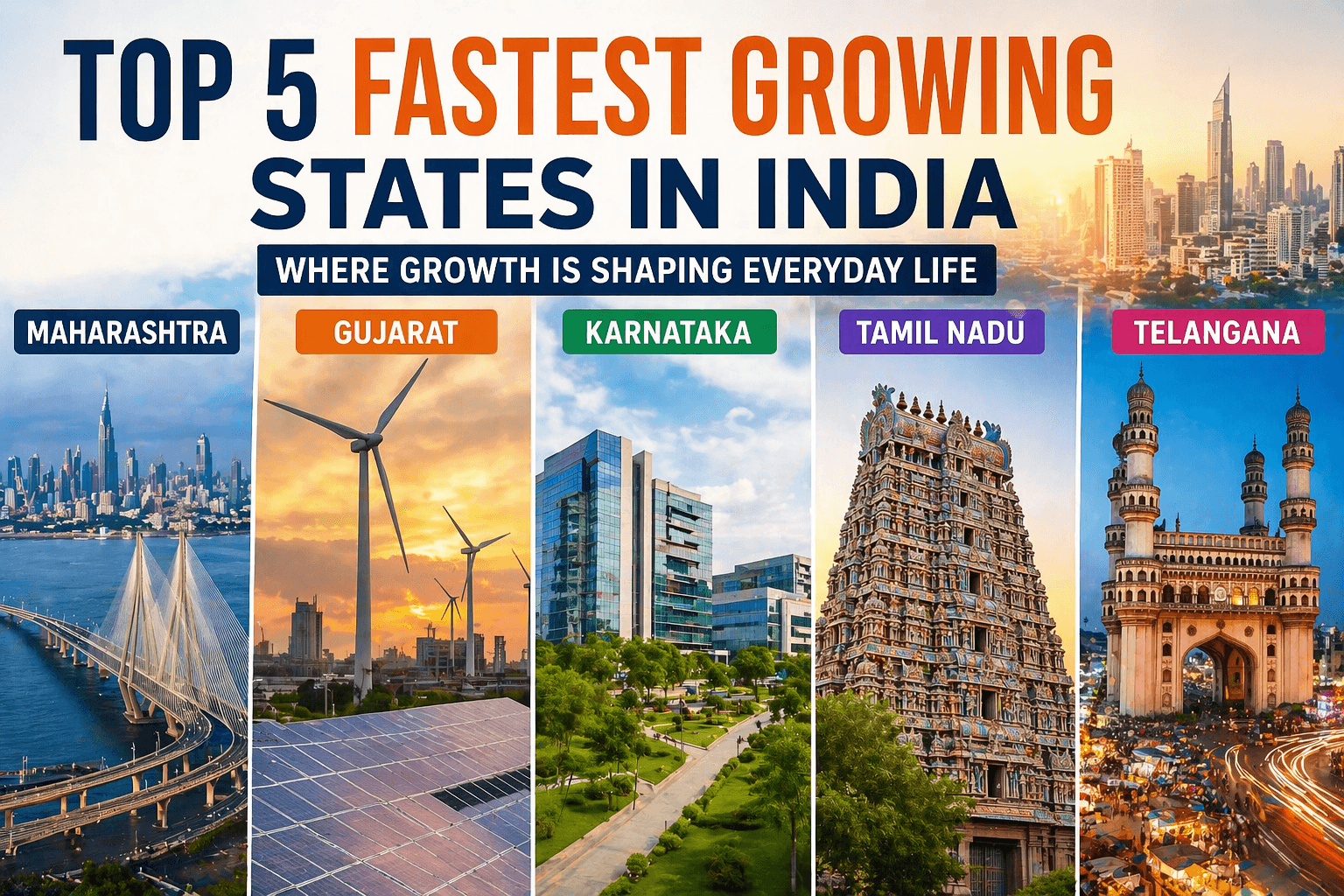 Economy
When we talk about economic growth, it is easy to focus only on numbers like GDP or investment figures. But growth is not just about statistics. It is about better roads, more jobs, improved education, and a higher quality of life for people. Across India, some states are moving ahead faster than others, creating opportunities and transforming lives.
Here are five states that are currently among the fastest growing in India, and the reasons behind their progress.
Maharashtra continues to lead as one of India’s strongest economic engines. With cities like Mumbai and Pune, it has a well-developed industrial base, strong financial sector, and a growing startup ecosystem.
The state attracts both domestic and international investment. Infrastructure projects, expanding metro networks, and a focus on technology and services have helped maintain steady growth. For many people, Maharashtra represents opportunity, whether in business, jobs, or innovation.
Gujarat has built its reputation on strong industrial development and business-friendly policies. From manufacturing hubs to ports and logistics networks, the state has created an environment where businesses can grow efficiently.
The presence of large industries, combined with consistent governance, has helped Gujarat maintain high growth rates. For workers and entrepreneurs alike, it offers a stable and supportive environment.
Karnataka, especially Bengaluru, is known as the technology capital of India. The state has become a center for IT companies, startups, and innovation.
What makes Karnataka stand out is its ability to attract talent from across the country. The growth of the tech sector has created jobs not only in IT but also in related industries like real estate, services, and education. It shows how innovation can drive economic progress.
Tamil Nadu’s strength lies in its diversity. The state has a strong presence in manufacturing, automobile production, textiles, and services.
Cities like Chennai and Coimbatore have developed into major industrial and business hubs. The government’s focus on infrastructure, education, and industrial development has created a balanced growth model that benefits multiple sectors.
Telangana is one of the newer states but has quickly emerged as a fast-growing economy. Hyderabad has become a major center for IT, pharmaceuticals, and startups.
The state government’s focus on ease of doing business, digital infrastructure, and innovation has attracted significant investment. Telangana’s rapid progress shows how policy and vision can accelerate growth in a short time.
Each of these states has followed a different path to growth. Some focus on industry, others on technology or services. But what they all have in common is a commitment to development and opportunity.
For the people living in these states, growth is not just an economic term—it is something they experience in their daily lives. Better jobs, improved infrastructure, and new opportunities are the real signs of progress.
As India continues to grow, these states offer valuable lessons on how development can be both fast and meaningful.
sonu vaishnav
April 24, 2026
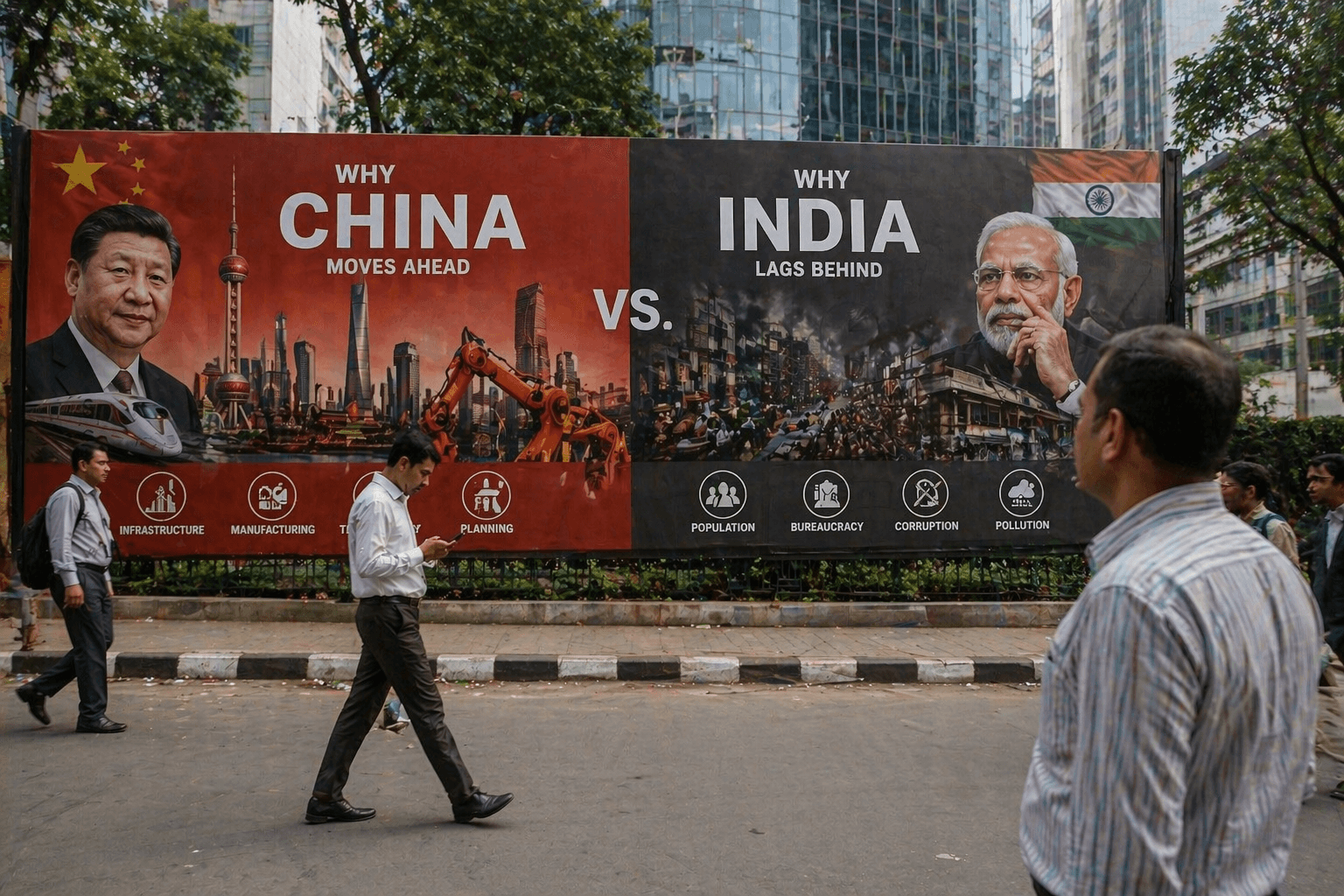 Economy
India needs new economic reforms to match China's competence.
India and China are one of the largest countries in terms of economy and land size. India got independence in 1947 and whereas China got autonomy in 1949, then what made China move ahead of India ?
The Indian freedom struggle and Chinese revolution are both poles apart. Both have adopted different styles of government structures, where India wanted a democratic system in which the people's mandate was important, whereas China wanted centralised government control.
Reasons why India is Behind China ?
* India follows a democratic system where every 5 years we have elections to choose the representative. It takes a lot of time and effort to conduct the procedures for elections. At least 6 months of procedures and all the development activities are stopped before the elections, which are eventually delayed. The constant change of governments creates large scale delays in governance and development.
* China opened its markets in the early 1970s, like India in the 1990s, it created a big gap in developments. India focused majorly on tech and software, but China focused on manufacturing and tech.
* Having a constant government for a long time improves decision-making and quickness in development, but when you have democratic systems and rigid bureaucracy, it creates hurdles to implement policies on the ground.
Wars and diversions faced historically after independence by india, it also goes through massive protests and economic fluctuations more than China.
* Research and development brings innovations and creates new knowledge. China spends almost 2.39 trillion dollars whereas India spends 188 billion dollars on R&D.
* China exclusively focused on manufacturing and exports compared to India. The dependency on Chinese goods across the globe is significant.
* India is dependent on western countries and China is independent. It has its own social media platforms like Youku for YouTube. Instead of Facebook, they use WeChat. It has built its own mechanism and tools which they export to other nations.
* China has a 19 trillion economy whereas India has a 4 trillion economy.
India has to significantly adopt strict and stringent rules and increase its manufacturing capacity on an extremely large scale. Reduction of dependency and focus on more innovation and imports would cause significant improvement in the economy. Implementation of a one nation, one election will help focus more on development rather than elections. All the places which require huge time and effort should be invested only in economic power. The vision Viksit Bharat 2047 should have major reforms in empowerment and growth rather than be dependent and hindrance.
Bura Anirudh Yadav
April 23, 2026
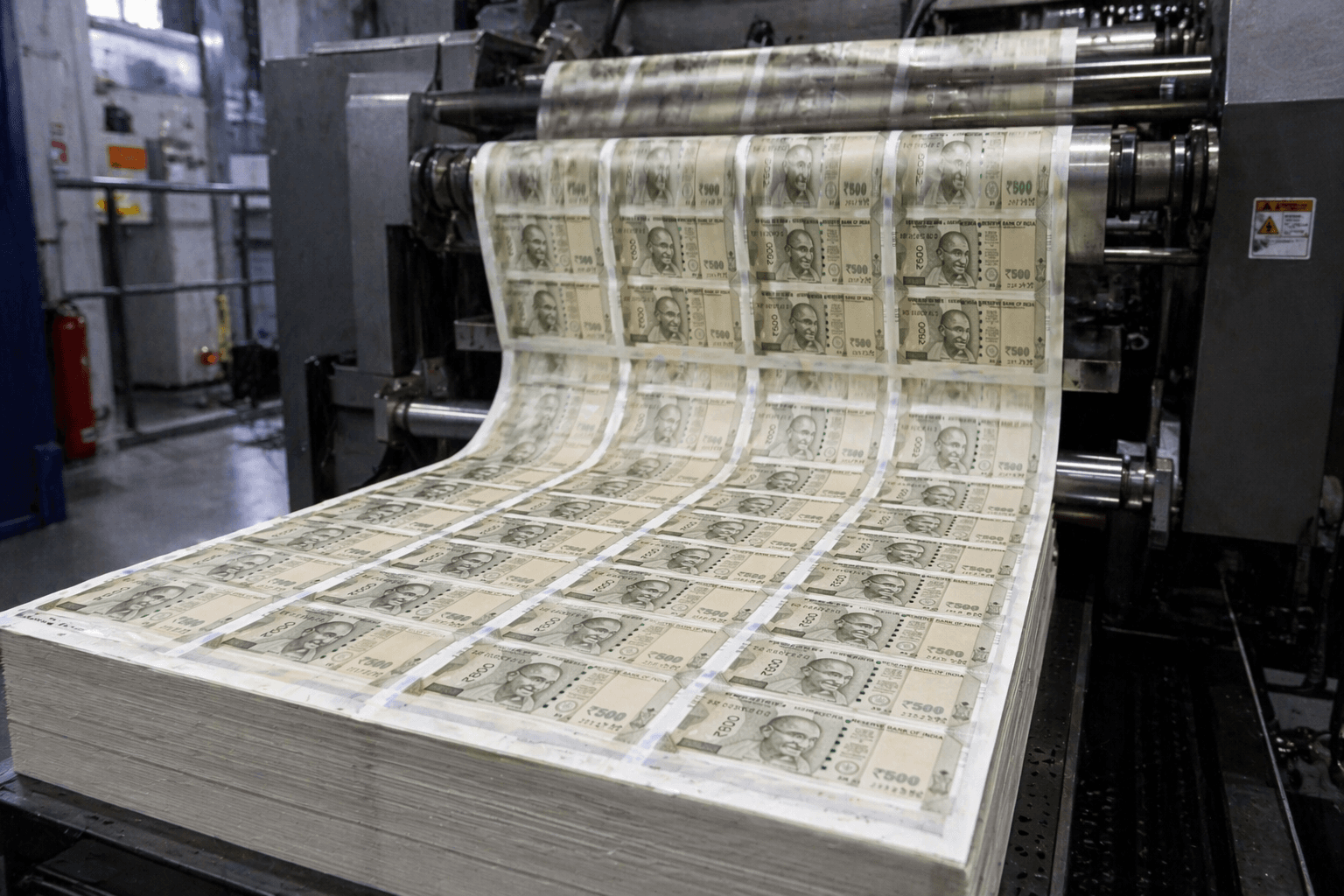 Economy
Have you ever thought about reducing poverty in India? Then why does the government not quickly print currency notes and circulate them among people ?
The Reserve Bank of India is a regulatory body which deals with Indian banking and currency systems, from monetary to the economy. It is one of the largest and most trusted central banks of the government of India. RBI plays a significant role in framing strict rules and regulations on banking, currency, foreign reserves and economic stability. The government keenly looks into currency making structures and announces the minimum amount of currency to be printed based on the requirements of demand and supply. Printing more currency will reduce the reputation of country and currency value. It might improve the purchasing power of the goods, but what about the supply of goods based on purchasing power?
Every year before the budget session, the finance ministry and RBI audit the currency usage in terms of public utility, need, wastage or torn notes. After deep analyzing, they print notes as per requirements. Limited or excessive currency notes can have a severe impact on inflation and on the Indian Economy.
Currency notes have a certain amount of frequency which is necessary to create a stable economic system. The government does statistical analysis before taking any actions on currencies. Demand and supply of goods require equal balance. For example, in Venezuela, they printed notes in huge numbers and supplied them to the citizens. Within a few days, the purchasing power had increased to 10 times higher than before and the supply of goods was reduced.
The entire nation got into an economic crisis, which led to massive disturbances across the country. To buy a piece of bread requires a huge amount of currency notes. The value of currency declined for goods which were cheap before and after inflation, it needs more currency for fewer goods. Poverty reduction needs proper planning and economic enhancement through providing job opportunities and development of resources. Printing notes would in fact worsen the situation 100 times more than you think.
Bura Anirudh Yadav
April 22, 2026
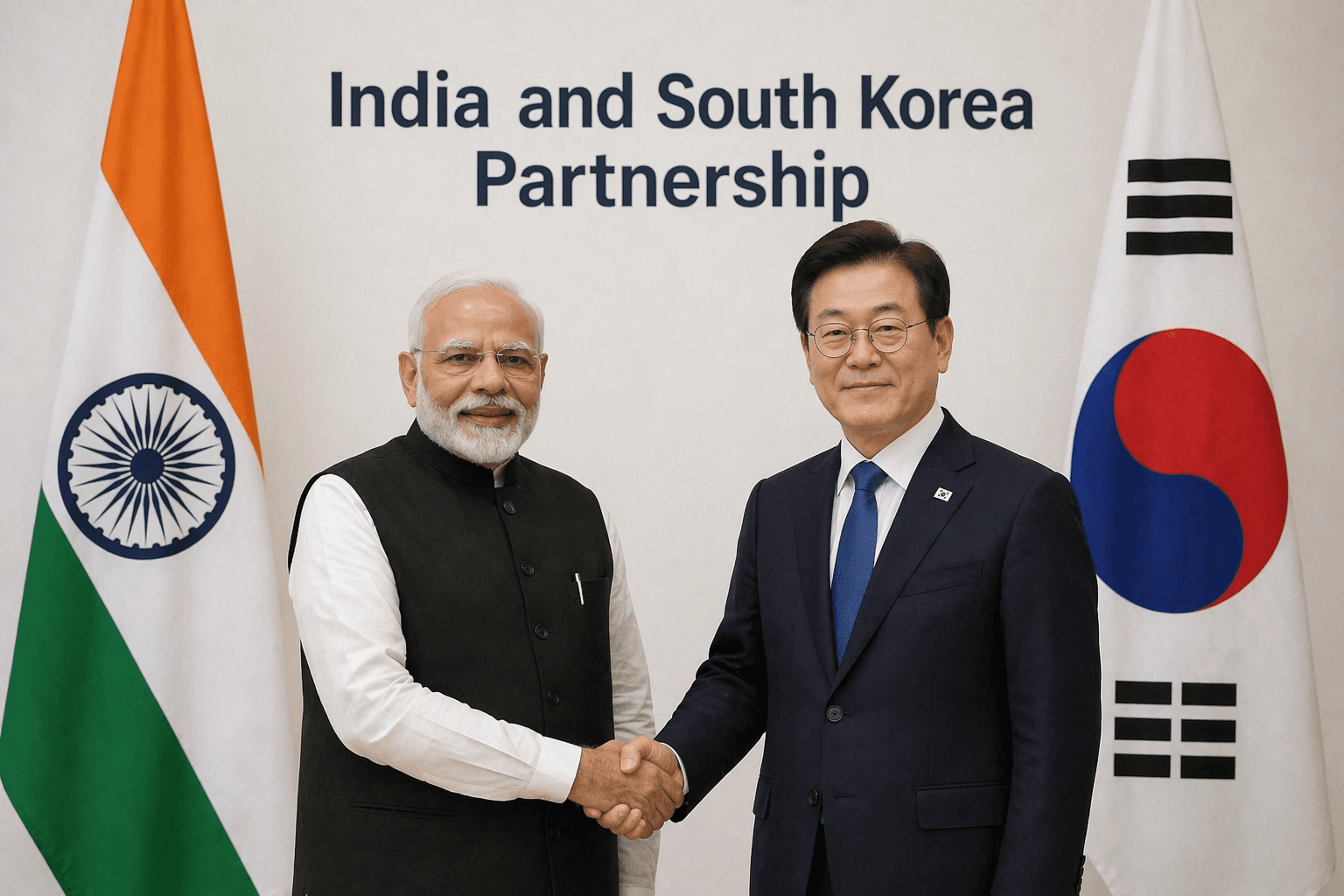 Economy
50 billion dollar trade between India and South Korea by 2030
India and South Korea have signed multiple agreements to increase economic ties between both countries. South Korea is one of the prominent strategic partners of India. As of 2025, India and South Korea have a trade deal worth 26.89 billion dollars.
South Korean President Lee Jae Myung is on a visit to India to enrich economic trade with India. It is a strategic success for both countries.
India and South Korea have signed multiple agreements during the visit. It includes tech, culture, defense, maritime and agreements which would help trade to be effective and efficient.
list of the trade deals that happened between India and South Korea.
*The Industrial Cooperation Committee and the financial forum between both countries to have trade settlements and smooth transactions for the trade process.
*Digital Tech support with AI, semiconductors and adequate
Supply chain management systems.
* Korean Industrial townships in India to be established to increase the Korean presence in India.
* Maritime and Defense sectors to gain momentum to create ship building, climate, artillery systems and technology for the latest additions to defense equipment. South Korea also joined the International Solar Alliance and Indian Pacific Oceans Initiatives.
* Cultural exchange of Indian cinemas in South Korea and PM modi said that K-pop and K drama have got a large amount of popularity in India. South Korea to get Korean Center in Mumbai and Bollywood can collaborate with that center. It is diversified agreements, which will enhance the growth of economic trade and friendship between both India and South Korea.
Bura Anirudh Yadav
April 21, 2026
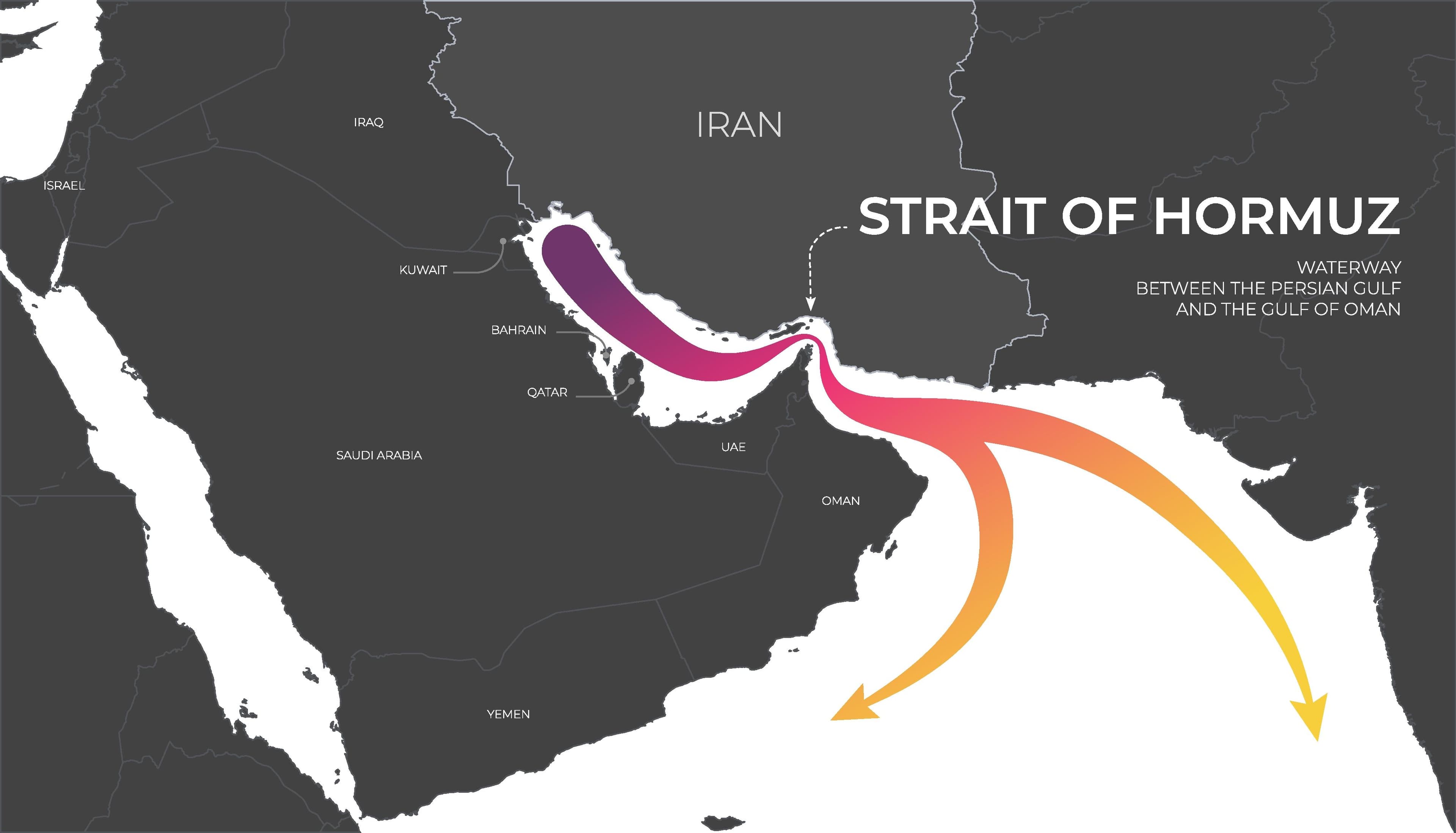 Economy
Lessons to learn from Middle East Crisis.
The Middle East crisis started after the assasination of Iran's supreme leader, Ayatoullah Khamenei. The escalation created massive havoc across the world. Iran, as a strategic move to counter Israel, the USA and the countries who did not support Iran during the conflict, has attacked the UAE by bombing and closed the Strait of Hormuz. It is a devastating trade loss for many countries, as most of the goods were on halt and almost 20% of world trade of oil and gas happens through the Strait of Hormuz.
How is India dealing with the Middle East crisis ?
After the Middle East crisis, India's economy slipped to 6th position from 4th. The crisis hit hard on LPG gas and oil supplies. Almost 60% of gas is imported from the Middle East region, which passes through the Strait of Hormuz directly. To counter that, India has started importing from 40 countries with 70% of energy coming from new routes. The idea of domestic production has increased upto 25% after the crisis.
India is totally dependent on imports of oil and gas with an almost 89% dependency that has created economic losses. Some experts predict the Middle East crisis could sustain for a long duration, and it will be the beginning of the electronic goods market to rise effectively. The increase in prices has hit every household, food businesses, black market LPG gangs and increased price rates.
What India should do to survive future problems of energy.
* Reduction of dependency on world imports and creating our own resources.
* From switching to electric based cooking equipment and EV vehicles.
* Having good relations with other nations to get good import supplies.
* Focus more on Research and Development to predict crises early on and take adequate measures to handle crises.
* Finding alternative routes to reduce dependency on the Strait of Hormuz in long time.
* Creating a strong naval presence and safeguarding trade and goods.
* Strategic foreign policy plan before any crisis.
The global crisis has impacted the Indian economy and disruptions across all sections of society, from job loss to price rises. The crisis is a lesson on oil and energy to start domestic supplies more. The self-reliance concept has to aggressively be pushed in the country so that the world depends on India rather than we depend on others.
Bura Anirudh Yadav
April 20, 2026
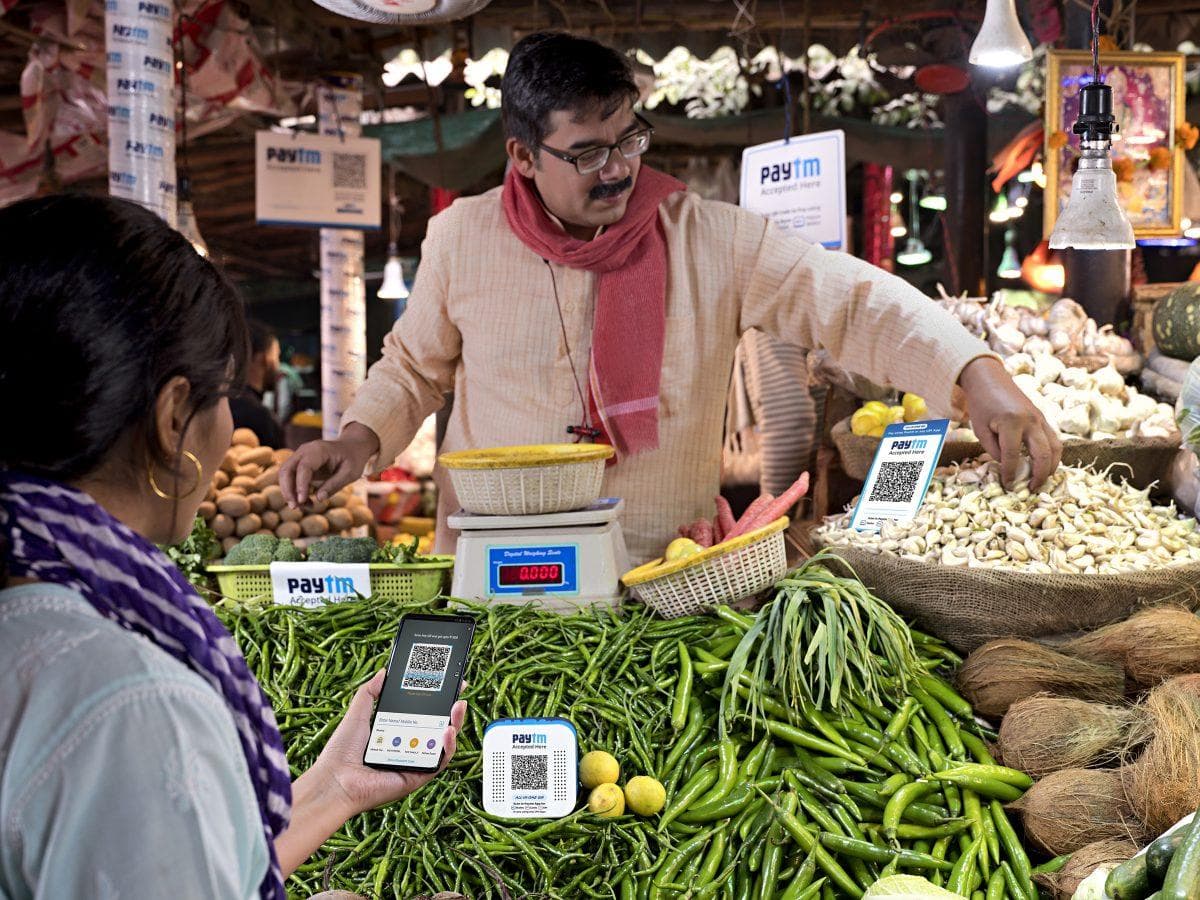 Economy
How are digital payments replacing the cash economy ?
The digital revolution that has taken place in India over the last few years has witnessed massive amounts of changes in the country. A new era of tech-driven procedure has made life easy for payments, orders, information and communication processes. The Digital India Mission was launched by the government of India in the year 2015. Eventually, it had a lot of negativity in parliament and citizens, but eventually, as time passed after 10 long years of governance, it has shifted from a cashless society in all major parts of the country. The tier 1, tier 2 and tier 3 cities where survival is difficult even though those parts have seen usage of digital payments methods. After the demonetization of currency notes, the increase in digital methods has skyrocketed by adapting new methods. The reduction of the cash economy has dropped since digital initiatives have gained the limelight and citizens felt easy access to payments via the internet and mobile applications.
Every other shop, including street vendors, especially in urban areas have adopted it on a large scale. The banks have created strict rules and restrictions on limit-based transactions. Society has adapted online methods from payments, mobile applications and E- governance methods when it comes to citizen grievances.
The government adopted digital platforms for form submission of e- challan, e - tax, e- complaints in police stations, electricity bills, water bills and every other initiative is linked to online methods. The dependency and effective time-saving measures have created hassle-free procedures, accountability, transparency and responsive work effectively. The citizens no longer wait for a long time, can track their own payments, can apply to multiple places for jobs or university applications with just an online application. From fee payments to online Tax filing, everything is dependent on online procedures only.
The removal of currency notes of 2000 value notes has also reduced cash flow in society. The dependency on tech has made it mandatory for every other citizen to learn technology-based systems. The older generation needs to adapt and learn new methods to adapt to banking systems and the usage of mobile phones. The digital revolution has created mammoth problems for the older generation in new ways. The traditional-based work was replaced with online gadgets. Many elderly people have lost their adaptability skills and are still dependent on their children. From booking cabs to online payments in supermarkets, a divide between new and older generations has created a significant impact on the world. The government's agenda to enhance technology to compete with the western world is also a reason why India's paradigm shift towards digital systems is worth understanding.
Our aim is to create awareness to support youth in building a better future through business opportunities.
-For Business kindly follow Onetick technologies
- For loan consultation contact -Loan Sugam
Bura Anirudh Yadav
April 18, 2026
 Economy
Government E- Marketplace FY 2025-26 Procurement Analysis
Government E- Marketplace is a procurement policy which changed the entire landscape of bidding process, auction and selling of goods and products entirely through tech-driven methods. It was started on 9 August 2016 to enhance transparent and responsible procurement and to fulfill service requirement procedures effectively. It has set a benchmark by creating a digital platform for supply of goods and efficient trade.
The Gem has vast amounts of space to sell, buy and bid properly on an electronic basis only. It is a purely 100% cashless system and the government will be the monitoring source of the entire process. Accurate profile and document verification is done through the Vigilance Commission and Controller Auditor General. Organizations will be dealing with audits and inquiries.
The mantra of Gems is openness, fairness and inclusiveness. It contributes almost 18% to 20% of India’s GDP. The modern tech tools are the major change from the traditional to modernized process of procurement, a new way of dealing with E-governance in India.
Gem has similar patterns, like Flip kart and Amazon. The government also shares requirements from various departments for goods. The bidding system was traditional, time-taking and paper-based. Now all bidding is done online.
Data & Analysis
Gem Startup Runway started in 2019, which began selling goods and products on GeMs. 2019 is women entrepreneurship empowerment, a major change made by the government. Almost 2.1 lakh women-led MSMEs were registered with almost 28,000 crore financial transactions. 68% of orders were executed in the year FY2025-26 worth 51 lakh orders worth 2.36 lakh crore and more than 11 lakh MSMEs were registered on the platform. The platform is a 100% electronics-based system which is a unique initiative of the Government of India.
GeMs platform helps in a transparent, authentic and responsible policy model for goods to be sold and proper assessment of documents via digital makes it a quick and transparent model for buyers and sellers. You can sell the products to the government authorities. The product which is not on the govt bid list or requirement can also be placed as an independent product for sale of goods. All members have to register through the portal, which is free of cost. As per the government's data, in the year FY-2025 -26, a revenue of 18 lakh crore worth of business happened on the Gems portal.
References
Ministry of Commerce and Industry official Website
Bura Anirudh Yadav
April 10, 2026
 Economy
Exclusive Insights & Awareness on Business Subsidies
Business subsidy is an essential component, to increase scaling and protection towards financial help for businesses through different policies. The government initiates policies to provide help to businesses to grow and create more employment opportunities. Historically, subsidies were given to maintain stability and economic empowerment. It was started due to crop failures in ancient times as agriculture was the major source of income. Eventually, in modern times, governments are giving subsidies to tech-driven and startup companies for business.
Types of subsidies
The governments give different types of subsidies to businesses by giving them financial help through these types of policies, like
* Capital subsidy by giving them direct financial help.
* Interest subsidy like reduction of interest or exemption on interest.
* Tax subsidies and incentives while applying for tax filing on financial and manufacturing things.
* Production-linked subsidies which give relaxation on the cost benefit process of companies investing in Manufacturing costs. Export on goods and innovation-based incentives for creating modernized methods.
The World's Top Countries in Subsidy
*China ranks top on this list as it provides cheap land, infrastructure facilities, and below-market loans directly through government control. China wants global dominance in terms of economic control over the world. It majorly focuses on EV/Solar and manufacturing and tech.
*USA ranks 2nd. It offers the largest subsidies for research & development. It provides innovation and semiconductors.
*Germany ranks 3rd when it comes to providing subsidies, it focuses on green energy and climate change.
Indian Perspective
According to the OECD, it is not clearly mentioned, but it is in the mid-level of subsidy provided compared to other countries. In India, the major states which provide the best subsidy plans are
*Gujarat has one of the best policies of subsidies. The Gujarat industrial policy 2020 is one of the recent policies. It is majorly focused on industries, interest rates are upto 5 to 7%.
*Tamil Nadu comes in 2nd position. Tamil Nadu Industrial Policy 2021 is the latest one, and it is majorly focused on manufacturing and electronics with a capital subsidy of 25 to 30%.
*Uttar Pradesh provides large scale incentives coverage and 100% stamp duty exemptions. The UP Industrial Investment & Employment Promotion is one of the prominent policies given by the government.
When it comes to low-ranking states where business and subsidies take a difficult path are
* Bihar due to bureaucratic delays and rigid systems
* Jharkhand lacks investor confidence and regions with ethnic groups.
* North-eastern states and hilly region states due to logistics, infrastructure and time-taking procedures.
Advantages of Business subsidies
*Economic enhancement to business growth
Challenges
* Geographical challenges, especially in hilly states like the North Eastern region, Jammu & Kashmir, Himachal, Uttarakhand.
Recommendations from Author
* Simplification of procedure to grant subsidies in quick and hassle-free methods.
References
NITI Aayog Report: Assessment of PMMY
Economic Survey of India
Mudra Annual Report 2024–25
Government Data Portal
Bura Anirudh Yadav
April 9, 2026
 Economy
A Policy Analysis on Pradhan Mantri Mudra Yojana (PMMY)
Executive Summary
Mudra Yojana is one of the prominent government initiatives, which has brought young entrepreneurs and enhanced economic growth across MSME businesses, along with huge employment generation. The Government initiated this Policy in the year 2015. It provides loans to the MSME sector to boost overall economic growth.
It facilitates loans under Shishu, Kishor, and Tarun categories up to ₹10 lakh for people in the service sector, food industry, trading, small enterprises, transport sector, women-led businesses, and manufacturing units. It helps to clear the credit gaps in micro, small, and medium enterprises.
Problem Statement
It was basically started for the financial inclusion of citizens in business by providing small- and medium-level financial help through loans under various schemes. It helps to increase employment growth, reduce dependence on local money lenders and related crimes, and promote digitalization and modernization of financial governance systems.
It also encourages people to get used to banking and technology-based systems. It is the first and crucial step towards entrepreneurship and building small- to large-scale business ecosystems.
Data & Analysis
According to insights from the NITI Aayog Report: Assessment of PMMY and data from the Economic Survey of India, it is estimated that 5.5 crore accounts have been opened and ₹5.5 lakh crore has been disbursed under this yojana.
The regions with high rates of loan sanctions and interest in MSME sectors are from the southern part of India due to their strong historical and financial systems, followed by the Northeast due to policy push and support from the government.
The top-ranking states include Tamil Nadu, Uttar Pradesh, Karnataka, and West Bengal. The data also indicates that almost 60 to 70% of the beneficiaries are women who have taken loans under Mudra Yojana, as supported by insights from the Mudra Annual Report 2024–25. Public sector banks are the major institutions providing loans and support. Data from the Government Data Portal shows that the scheme has seen consistent growth over the years. In 2022, ₹4.5 lakh crore was allocated by the government, and by 2024 it increased to ₹5.5 lakh crore. It clearly indicates growth of around 10 to 12% in the Mudra Policy.
For further verification and official updates, the Economic Survey and NITI Aayog provide regular government releases and announcements related to this governance initiative. However, the systematic procedure in governance and monitoring is still lacking due to several obstacles from both sides of the loan process.
Advantages
* It boosts economic opportunities in MSME sectors.
* It generates employment growth and job opportunities.
* The local economy gains revenue in rural areas with basic financial support.
* Dependence on local money lending reduces, and digital and tech-driven methods improve.
* Small-ticket initiatives may turn into world-class businesses.
* It brings youth and rural people into mainstream entrepreneurship.
* It improves overall GDP growth.
* People understand business and banking systems and move towards upgradation.
Challenges
* A large pool of applicants leads to delays in sanctioning and verification procedures.
* Lack of awareness about the schemes and their details.
* Lack of knowledge regarding the documentation process.
* The government lacks strong promotion and marketing methods.
* Monitoring and evaluation methods take time and face delays in governance.
* Lack of knowledge regarding banking and loan facilitation.
* Poor internet connectivity and fear of loan repayment procedures.
* Youth are more interested in government jobs and job markets.
Suggestions from Author
* Lack of campaigns should be addressed through better awareness programs for schemes.
* Simplify the procedures under the policy.
* Increase digital and financial literacy.
* Ensure timely monitoring and evaluation under strong governance.
* Provide guidance and mentorship for youth to grow in business.
Conclusion
Mudra Yojana is purely based on MSME growth and aims to create an entrepreneurial mindset among citizens while building a large-scale workforce and supporting economic growth through effective policy implementation and governance.
References
NITI Aayog Report: Assessment of PMMY
Economic Survey of India
Mudra Annual Report 2024–25
Government Data Portal
Bura Anirudh Yadav
April 8, 2026
Get daily economy briefings, market analysis, and policy updates delivered straight to your inbox.