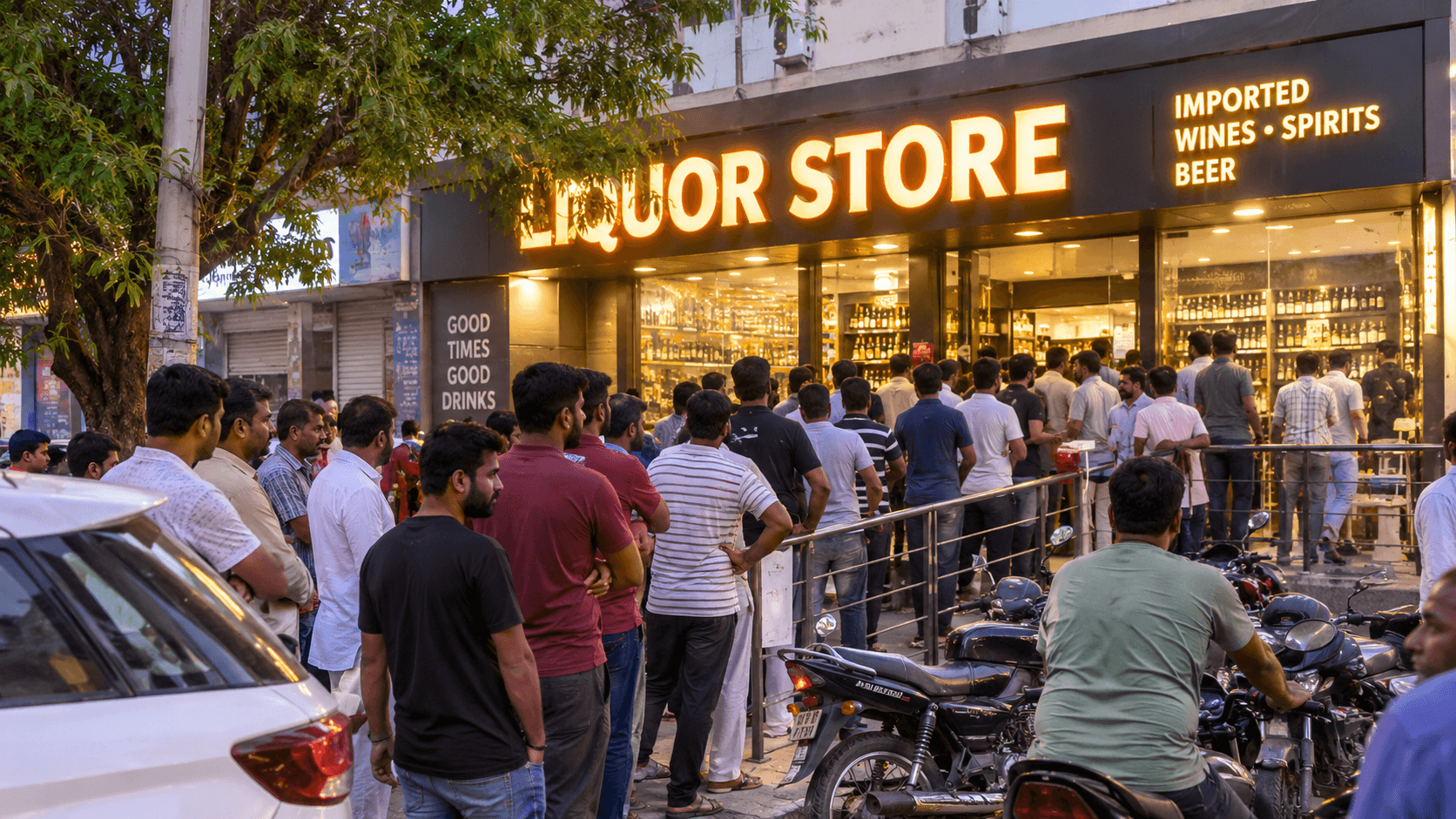
Every evening, while walking on the streets, a big rush of people making noises along with multiple groups standing in lines is visible. The parking area is blocked, and the traffic jams occur due to just 1 liquor store, as the line bypasses the main roads. In India, the liquor business has a ₹5.3 lakh crore revenue model and each state has a different tax system along with procedures. We assume that the liquor business has quite sustainable and revenue.
The business seems quite profitable, and the owners have luxury life and authority in their local areas. Their influence makes them run the business efficiently. Let's understand the business. In many states there is a tender system where everybody applies for liquor tenders. In some places, the E- lottery system works. Based on this system, the allotment happens. Once you received the approval, then you can start your own liquor store, but there will be a time limit of at least 1 or 2 years based on state. The business works or not, you have to pay the government the required amount being charged.
If you owned your own store in a prime location, it would be profitable or if you took it for rent purposes, the expenses would increase along with other procedures. Approximately, a liquor bottle charges 1000 rupees, then it would not go directly to liquor store dealers. The cost cuts would come from VAT along with state excise duty, sales tax, cess along with other procedural charges. These charges would be included, then a minimum margin would be benefited. After the charges, it also includes salaries of the staff, electricity, transport charges, dry days and festivals where sales go down. Eventually, the police issued overtime sales along with restrictions.
These businesses earn quite a good amount of money, but, along with expenses which are not visible, can make business tough. By the end of the month, the business feels profit from outside, but from inside the expenses make it complex. The real liquor business owners who are experienced, have gone through all those procedures of losses and eventually established themselves. So how do they handle it ?
The experienced people calculate sales and identify the current market trends along with requirements. Ordering the right brands which people prefer rather than different types of expensive things. Correct management skills and store procedures can reduce the losses. Supply of the liquor on time and quick service can increase the retention of customers. This is a business which is not quick regaining of profits, it is volume-based along with long-term planning work. The demand and fulfilling the needs of the customers is the major turning point in this business. Having a luxury liquor store can be beneficial but it requires prime locations. The business is only fruitful when you manage it with quality management along with public requirements.