
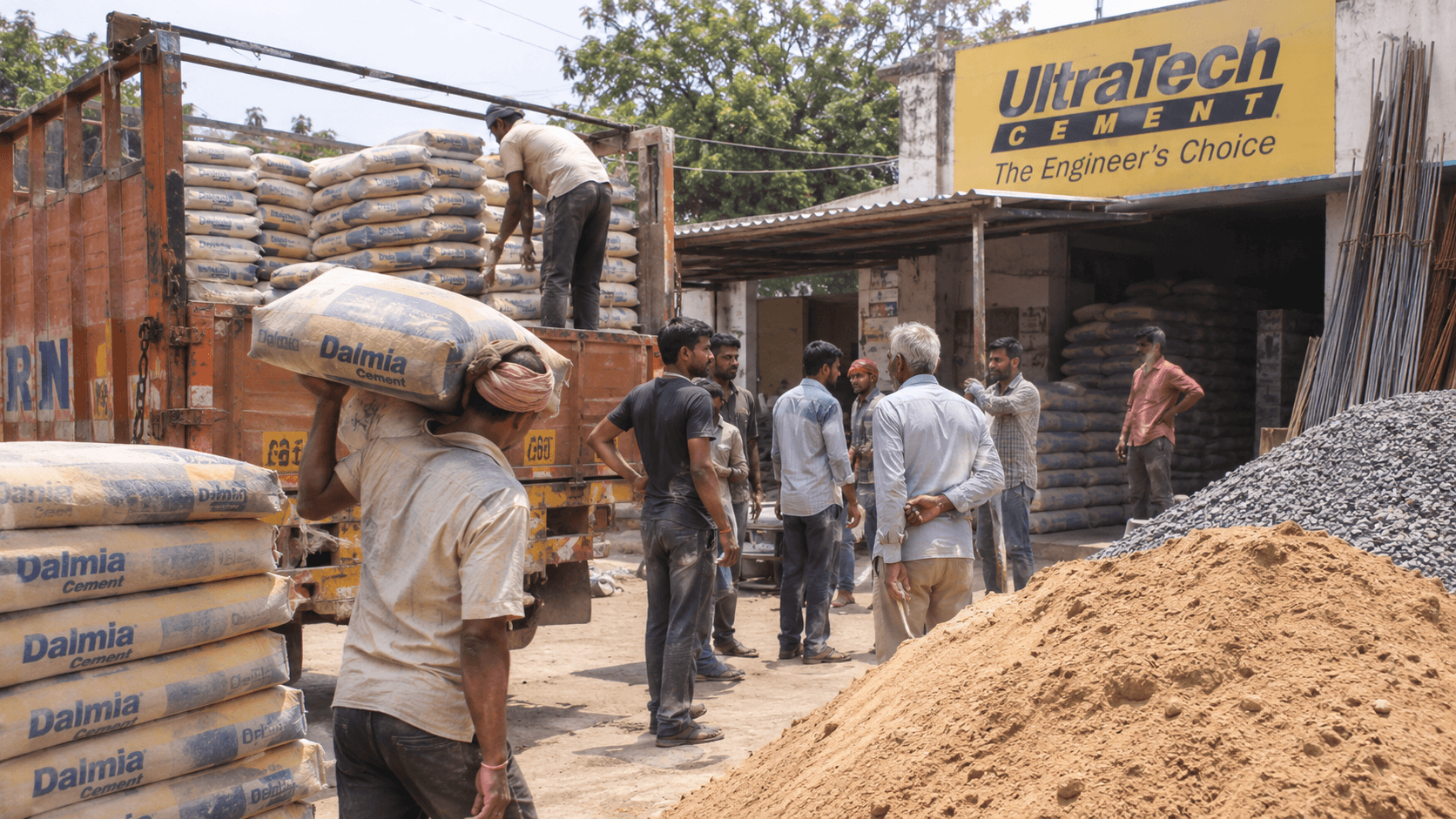
Early in the morning, we see hundreds of cement bags being delivered, with trucks full of cement near construction sites. The business is filled with dust with labour-intensive work involved, but the owner is one of the top personalities in his locality. The banks keep on lending a good amount of support to the cement owners and dealers. The cement bag is approximately 350 rupees per bag; the margin is about 15 rupees per bag. You might think such a low amount, then how do they even survive? The business model is based on volume more than margin.
Along the cement business owners sell materials related to construction with iron, sand and other equipments. These products have an almost 5 to 10% margin based on volume and quantity. The cement industry gives targets to dealers for selling more volume, making the business even more profitable. The business might look dirty with hard labour, your city's biggest buildings are built with that same cement.
When it comes to expenses, the problems of business are ample. With regard to profits, expenses also play a key role. From electricity bills to worker salaries, GST along with maintenance and delivery charges with diesel. Then eventually damages of cement, especially during the rainy seasons, as the cement gets harder and can't be used further. Based on the damage, the prices fluctuate in the markets. Every day the market shifts based on the situation. It requires constant monitoring of market values. The cement loses its quality every 3 months after manufacturing, by up to 30%. The moisture content in cement is measured based on the quality and sold in the markets.
Mistri plays a significant role. Any cement dealer who has the loyalty and trust of at least 50 Mistri has higher chances of selling cement. The house owners have direct interaction based on the mistri’s suggestion and recommendations. They buy cement and the quantity based on his command. Eventually, all the Mistri’s get cut from the cement dealers and industries. The more volume and repeated orders received, it would be more profitable. The people who handle these cement businesses usually plan with effective measures. There are always 3 months saved emergency funds to handle a crisis for all the business owners specifically for cement industry.