
The government of India has announced a major plan to strengthen the country’s renewable energy transmission and storage system. The PM Dhara Scheme is aimed at improving access to renewable energy by developing better transmission networks and energy-storage systems. India is producing more electricity from renewable sources such as solar and wind energy.
However, both sources have limitations. Solar power depends on sunlight, while wind power depends on wind speed and weather conditions. Therefore, producing renewable electricity is only one part of the challenge. We also need strong transmission networks and large-scale storage systems to store electricity when production is high and supply it when demand is high.
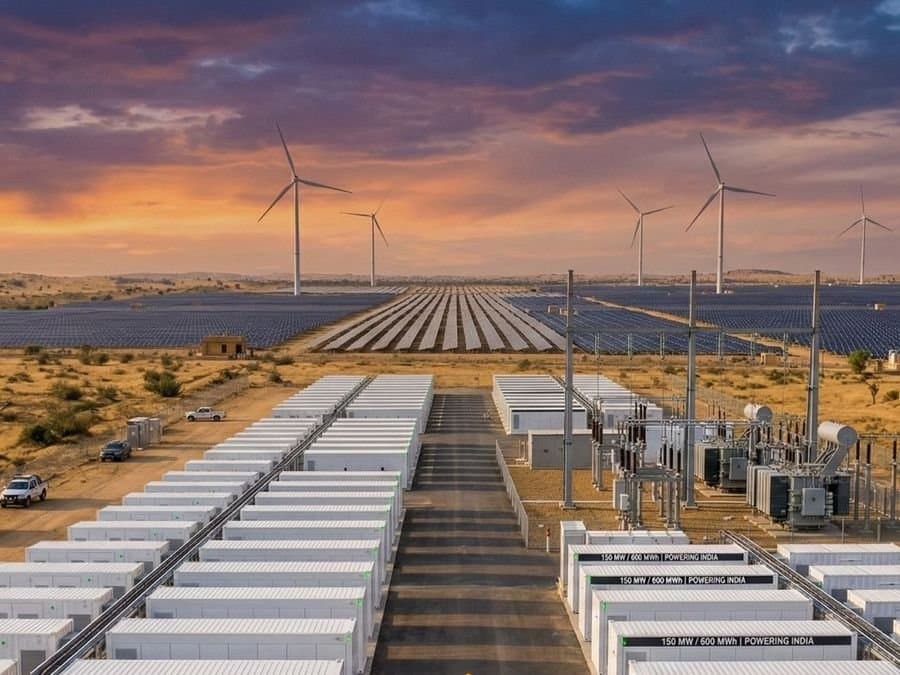
For example, Rajasthan has significant solar power generation. During periods of strong sunlight, solar plants can produce large amounts of electricity. To make full use of this electricity, India needs better transmission lines and battery-storage systems so that power can be transferred to areas where it is needed and stored for later use.
The process from renewable energy plants to transmission networks, distribution centres and finally energy-storage systems is complex. The government’s plan is intended to improve coordination and infrastructure across these different stages.
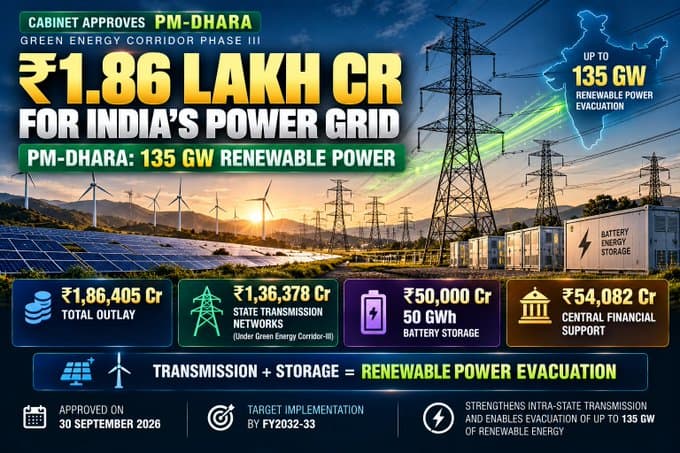
The programme involves major investment in green energy corridors, interstate transmission infrastructure and battery energy storage systems. According to the figures announced for the programme, the investment includes around ₹1.36 lakh crore for interstate transmission infrastructure and around ₹50,000 crore for battery energy storage systems, along with central financial support for transmission projects.
The overall objective is to create a stronger and more reliable electricity network that can connect renewable-energy-producing states with areas where electricity demand is high.
This investment is important because India’s electricity demand is increasing rapidly. Better transmission and storage infrastructure can help reduce wastage of renewable electricity, improve grid stability and make it easier for India to increase its use of clean energy. In simple words, the government is trying to build a system in which renewable electricity can be produced, transmitted, stored and supplied efficiently across the country.