
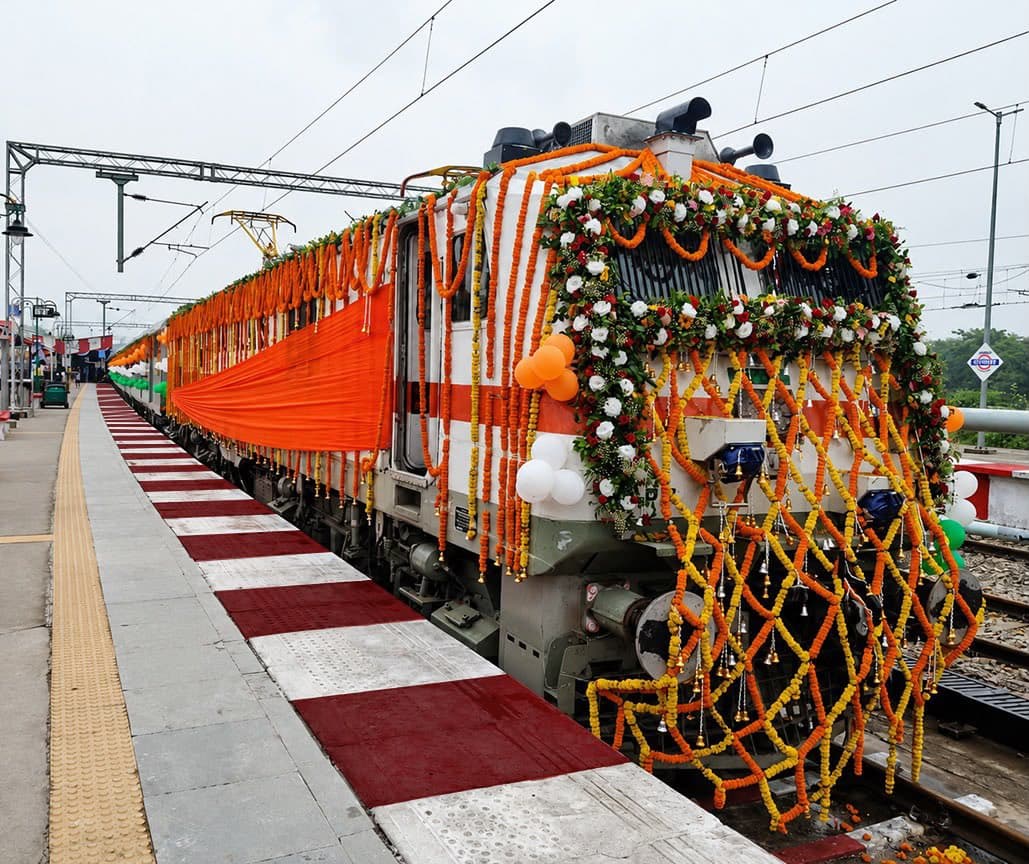
Indian railways is one of the largest organizations which operates for all the 150 crore population of India.
We heard Indian railways were built by the British. Yes, it was built but only for business purposes; the workers, land, execution, wealth. Everything was Indian, but most of the steel used to come from the British.
The Indian railways has one of the 4th largest rail networks with 68,525 km of access along with approximately 25,000 trains operating on a daily basis. It is one of the largest organizations after the Indian army to provide large-scale job opportunities. Almost 14 lakh workers work for Indian railways.
Revenue
It earns about 2,78,000 crore in revenue annually. It is a big profitable earning right, but its revenue comes from 28% from tickets, 65% from goods train carrying coal, cement, iron ore. 7% from MSME goods, advertisements, movie shoots, food, tenders, land, rental income and a few extra charges overall as convenience charges.
You might think Indian railways are earning great profits, but actually not. It is in losses all the time, but how ?
* Firstly, the salaries of the employees and for retired employees pensions.
* Maintenance and operations of all trains.
* Building new train tracks and routes.
* Cleanliness (Especially Gutkha, Paan, Tobacco)
* Tentatively 2 crore people travel without tickets.
* Violence, protests, train delays.
* Pillow and bedsheets theft.
* Railway property damage.
For such reasons, it gets extremely difficult for railways to operate and maintain, which leads to losses and restrictions. The government's budget and support makes railway work efficient. The simple logic here is the government is allocating all those funds from taxpayers money, which is people’s money. If you waste the government's resources and public property, you will be charged anyhow. So, the government deals with all these profits and losses together.
* It has an expansion plan of creating new trains and routes, increasing per day to 15 km of new tracks.
* Creating modernized trains with new facilities, reducing the general stores and increasing compartments.
* Constructing new stations across villages and interior areas.
The profits that seem perfect are actually not in real numbers and reality. Managing such a large institution needs constant monitoring and management. One single train delay can make things worse for almost the next 3 to 4 days to manage.