
Just Imagine
* Rural women carrying water from nearby lakes and walking 4 miles a day, along with the child. How difficult is it for those poor women ?
* The struggle of rural women and their pain was no less than a war. Constantly struggling with the water crisis, from agriculture to household utility.
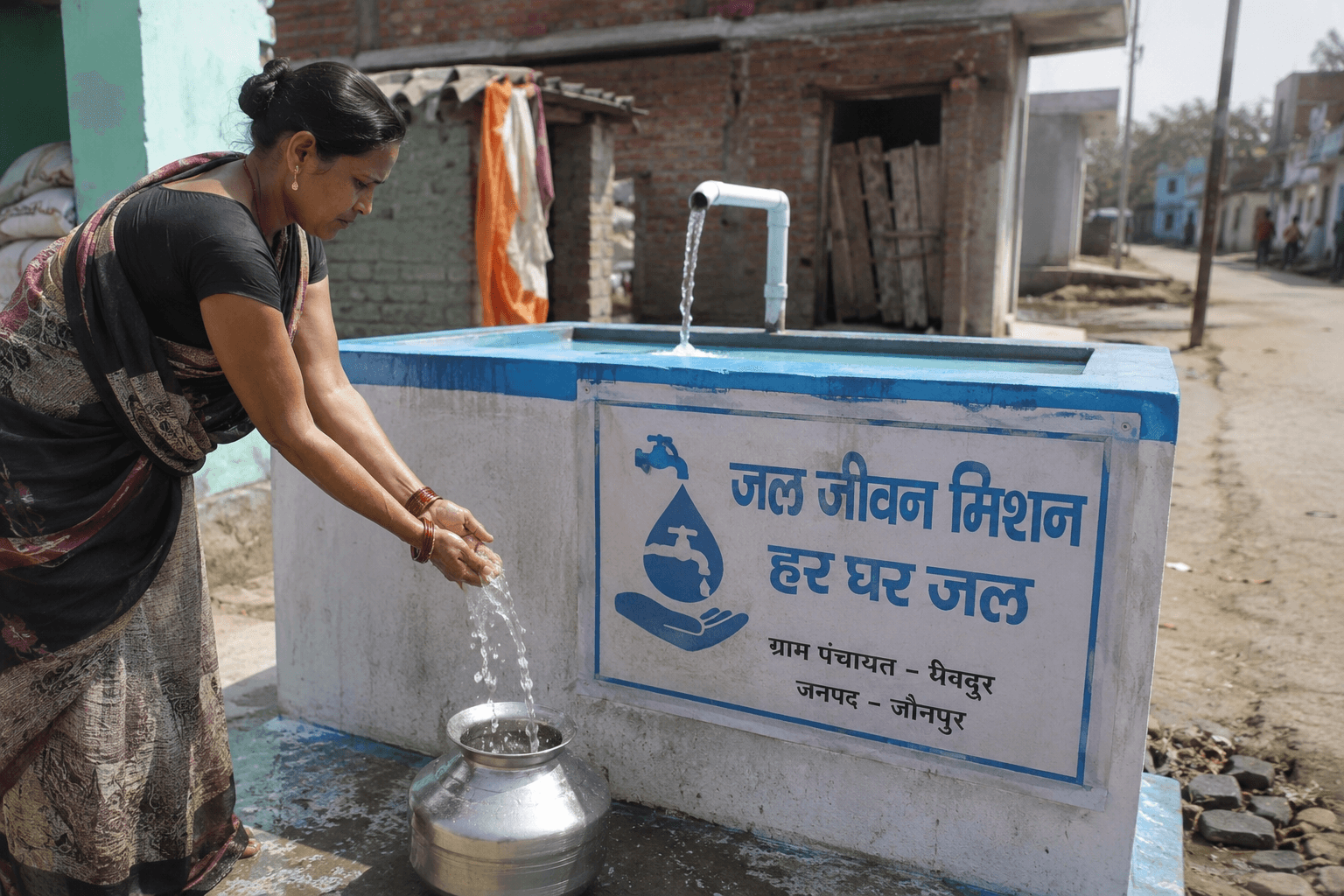
* Have you heard of Jal Jeevan Mission launched in 2019, its aspirational project of filling tap water facilities for every rural household?
* During the inspection, around 17% approximately 3.23 crore population only had tap water connections, which was a low number by then. The government took a firm decision to provide a water facility.
The key motives of government
* To provide tap water facility
* Special concern about drought-prone, flood-hit, hilly regions, and coastal areas.
* Schools, Anganwadi centers, gram panchayat buildings and health wellness centers.
* Digging artificial lakes, water security zones, rainwater harvesting techniques.
* Developing human resource and water management.
Overall, providing water for rural areas is the major motive.
Data and Analysis of water.
Water is an essential need for every human life in nature. As our ancestors used to say, without water there is no life on earth. Protecting and preserving is essential for a sustainable earth. 97% of the earth is salt water and only 2.5% of the earth is freshwater.
Who owns most freshwater reserves?
*America: Contains the largest share of global freshwater resources at 45%.
*Asia: Holds 28% of freshwater but has the lowest resources per inhabitant.
*Europe: Possesses 15.5% of freshwater resources.
*Africa: Holds 9% of freshwater resources.
When it particularly comes to India, we face severe water shortages during summers, especially in urban areas, where the population density is higher. Nearly 40% of households are dependent on groundwater resources and rainwater, which is seasonal and further results in floods and droughts.
Jal Jeevan Mission Data ( Reference from Press Bureau of India )
As of 2024, almost 77% of rural households have tap water connections; an additional 11.82 crore connections have been given. According to the World Health Organization, almost 5.5 crore hours are saved every single day. Almost 4 lakh deaths can be saved due to safe drinkable tap water.
How did this mission become successful, and how did the government execute it?
*Involving 14,000 + NGO groups and training around 24 lakh women for this mission.
*Har Ghar jal, Nari Shakti se Jal Shakti, Nal jal mitra programme campaigns
*Establishing Pani samitis and community building.
*Village water sanitation committees
*Jal Shakti Abhiyan: Catch the Rain
*Village level planning and execution by visiting village by village.
These were key initiatives how the tap water reached every household as per targeted vision.
As of 2024, almost 77% of areas have been given to water facilities across India. The campaigns and village level monitoring have created an effective and efficient strategy.