
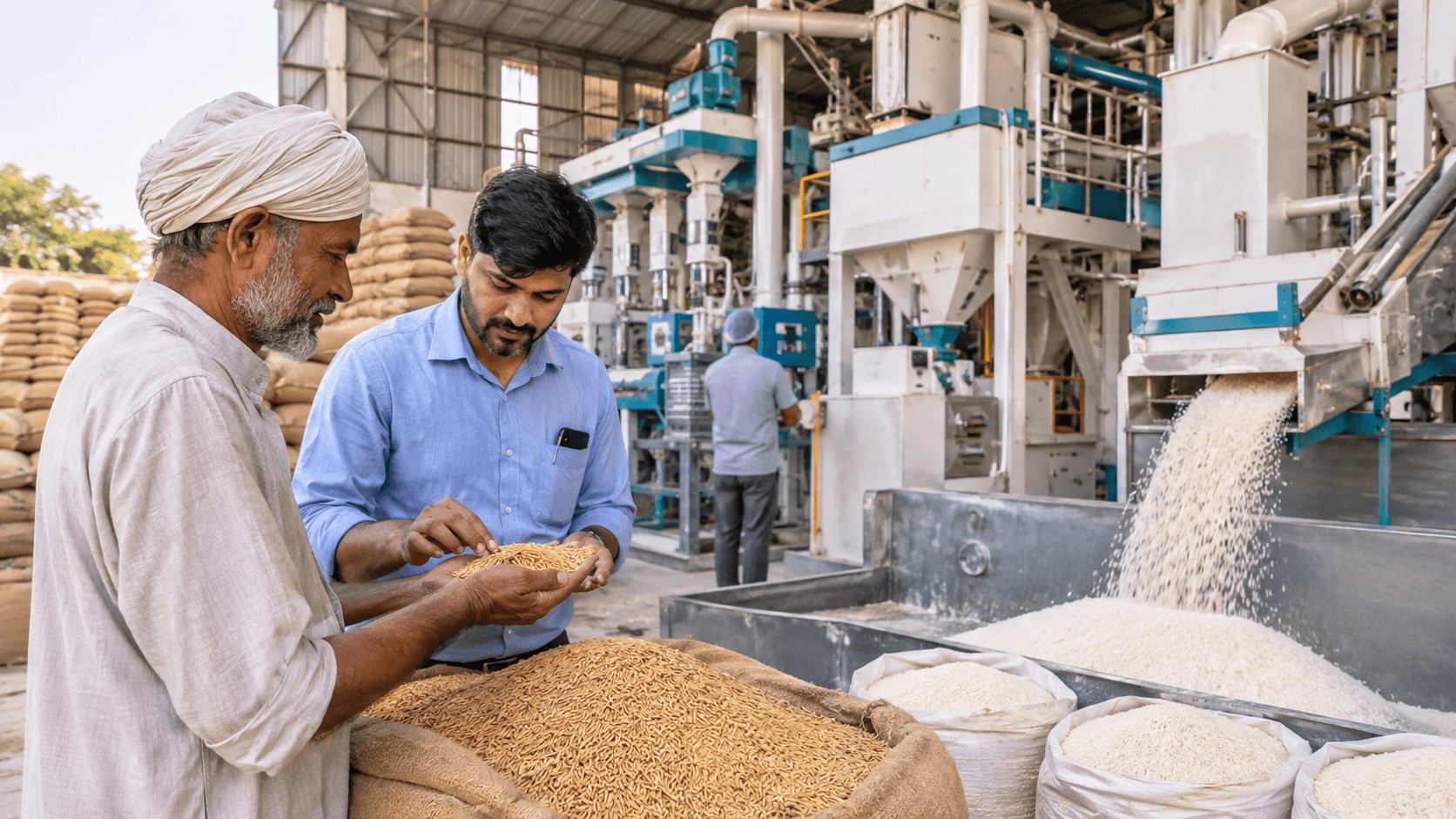
Our hardworking farmers produce paddy and eventually bring it to the market yards to sell the produce. Based on the quintal, the farmers sell their produce where mill owners and middlemen buy it. The mill owners smartly check the quality of the rice with types by measuring the shelf life, moisture check, sample testing, grain inspection & uniformity. After checking everything most of the goods are stored in huge godowns and warehouses to protect themselves from all seasons.
The paddy rice which has been sold to the mill owners, eventually they try to enhance the rice and segregate the rice based on its value. The machine plays a significant importance as most of the rice is checked and separated based on quality. The rice is divided into a few categories like, high quality rice, broken rice and along with brown rice, the rice bran converted into oil and also as animal fodder. Through this most of the revenue is earned by mill owners. They either collaborate with others for packaging, sometimes they even make their own brands and sell it.
Another important task is to manage machinery which has its own expenses and requires maintenance. To open a rice mill one has to have at least 1 to 2 acres of land with employees. Along with transport for supply and paddy procurement from farmers. It costs at least 20 lakh to 5 crore based on the size and area of the rice mill. The rice mill is a profitable business, making several types of paddy rice.
Major problems of this sector
Most of the rice can be affected by moisture and eventually spoil with time or due to seasonal climate issues. Many farmers nowadays try to sell on their own, making their own profits and skipping the rice mill procedures. The price they sell to the rice mill impacts their livelihood as mill owners give minimum prices. Sometimes the warehouses are spoiled by rats or insects, creating huge losses for the owners. Over-polishing of rice harms the quality and taste of rice along with removing rich nutrients, making it unhealthy. After procurement from farmers and eventually realising the rice didn't extract properly, making it a severe loss. Most of the revenue comes from husk, rice bran and high quality rice. These are three major sources of income for the mill owners. It also increases high electricity bills as most of the machines work continuously making it expensive.
The real economics of rice, the mill owner buys it for almost 22 rupees approximately. Eventually, they sell it for 32 rupees to 45 rupees with packed rice or even more. It is sold in quintals for around 2000 rupees, with every quintal getting a profit margin of 150 to 600 rupees with a 5 to 15% margin. Along with 150 to 250 rupees for transport costs and supply costs. Per month, approximately a small and medium size mills earn a profit of 2 to 5 lakhs including expenses. The overall rice mill business works based on quality checking and a proper supply chain, creating a strong business base in the rice mills. It is a long-term along with continuous quality checking and monitoring business.