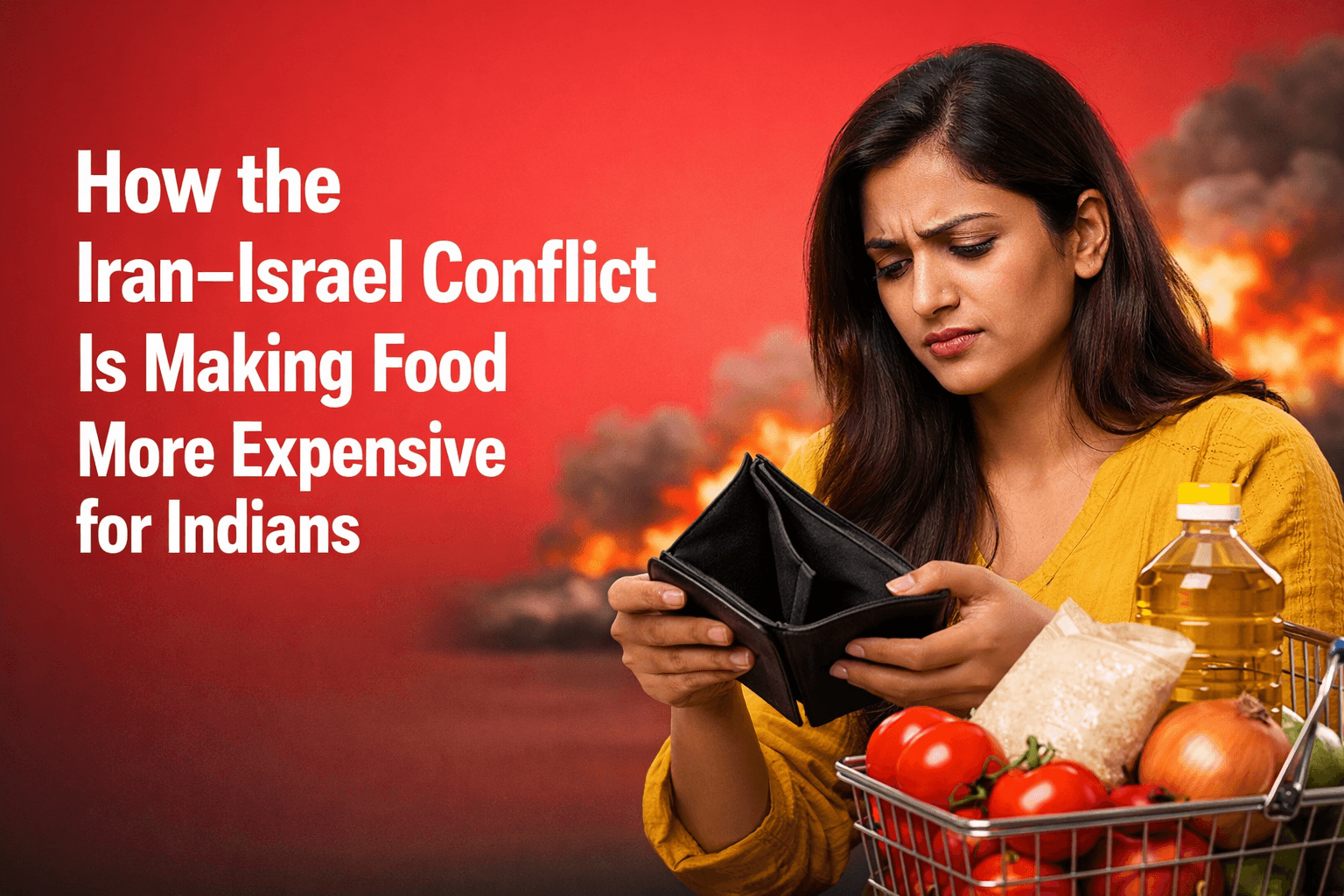
What if a war happening thousands of kilometers away could make your daily food more expensive?
It sounds surprising, but that’s exactly what’s happening right now. The rising tensions between Iran and Israel are not just a geopolitical issue—they are slowly reaching your kitchen.
At the center of this situation is a narrow but extremely important water route called the Strait of Hormuz. Around 20% of the world’s oil passes through this single route. In simple terms, it’s like a lifeline for global energy supply.
In February 2026, after strikes involving the United States and Israel on Iran, tensions escalated sharply.
Iran responded with a strong warning—threatening to block this critical route. Even the possibility of disruption was enough to shake global markets.
Oil prices quickly surged past $100 per barrel. And experts believe this could go even higher. Investment strategist Lyn Alden has warned that while the global economy might manage at $150 oil, crossing $200 could start breaking systems.
But what does that actually mean for everyday people, especially in India?
When oil becomes expensive, it doesn’t just affect petrol or diesel prices. It creates a chain reaction. Transportation costs rise, electricity generation becomes costlier, and industries that depend on fuel start increasing prices.
This directly impacts food.
Farming depends heavily on fuel—for tractors, irrigation, and transportation. Fertilizers also become expensive when energy prices rise. So when oil prices go up, the cost of growing and delivering food also increases. Eventually, that cost reaches your plate.
Countries with weaker economies are hit the hardest. They simply cannot compete with richer nations when it comes to buying expensive oil. As a result, they face shortages, power cuts, and rising inflation. Reports already suggest electricity issues in places like Egypt, showing how quickly the effects can spread.
India, too, is not completely immune. With limited oil reserves—estimated to last around 60 days—the country depends heavily on imports. Any long disruption in supply can create pressure on prices and availability.
This situation is not just about global politics anymore. It’s about how connected the world really is. A conflict in one region can ripple through economies and impact millions of lives elsewhere.
For now, the situation remains uncertain. But one thing is clear—what’s happening in global oil markets today could shape how much you pay for your daily essentials tomorrow.