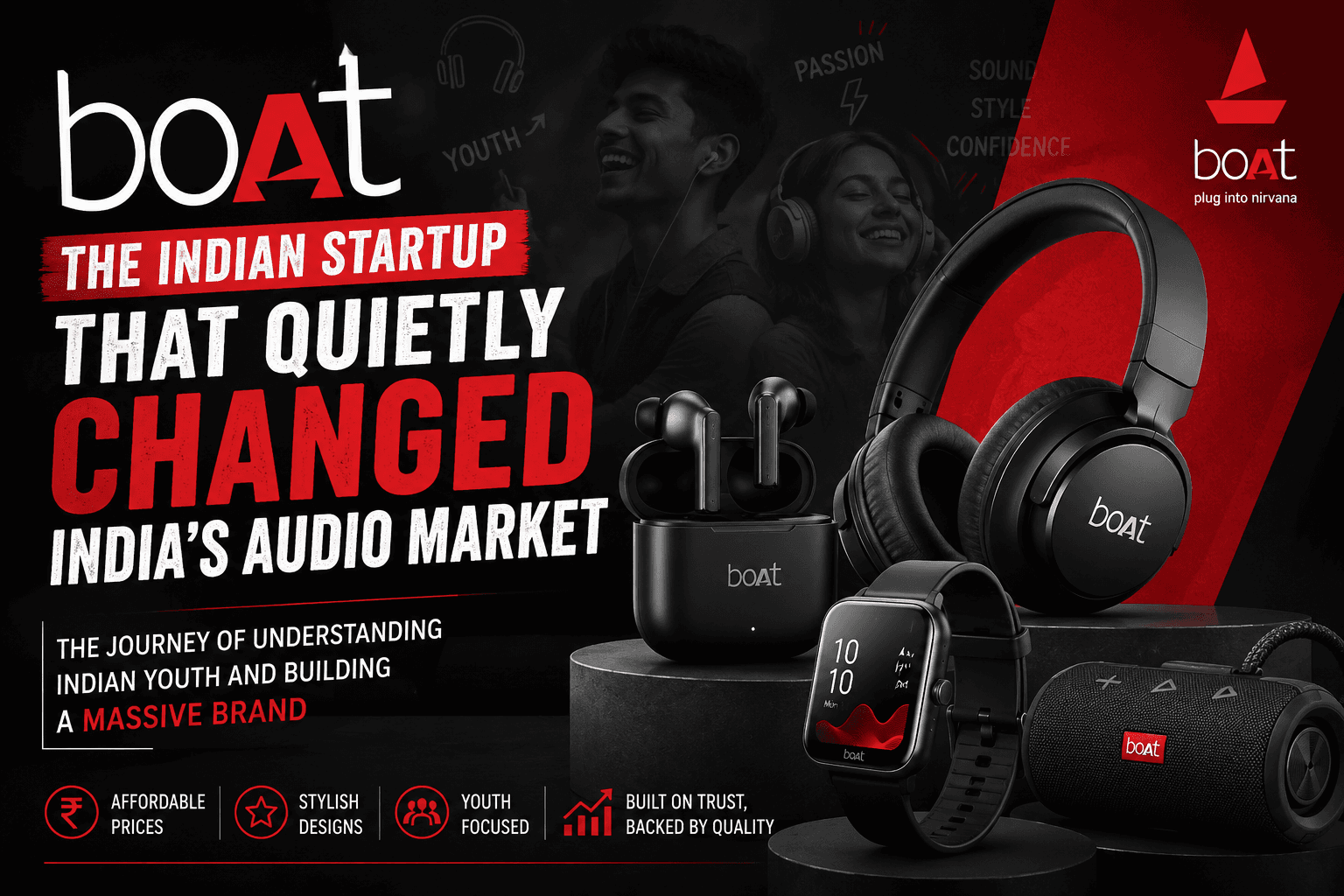
boAt: The Indian Startup That Quietly Changed India’s Audio Market
India has seen hundreds of startups over the last few years. Some became famous because of heavy funding, some because of controversies, and some because of social media hype. But there are also a few companies that quietly entered the market, understood the Indian consumer better than anyone else, and slowly built a massive empire.
One of those startups is boAt.
Today almost every college student, gym-goer, traveler, or office employee has either used a boAt product or at least heard its name. From wireless earbuds to smartwatches, the company became part of daily life without making too much noise about itself.
But the journey was not as easy as it looks today.
How boAt Started
When boAt entered the Indian market, international audio brands were expensive for most people. Good-looking headphones and speakers usually came with premium prices that many students and middle-class buyers could not afford.
The founders of boAt noticed one simple thing:
Indian consumers wanted stylish products, but at reasonable prices.
That single understanding changed everything.
Instead of competing with luxury audio companies directly, boAt focused on young Indian buyers who wanted trendy gadgets without spending huge amounts of money.
The Smart Move That Worked
boAt did not try to become a “revolutionary tech company.”
It simply focused on what customers actually needed.
The company worked on:
- Affordable pricing
- Modern designs
- Strong online marketing
- Influencer collaborations
- Products made for Indian youth culture
At a time when many startups were spending heavily just to stay visible, boAt slowly built trust through everyday usage. People started recommending the products to friends instead of just watching advertisements.
That organic growth became its biggest strength.
Why People Connected With boAt
One major reason behind boAt’s success was its branding.
The company understood internet culture, music culture, fitness trends, and the lifestyle of young Indians. Instead of looking like a corporate electronics brand, boAt looked cool, modern, and relatable.
From cricket sponsorships to creator partnerships, the brand became visible everywhere without feeling forced.
Its products were not positioned as luxury items.
They were positioned as lifestyle products.
And that strategy worked brilliantly.
Challenges Behind The Success
Like every growing startup, boAt also faced challenges.
The consumer electronics market is highly competitive. New brands enter almost every month with aggressive pricing. International companies already have strong technology and manufacturing advantages.
boAt also faced criticism regarding:
- Dependence on imports
- Product durability concerns from some users
- Heavy competition in wearable tech
- Pressure to maintain growth
Still, the company managed to survive because it understood its audience better than many competitors.
While other brands focused only on specifications, boAt focused on consumer emotion and branding.
A Silent Success Story
The interesting thing about boAt is that people rarely discuss it like a “startup success story,” even though it became one of India’s biggest wearable and audio brands.
Maybe because there was no dramatic controversy.
Maybe because the founders stayed away from constant public attention.
Or maybe because the company quietly kept working while others focused on headlines.
But in reality, boAt became proof that a startup does not always need complicated innovation to win.
Sometimes understanding the customer deeply is enough.
What Indian Startups Can Learn From boAt
boAt’s story teaches an important lesson to Indian startups:
You do not always need to build the next AI model or billion-dollar software platform to create impact.
Sometimes solving simple consumer problems with good execution, smart branding, and consistency can build a massive business.
In a startup ecosystem filled with hype and noise, boAt became successful by doing one thing properly — understanding what ordinary Indians actually wanted.