

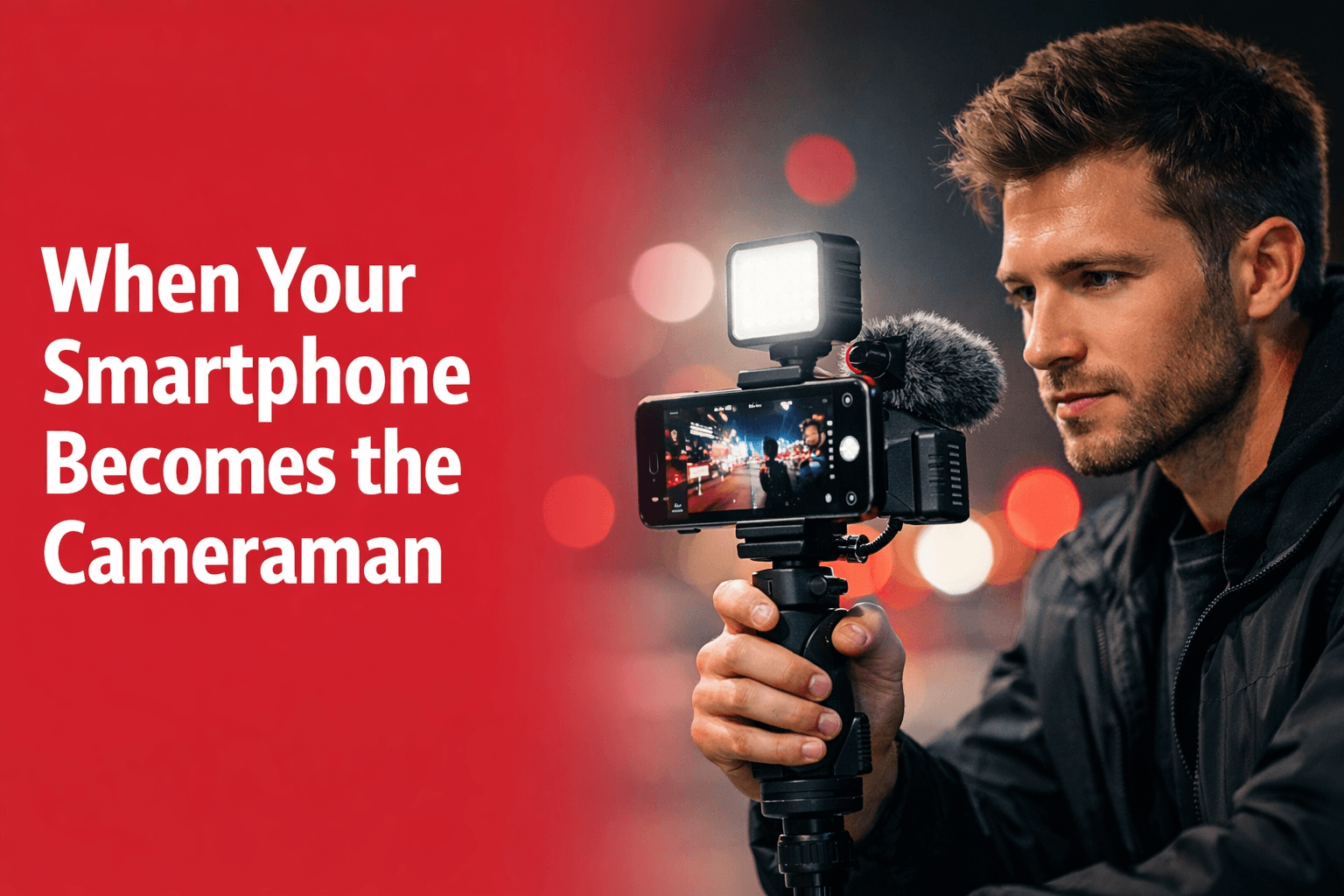
When Your Smartphone Becomes the Cameraman
Anyone who creates videos alone knows the struggle. You set the phone on a tripod, press record, walk into the frame… and then realize the angle is wrong. Adjust the phone again, try another shot, repeat the process. For solo creators, filming can sometimes take more time than the actual content itself.
Now imagine a phone that automatically follows you while recording, keeping you perfectly in frame without anyone behind the camera.
That’s exactly the kind of idea Honor recently demonstrated during Mobile World Congress 2026 in Barcelona.
A Phone With a Moving Camera
Instead of the usual fixed camera design, this concept smartphone includes a small robotic mechanism attached to the camera module. The camera can physically rotate and shift its position, almost like a miniature robotic arm.
The device uses artificial intelligence to detect and track the subject. If the person recording starts walking or changes direction, the camera adjusts automatically to keep them centered in the frame.
For someone filming a vlog or tutorial alone, the experience could feel similar to having a dedicated cameraman following every movement.
Designed With Creators in Mind
The device also features a 200-megapixel camera, which means it is capable of capturing extremely detailed visuals. To make videos smoother, the phone integrates a stabilization system similar to what gimbals provide.
AI also plays a role in recognizing objects and scenes. By understanding what is happening in front of the camera, the system can adjust framing and focus more intelligently.
All of this is aimed at making the filming process easier—especially for creators who usually work without a production team.
Why This Idea Is Interesting
Video content has become one of the most popular forms of communication online. Platforms are filled with vlogs, tutorials, short videos, and live streams created by individuals.
However, many of those creators work alone. Setting up equipment, checking angles, and ensuring smooth footage can slow down the process.
A smartphone that can track movement and manage framing automatically could remove a lot of those small but frustrating steps.
Not in Stores Yet
The device shown by Honor is still a concept prototype. It hasn’t been announced as a commercial product yet. Companies often showcase experimental ideas at events like Mobile World Congress 2026 to explore what future devices might look like.
Even so, demonstrations like this hint at how smartphones are evolving. They’re no longer just tools for communication—they’re gradually turning into intelligent creative devices.
If technology continues moving in this direction, recording videos might soon feel less like managing equipment and more like simply pressing record and letting the phone handle the rest.